How to Grow Garlic Effectively? High-Yield Cultivation Techniques Shared
How can garlic be grown effectively? Please let me explain. Taking the most commonly used autumn-sowing cultivation method in southern China as an example, here is a brief description of each cultivation technique. 4.1 Soil preparation and basal fertilizer application. The soil preparation and fertilization work before sowing is basically similar to that for onions. Avoid continuous cropping; the soil should preferably be fertile, well-drained sandy loam...
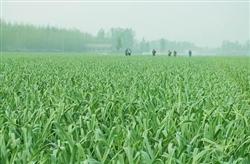
How can garlic be grown effectively? Please let me explain.
Taking the most commonly used autumn-sowing cultivation method in southern China as an example, here is a brief description of each cultivation technique.
4.1 Soil preparation and basal fertilizer application
The soil preparation and fertilization work before sowing is basically similar to that for onions. Avoid continuous cropping; the soil should preferably be fertile, well-drained sandy loam.
4.2 Sowing
Garlic is sown directly using garlic cloves. For autumn-sowing garlic cultivation, in most parts of southern China sowing is done in September to October in autumn, garlic scapes are harvested in April to May, and garlic bulbs are harvested in June; when green garlic is the cultivation goal, sowing can begin in July, but for early sowing the seed garlic needs low-temperature treatment to break dormancy.
Before sowing, the garlic cloves used for seed should be selected and graded. Strict selection should begin in the field before harvest, and in particular plants carrying viruses should be removed. After harvest, select garlic bulbs that have the characteristics of the variety, are round and regular, large and undamaged.
In production, in order to break dormancy and promote germination, the garlic skin can be peeled off before sowing, or the garlic cloves can be soaked in water for 1-2 d before sowing to facilitate water absorption and gas exchange. In addition, placing the garlic cloves at a low temperature of 0-4 degrees C (in production, a cold storage room or ice cubes can be used) for 1 month can greatly advance germination. These methods are especially suitable for green garlic cultivation, as this allows earlier sowing and earlier supply.
Sowing density and sowing rate. The sowing method is to insert the garlic cloves into the soil with the tips slightly exposed; they should not be planted too deep. When harvesting garlic bulbs, the plant spacing and row spacing are 15-20 cm x 10-13 cm, or even denser. The sowing rate per hm2 is 750-2000 kg. The larger the plant and row spacing, the greater the single bulb weight, but deformed bulbs are more likely to occur. When the cultivation goal is to harvest green garlic, sowing is denser, with row spacing 12 cm x 4-7 cm.
4.3 Field management
When the seedlings emerge 3-6 cm, topdressing should begin, mainly with nitrogen fertilizer. During the growth period of green garlic, from August to September to November to December, topdressing should be applied 2-3 times to promote aboveground growth. The greater the aboveground growth, the higher the yield. When the cultivation goal is to harvest garlic bulbs, in addition to topdressing at the seedling stage, apply topdressing once more before overwintering. By the time spring warms in the second year, this is the vigorous growth period of the garlic plant, and a heavy fertilizer application should be made. After the garlic bulbs begin to expand, fertilizer should not be applied too much or too concentrated, so as to avoid causing bulb rot. To promote garlic bulb development and obtain high yield, there must be a relatively large leaf area when the bulbs begin to form.
Cultivation and weeding work is especially important after the garlic seedlings emerge. When the seedlings are 10-15 cm tall, cultivation can be deeper; when the seedlings are more than 30 cm tall, cultivation should be shallower. Generally, cultivation and watering are combined with fertilization. But by April to May of the second year, the bulbs have already begun to expand; at that time there is more rain, so attention should be paid to drainage, otherwise the garlic cloves are likely to split apart. If too much nitrogen fertilizer is applied, the young sprouts of the newly formed garlic cloves may produce leaves again, thereby affecting the quality and storage life of the garlic bulbs. Some recent experiments show that using chemical herbicides such as pendimethalin, trifluralin, Simazine, and Atrizine, combined with colored plastic film mulching, all have good weeding effects.
4.4 Harvesting
The bulbs, garlic leaves, and garlic scapes of garlic can all be used as food. Because the parts harvested for food are different, the harvesting periods and methods are also different.
Green garlic is eaten for its young leaves and pseudostem. In the Yangtze region, after sowing in July to August, it can be harvested from October of that year to the following spring. But after entering summer, the leaf tissues gradually age and the fiber content increases, so it is no longer eaten as green garlic. In most cases, the harvesting method is to pull it up once, roots and all. But it is also possible before winter, when the plant is about 3 cm tall, to cut once at the base of the pseudostem, 3-5 cm above the ground. After cutting, strengthen fertilizer and water management, and new leaves can regenerate for another harvest in February to March of the following year.
Harvesting of garlic scapes. Harvesting garlic scapes is closely related to harvesting garlic bulbs. Generally, those that have garlic scapes all have divided garlic bulbs, but those that have garlic bulbs do not necessarily have garlic scapes. The differentiation period of garlic scapes and the young sprouts of garlic cloves is almost simultaneous. Garlic bulbs must wait until they are fully mature before harvesting, while after garlic scapes differentiate, they elongate very quickly and need to be harvested in time, otherwise the yield of garlic bulbs will be affected.
Harvesting of garlic bulbs. Garlic bulbs can begin to be harvested 20-30 d after the garlic scapes are harvested. If the garlic scapes are not harvested, the garlic bulbs will still expand, but the yield will decrease by more than 15%. The harvest season is also a season with more rain. If harvesting is too late, the garlic bulbs are prone to rotting, and after harvest they also tend to split apart and do not store well.
Click to get more garlic cultivation techniques
Click to get more vegetable cultivation techniques