-

For garlic to be high-yielding, getting these four stages right is key
To make garlic high-quality, high-yielding and early to market, you must get the following four stages right: The sprouting stage: harvested garlic seed remains dormant for a certain period. Therefore, 10 days before planting, the selected garlic seed should be placed in a cool spot and covered with fine sand or loess. Before sowing, soak it in well water for 12 hours. This not only brings germination forward by 2-3 days, but also gives even, sturdy growth. The soil preparation stage: garlic likes moist sandy soil; other loess and clay soils can also be planted as long as they are broken up. The
-
The Correct Way to Apply Sulfur Fertilizer for High-Yield Garlic
Garlic is a sulfur-loving crop. Allicin is mainly a disulfide compound. Most of the protein in garlic contains sulfur, and sulfur plays an important role in improving garlic quality. At the same time, studies show that only when the fertilizer N/S ratio is close to the optimal value can the nitrogen and sulfur absorbed by the plant be used most effectively. The N/S ratio in garlic is roughly 12/1. The utilization rate of sulfur in calcareous soils in the north is 2%-3%, and it is easily fixed as calcium sulfate, while the nitrogen utilization rate is 30%-35%. The optimal N/S is 4/5. Sulfur cannot be reused within the garlic plant, so sulfur must be supplemented in the middle growth stage to maximize the yield-increasing effect of the fertilizer. Choosing a suitable sulfur-containing fertilizer in production is the key to high yield. According to trials, applying 40% nitrogen-sulfur fertilizer (nitrogen-sulfur fertilizer contains N >= 17.5%, S >= 22.5%. Its fertilizer effect combines long-lasting and quick-acting effects, and the fulvic acid it contains plays an important role in promoting garlic root growth, improving disease resistance and fertilizer utilization rate, and eliminating soil compaction. It can combine root promotion and root nourishment, avoid premature aging and lodging of garlic, and achieve the production goals of increasing yield and marketability and building soil fertility) will be the best choice to meet garlic's needs. The specific fertilization methods are:
-
High-yield garlic cultivation techniques require attention to detail; these key points must be mastered
1. Pay attention to sowing time and sowing rate. The best sowing time is about 3 days after White Dew and about 5 days before the Autumn Equinox. Garlic seed should be sown in three grades: large, medium, and small, at 40,000 plants per mu, with 20 cm row spacing and 8 cm plant spacing. 2. Pay attention to crop rotation arrangement. Planting in muddy fields is preferable; garlic should not be grown continuously, otherwise pests and diseases will increase. The previous crop is best as sesame or soybean; fields previously planted with peanut or hemp crops are not suitable for garlic. 3. Pay attention to scientific fertilization. First apply sufficient farmyard manure, and also apply an appropriate amount of chemical fertilizer. On farmland with good soil quality, less chemical fertilizer can be used, but phosphorus and potassium fertilizer
-
Detailed Explanation of Key Techniques for High-Yield Garlic Cultivation
I. Variety Selection The main garlic bolt-type varieties suitable for cultivation in our county are Han Garlic, Red Seven Stars, Wen Zao, Er Ji Zao, and Late Garlic, with a seeding rate of 120-150 kg per mu. II. Field Selection Select fields for garlic that are on high ground, have high fertility, deep soil layers, and convenient drainage and irrigation. III. Field Preparation First deep-plow the soil, sun-dry the field, make furrows and level the land, requiring level ground, fine soil, and deep furrows. IV. Timely Sowing Sow garlic at the right time to promote early growth and rapid development, early bolt emergence, and high economic returns.
-
Characteristics and High-Yield Cultivation Key Points of the New Glutinous Rice Variety E-You 512
E-You 512 is an indica-type high-yield glutinous rice bred in 1997 using the apomictic autotriploid SAR-3 as the female parent and mixed pollen as the male parent. Its hybrid F1 generation showed segregation, some F2 lines were stable and uniform, and elite lines were selected to breed the F3 generation. It was approved by the Sichuan Provincial Crop Variety Approval Committee in 2002 and has now been widely promoted and applied in Sichuan Province, with yields reaching over 500 kg per mu. 1 Main characteristics 1.1 Yield performance This variety in 1999
-
Hainan successfully breeds a new high-yield, high-quality glutinous rice variety
The Hainan Academy of Agricultural Sciences has successfully bred a glutinous rice variety, "Haifeng Nuomi No. 1," which has better quality than the traditional Li ethnic group's mountain orchid rice (Shanlan rice). This variety has the advantages of high yield, disease resistance, cold tolerance, lodging resistance and good glutinous quality, with an average yield per mu 4 times that of Shanlan rice. Shanlan rice, also called "Shanlan rice" (mountain-blocked rice), refers to a type of upland glutinous rice planted by the Li people of Hainan, China, who cut out a patch of land on the mountain and enclosed it for cultivation. It is suitable for brewing wine, and Shanlan wine is called the champagne of the Li ethnic group. Therefore, Shanlan rice is the traditional crop most beloved by the Li ethnic group. Hainan Academy of Agricultural
-
To achieve high yield and high efficiency in fisheries, these three measures need to be implemented well
To achieve high yield and high efficiency in fisheries, efforts should be actively made to optimize the ecological conditions for aquaculture and strengthen the construction of supporting pond facilities. Specifically, this can be done from the following three aspects. 1. Implement the renovation of old ponds. The old pond renovation project should follow the requirements of "ecology, circulation, health, and intensification" and carry out major engineering construction such as "desilting and deepening, pond shape transformation, pond embankment slope protection, pond ridge widening and tidying, and improvement of supporting water, electricity, and road facilities," with particular emphasis on removing the thick layer of sludge at the bottom of the pond so that the bottom sediment is reduced to about 20 cm. Through desilting
-
What are the adjunctive treatment methods for pig high fever syndrome?
When pigs suffer from severe colds, pneumonia, influenza, heatstroke, and febrile diseases such as erysipelas and swine pasteurellosis, they often run a fever, sometimes with body temperature reaching above 42°C and remaining persistently high. In clinical practice, drawing on the methods used by human physicians to manage high-fever patients, adjunctive treatment such as pouring cold water over the head and applying cold compresses was used for pigs with high fever syndrome. After treating more than 10 cases, the results were good. The specific method is: first fill a kettle with well water or cold water, slowly pour it over the sick pig's head, and gently pat it. After pouring is complete, soak a towel or piece of cloth in well water or cold water, fold it 2-3
-
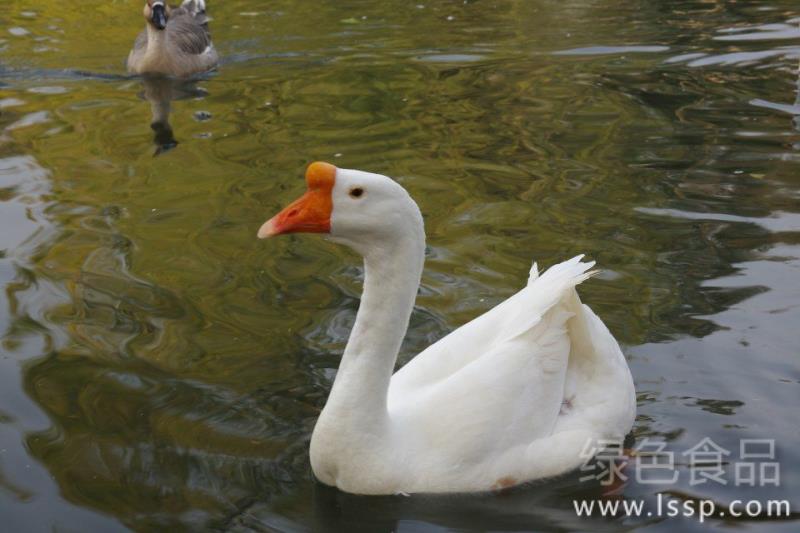
Symptoms and Prevention Methods of Heatstroke in Geese During Summer High Temperatures Due to Lack of Sweat Glands
Summer High Temperatures, Geese Lack Sweat Glands and Are Prone to Heatstroke: Symptoms and Prevention Methods of Heatstroke in Geese
-
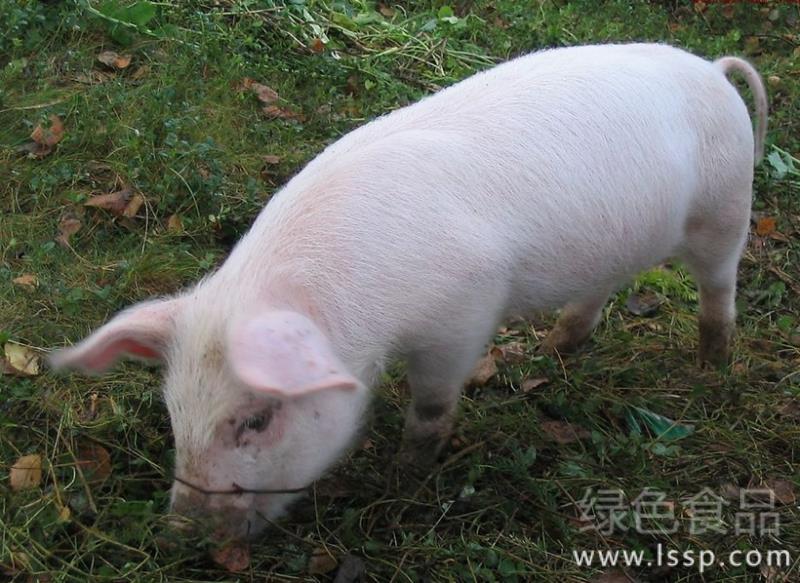
Piglet stubborn diarrhea has both high incidence and high mortality; how should it be treated?
Piglet diarrhea with high incidence and high mortality: how to treat piglet stubborn diarrhea
条件筛选