-

Detailed Explanation of New Techniques for High-Quality and High-Yield Garlic Cultivation
With the improvement of people's living standards and the continuous increase in agricultural product exports, the garlic planting area has been continuously expanding, and the requirements for product quality have also been continuously rising. Through years of practice, we have summarized a set of high-quality and high-yield garlic cultivation techniques. The main technical points are: 1. Select excellent varieties. For garlic bulb production, varieties with large heads, few cloves, weak bolting ability, white and bright skin color, long dormancy period, and strong spicy aroma should be selected, such as Soviet Red Skin Garlic and Lunong Garlic; for garlic scape production, varieties with early scape emergence, long and thick scapes, and easy extraction can be selected,
-
Application Technology of EM Bacteria in High-Quality Rice Production
In recent years, China's grain output has been greatly increased, but it also faces the contradiction of severe environmental pollution and low quality of agricultural products. Long-term unreasonable application of chemical fertilizers has become one of the important factors that waste resources, pollute the environment, increase production costs, and affect the quality of agricultural products. With the improvement of human environmental protection and health awareness, the demand for pollution-free food is also increasing day by day. Therefore, in agricultural production, it is imperative to develop new biological organic fertilizers to reduce or even eliminate chemical fertilizers and produce high-yield, high-quality, and efficient agricultural products. EM
-
How to identify high-quality fish fry? Selection tips every farmer must know
"Good seed is half the profit, good seedlings are half the grain." Robust, high-quality fish fry are not only an important factor in improving the survival rate of fry, but also an important foundation and guarantee for increasing fish yield and boosting economic returns. High-quality fish fry should have: appropriate and uniform size, robustness without injury, lively movement, and strong feeding competitiveness. Specifically, identifying high-quality fish fry can be summarized as "three looks and one sampling." First look: the size of the fry. The harvested size of the same fish species from the same pond should be neat and uniform, with little difference in body length and weight. In contrast, inferior fry with large individual differences and unevenness, due to reasons such as food competition, mixed germplasm, and poor feeding, often have a very low overall survival rate. Second look: the body color of the fry. High-quality fry have bright and glossy body color. Different species and different feeding methods produce fry with different body colors. Generally speaking, high-quality silver carp fry should have a silver-gray back and silvery-white sides and belly; high-quality grass carp fry have a light golden-yellow body color, with gray-black net-like scales relatively obvious, and the more robust the fish, the more prominent the light golden-yellow; high-quality bighead carp fry mostly have a light golden-yellow body color, with black markings all over the body not very obvious. If the body color of the fry is darker, or even blackish, it indicates that the fry are weak or diseased. The gloss on the body surface of the fry is caused by the mucus layer covering the body surface, which is rich in proteases, lysozymes, etc., and has the function of protecting the scales and skin of the fry from invasion by diseases and pests; fish or weak fry lack a mucus layer, so the body surface has no gloss. Of course, when fry are attacked by external diseases and pests, they will also secrete a large amount of mucus and lose their gloss. For example, when fish are attacked by Ichthyophthirius multifiliis, the body surface will be covered with a thick layer of mucus, which is a stress response made by the fry to external invasion. Third look: the activity of the fry. High-quality fry are lively in movement, strongly gregarious, quickly gather in groups and dive to the bottom when startled, have strong feeding competitiveness and strong upstream swimming ability. When crowded, the fry heads point downward, and only the tails can be seen constantly fanning; while weak or diseased fry with poor constitution move slowly, do not form groups, swim alone, have weak feeding competitiveness, and poor upstream swimming ability. One sampling: randomly sample fry to check their quality. High-quality fry jump violently when out of water, are plump, with small heads and thick backs, glossy body color, moist muscles, intact scales and fin rays, gill covers not open, tails not bent, no parasites or wounds on the body surface, and normal body shape without deformities. In contrast, weak or diseased fry jump weakly, have incomplete scales and fin rays, congestion, emaciated bodies, large heads and small tails, backs as thin as a knife edge, and even those with "no belly" or that "stick to the net" are considered inferior fry.
-
How to Achieve High Yield and Efficiency in Rice-Fish Rotation? A Detailed Explanation of the Field-Pond Technique
The field-pond rice-fish rotation is a high-yield, high-efficiency technical model formed in western Fujian over the past two years through continuous improvement based on the extension of "pit-pond" and "ditch-trench" rice-field fish farming. In 2000, Longyan City extended rice-field fish farming over 20,000 mu, of which the field-pond rice-fish rotation area was nearly 5,000 mu. On March 21 this year, the Longyan City Animal Husbandry and Fisheries Bureau and the Liancheng County Science and Technology Bureau organized relevant experts to conduct an on-site sampling inspection of the rice-field fish farming on Li Jincai's household's 1.8 mu of paddy field in Songyang Village, Gechuan Township, where this model was implemented. The total output of fresh fish was 1,112.5 kg
-
Bovine eyeworm disease must be treated promptly during the high-temperature period in summer and autumn
Symptoms: In the early stage, there is conjunctival redness, congestion, swelling, inflammation, and tearing, with serous or purulent discharge. In the later stage, it gradually worsens and increases, the eyelids swell, and the cornea becomes cloudy or develops ulcers or perforation. Sick cattle have reduced appetite, elevated body temperature, restlessness, shake their heads and rub their eyes, and are photophobic. In severe cases, it can cause blindness in one or both eyes, and cows produce less milk. Prevention: Maintain good environmental sanitation in the cattle shed, ensure the pen is dry, remove filth and dispose of it properly, and do a good job of fly control. Feeding management should also be strengthened, nutrition increased, and the cattle's eyes protected from injury
-
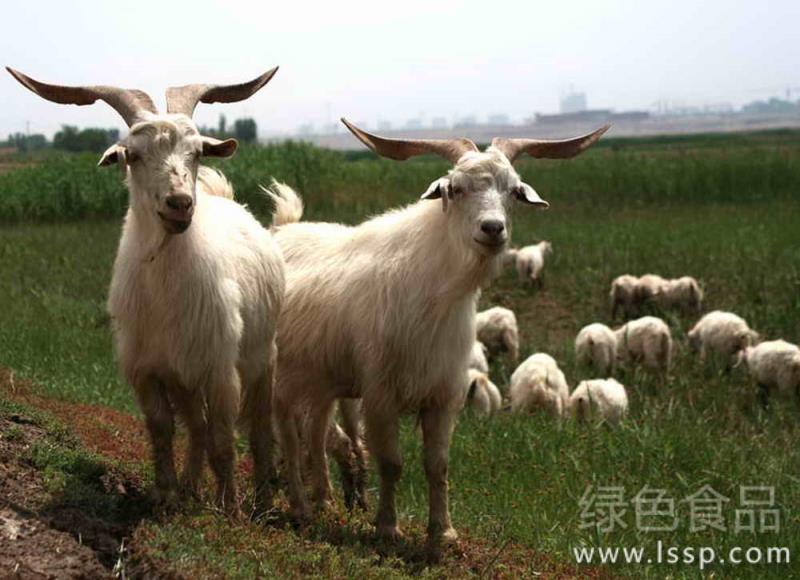
Sheep foot-and-mouth disease has a high mortality rate; how can it be prevented and controlled scientifically?
Sheep foot-and-mouth disease has a high mortality rate; how to prevent and control foot-and-mouth disease in sheep
-
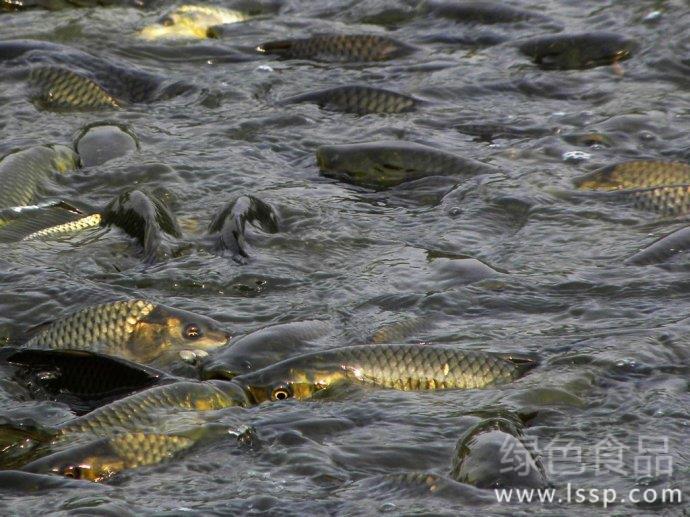
The plum rain season is a high-risk period for aquaculture. How should fish ponds be managed?
The plum rain season, a disaster season for aquaculture: how to manage fish ponds well during the plum rain season
-
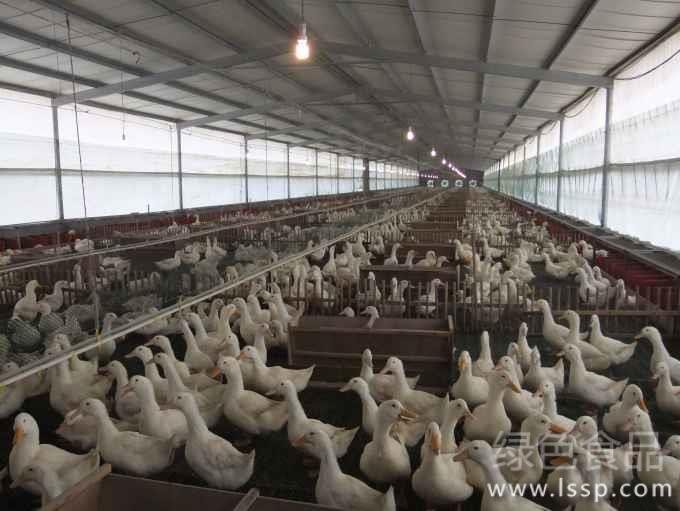
Raising Ducks on Greenhouse Frames: Fewer Diseases, Higher Profits, and a Detailed Guide to the Farming Method
Raising Ducks on Frames in Greenhouses: Fewer Diseases, Higher Profits - How to Raise Ducks on Greenhouse Frames
-
How can outdoor cultivation of Gastrodia elata achieve high yields?
Artificial cultivation of Gastrodia elata adapts to a very wide range of conditions; regardless of the height of the mountain, regardless of shady or sunny slopes, and regardless of sandy or loess soil, Gastrodia elata production can be developed. So how can high yields be obtained? ① Flat planting on hillsides. In mountainous areas with heavy autumn waterlogging and rain, when Gastrodia elata is planted in pits, except in a few well-drained places, the pits mostly accumulate water, causing rot and reduced yields. Cultivation by piling soil on the slope surface occupies much land and is easily affected by summer drought and high temperatures, which is unfavorable to the growth of Armillaria mellea and Gastrodia elata, making high yields difficult to obtain. However, bed planting or horizontal cultivation can achieve high yields. The method is: on slopes above 25°C, because rainwater
-
New electromagnetic growth-promotion technology for Gastrodia elata boosts high-yield cultivation
Gastrodia elata grown in lightning-strike areas has high yields, with large tubers of good quality. Based on this pattern, by adopting new technology that improves the geomagnetic field, each square meter can produce 25 kg of Gastrodia elata, and the harvest can be brought forward by 80 days. The specific operational techniques are described below: 1. Planting time and variety selection. The best seasons for planting Gastrodia elata are spring, autumn and winter. The seed stock should be first-generation pollinated seed free of pests and diseases; degraded second-generation inferior seed must not be used. 2. Site selection. With the new geomagnetic-improvement technology, as long as the magnetic field is suitable and the temperature and humidity are appropriate, idle land in mountainous areas
条件筛选