-

Scientific Potassium Application for High Yield and Quality in Garlic
Potassium is an essential nutrient for crop growth, and its role in increasing crop yields and improving the quality of agricultural products has been confirmed in many crops, but there are still few reports on the effect of potassium on garlic yield and quality. Through two years of field trials, the Soil and Fertilizer Institute of the Zhejiang Academy of Agricultural Sciences proved that potassium application to garlic achieves high yield and quality. 1. The role of potassium application in garlic. The results of two years of field trials showed that potassium fertilizer application to garlic had an obvious yield-increasing effect. Under equal nitrogen and phosphorus levels, applying potassium fertilizer compared with no potassium fertilizer increased yield by 60.0
-
Detailed Explanation of High-Efficiency Double-Layer Mulch Cultivation Technology for Garlic
Qi Xinqiang, a garlic farmer in Qijiazhuang Village, Dingzhou City, Baoding, has grown mulched garlic for many years and, in the course of production, worked out a cultivation technique using double-layer plastic film mulch for garlic, achieving an earlier market launch for the garlic and relatively high yields, with a per-mu yield increase of more than 10%. It is worth the study and reference of vegetable growers in the major garlic-producing areas. The cultivation technique is introduced below: 1. Selection of excellent varieties. Select Shandong Guanxian garlic, an excellent garlic variety from Shandong Province and also an important export variety. Each garlic bulb has 7-8 cloves, the outer skin is slightly purplish-red, the skin is thin, the cloves are plump, the pungency is strong
-
New disease-resistant, high-yield rice variety launched by Bayer CropScience
On May 14, 2008, Bayer CropScience announced the launch in India of ArizeRDhani, the world's first hybrid rice variety resistant to bacterial leaf blight. Compared with conventional varieties, this new variety can increase yields by 20%-30% and provides the crop with strong protection against the highly destructive bacterial leaf blight. "Rice is a staple food in many developing countries and emerging markets. Although global demand for this crop continues to grow, the occurrence of diseases can greatly affect harvests and threaten food supply.
-
Mixed farming of turtles and earthworms in the same pond yields high economic returns
Under micro-flowing water conditions, amphibious turtles and aquatic earthworms are co-cultured in one pond, with the aquatic earthworms serving as the main feed or supplementary feed for the turtles. This can make the turtles strong and healthy, grow faster, shorten the breeding cycle, reduce feeding costs, and more than double economic returns. Moreover, throughout the entire rearing process, contamination of the product by hormone drugs is avoided, meeting the basic requirements for pollution-free food and making it more popular with consumers. The main technical points are introduced as follows: 1. Pond construction: choose a site with abundant water sources and good water quality
-
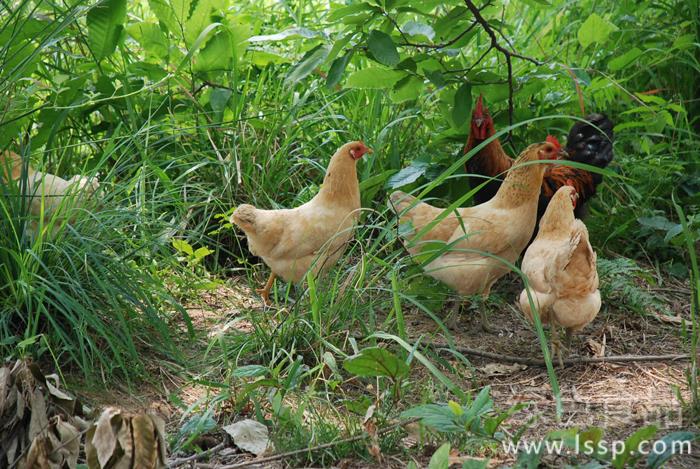
Free-range chickens are more popular than feedlot chickens, and new techniques bring high returns in raising them
Free-range chickens are more popular than feedlot chickens; new techniques bring high returns in raising free-range chickens
-
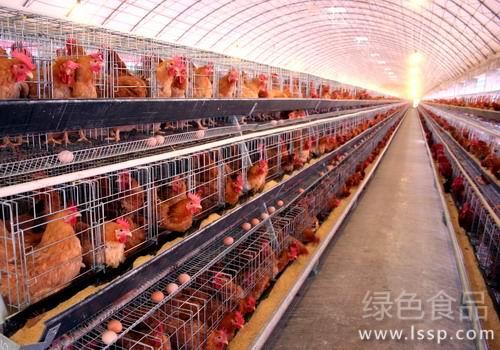
High mortality from avian encephalomyelitis in laying hens: how to prevent and control it?
How to prevent and control the high mortality of avian encephalomyelitis in chickens
-
What to do about premature senescence in high-density drip-irrigated cotton? Main causes and preventive measures
I. Main causes of premature senescence in high-density cotton planting 1. Variety factors Varieties are not resistant to premature senescence. In recent years there have been many cotton varieties; some have aged and degenerated, and some are inherently poor in disease resistance and premature senescence resistance, or are unsuitable for high-density planting, leading to premature senescence in cotton. 2. Environmental factors ① Temperature For mid-early maturing cotton, the suitable sowing period is when the 5 cm soil temperature stably passes 12°C. If sowing is too early or the seedling stage encounters low-temperature chilling injury, because the air temperature is relatively low, root growth is slow and diseases are severe, which easily damages the cotton root system function, thereby
-
Three key points to master for high-yield Gastrodia elata cultivation
I. Armillaria must be "three new" 1. New technology: new methods to obtain new strains. The new method uses the latest biotechnology to detoxify the strains, which is by far the most advanced method of obtaining strains. Among traditional Armillaria strains, the best results come from those obtained by tissue isolation or spore isolation; most units or individuals use purchased mother cultures for subculturing and expansion, so the cultivation results are poor. 2. New strains: pure isolated strains within three generations are required. The pure isolated strains referred to in this article mean
-
Three key points for high-yield cultivation of Gastrodia elata
In recent years, as the area devoted to Gastrodia elata production has shrunk sharply while market demand keeps rising, the price of Gastrodia elata has shown a continuously upward trend. Recently many growers have called to inquire about cultivation techniques for Gastrodia elata. A reporter interviewed Gastrodia elata expert Professor Cao Debin of the Shandong Academy of Agricultural Sciences on this topic. The key points of high-yield cultivation techniques for Gastrodia elata are introduced here, in the hope of being helpful to the many Gastrodia elata growers. 1. Armillaria must be "three new" 1. New technology: new methods to obtain new strains. The new method uses the latest biotechnology to detoxify the strains, and this is by far the most advanced method of obtaining strains. Among traditional Armillaria strains, those obtained by tissue isolation or spore isolation have the best effect; ordinary units or individuals mostly use purchased mother cultures for subculturing and expansion, so the cultivation effect is poor.
-
Detailed Explanation of the High-Efficiency Field-Based Wild-Simulated Cultivation Technology Model for Oyster Mushrooms
Under the premise of producing the same mushroom yield, field-based wild-simulated cultivation of oyster mushrooms can reduce investment in production facilities and labor intensity, facilitate operation and management, and the fresh mushrooms produced have a strong wild mushroom flavor, enhancing the commercial value of oyster mushrooms. This model is highly practical, easy to operate, suitable for large-scale and industrialized production, and has high promotional value. Oyster mushrooms, with their advantages of high yield, strong adaptability and large consumption volume, occupy a major position in the edible mushroom production of our province. However, using houses, greenhouses, caves and other facilities to cultivate oyster mushrooms has long been
条件筛选