-

Pond fish "pond turnover" (mass fish suffocation) occurs mostly in the high-temperature seasons of summer and autumn; early prevention is key
Due to negligence in management, fish ponds often suffer from pond turnover, causing great losses to fish farmers. To prevent pond turnover, the symptoms, causes and control measures are briefly introduced below for the reference of fish farmers. 1 Symptoms: Due to severe oxygen deprivation, pond fish gasp at the surface, scattered throughout the pond, mouths opening and closing, calmly taking in oxygen directly from the air at the water surface; in severe cases they slowly turn over, struggling to keep balance, and after repeating this several times, they die belly-up. 2 Dead fish species
-
High-yield method for fish-lotus polyculture in grid ponds
The grid pond fish-lotus polyculture technique involves partitioning a hardened lotus pond into small grids of 2 sq m to 4 sq m using roof tiles, hard boards, etc., and planting lotus within the grids. The average yield per mu of water surface is 0.5 wan kg of lotus root and 400 kg to 450 kg of fish, with a net benefit of over 10,000 yuan per mu. This technique can utilize waste pits, wasteland, river beach land, and scattered marginal land to build grid ponds for fish-lotus polyculture. It features small investment, low cost, quick results, and high efficiency, making it suitable for vigorous development by thousands of rural households. It can both increase economic income
-
Both sunstroke and heatstroke in pigs are caused by high temperatures
In the hot summer, pigs are prone to heatstroke. In fact, heatstroke is the collective term for sunstroke and heatstroke, which traditional Chinese veterinary medicine calls black-sweat wind. Causes The causes of sunstroke and heatstroke differ, but their pathological processes cannot be completely separated. Sunstroke occurs when pigs are exposed to direct sunlight for too long, causing a rise in physiological body temperature and overheating and warming of the skin, which dilates the skin blood vessels. On the other hand, overheating of the head leads to congestion of the brain and meninges, ultimately causing disorders of the cerebral cortex regulatory function and the vital centers in pigs.
-
Feeding and Management Key Points for Large Yorkshire Sows During Their High-Production Period
1. The age structure of the sow herd must be reasonable. According to a survey of 150 litters from parities 1-10 at a certain pig breeding farm in Jining, sow production performance varies with age (parity). The Large Yorkshire sow is a fine breed with relatively stable genetic traits, a long high-production period, strong reproductive capacity, and sustained high and stable production over many years. According to a survey of 150 litters from parities 1-10 at a certain pig breeding farm in Jining, adult sows (parities 4-7) averaged 12.4 live piglets born per litter, which is 1.6 more per litter than young sows (parities 1-3)
-
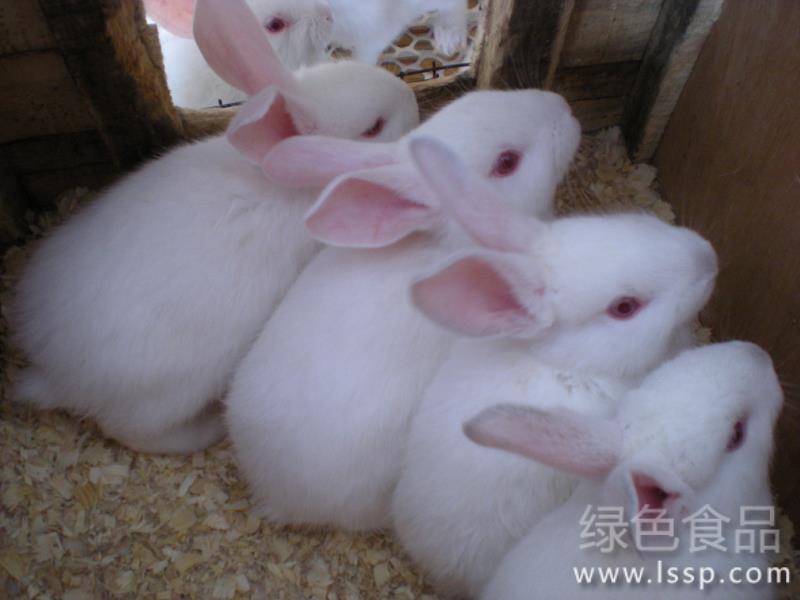
Angora rabbits cannot tolerate high summer temperatures; how can summer management be done well?
Summer heat is unsuitable for Angora rabbits; how can summer management of Angora rabbits be done well
-
Cultivation Technical Points for the New High-Temperature Grey Oyster Mushroom Strain
In the spring of 2001, after our oyster mushroom variety comparison trial ended, when the temperature reached as high as 34°C, several oyster mushroom fruiting bodies successively grew on the waste material pile covered with overgrown weeds. The color ranged from greyish-white to greyish-black, the fruiting bodies grew in clusters, and the largest cluster weighed 2.4 kg. Through directional tissue isolation and fruiting trials using bottle cultivation and bag cultivation methods, it performed well. After 2 years of pilot-scale verification, it was confirmed to be an excellent strain for summer cultivation. By the spring of 2004, virus-free treatment was carried out, making its traits more stable, and it can serve as the dominant strain for summer oyster mushroom production.
-
High-yield cultivation method of cutting oyster mushroom blocks into pieces, standing them upright and covering with soil
Mushroom farmers in Dongkan Town, Binhai County, Jiangsu Province, through years of oyster mushroom cultivation practice, worked out the six-character high-yield formula for oyster mushrooms of "cutting into blocks, standing upright, covering with soil", which increased the oyster mushroom yield per mu by more than 2000 jin compared with the past, with an increase rate of about 30%, and at the same time, production costs dropped greatly. Their high-yield experience mainly consists of three steps: "cutting into blocks, standing upright, covering with soil". The so-called "cutting into blocks" means that at the end of harvesting the second flush of mushrooms in furrow-bed cultivation, the dead mushrooms, stipes and the like remaining on the bed surface are cleaned up, and a sharp knife is used to cut the cultivation substrate into multiple pieces of about 50 cm
-
Four key measures for high-yield cultivation of oyster mushrooms
Supplementing nutrient solution: After harvesting the first flush of mushrooms, soak the mushroom bags in nutrient water with 0.1% urea and 3% white sugar for about 10 hours, allowing them to absorb a large amount of water, and the second flush will form quickly; then use a water injector to inject nutrient solution (vitamin B1, 20 mg, magnesium sulfate 20 g, boric acid 5 g, zinc sulfate 10 g, urea 25 g, cold boiled water 50 kg), reduce humidity and keep warm for 7 days, and the second flush will grow smoothly. Alternatively, break the mushroom skin at both ends of the bag once, place upside down on the ground, and irrigate with sufficient nutrient solution water (vitamin B
-
Semi-underground three-dimensional cultivation of oyster mushrooms yields high output and good returns
Semi-underground three-dimensional bed-frame cultivation of oyster mushrooms is a new approach explored in recent years to achieve high yields and improve economic returns. According to trials, on an area of 20 sq m, with 2000 kg of substrate, the annual output of oyster mushrooms is about 2500 kg, with a biological efficiency of over 120%. The key technical points are as follows: 1. Building the greenhouse: first dig a pit 1.8 m to 2 m deep and 4 m to 5 m wide, with the length determined as needed, and place the three-dimensional bed frames inside. On top, use bamboo poles and plastic film to build an arched shed, pack the surrounding edges firmly with soil, and cover with straw mats. Leave ventilation openings of about 30 square cm on all four sides, east, west, north and south, and build a small door on the west side for workers to enter and exit.
-
Fast-Track High-Yield Cultivation Techniques for Oyster Mushrooms in the Hot Season
High temperatures are extremely detrimental to the normal growth and high yield of oyster mushrooms. If conventional cultivation methods are still used, not only will the cost of oyster mushrooms be high, but the yield will also be low. However, if fast-track high-yield cultivation techniques are adopted, high yield and high efficiency can be achieved. Summarizing our years of experience, fast-track high-yield cultivation of oyster mushrooms in the hot season mainly involves the following key points: Selecting suitable spawn There are many varieties of oyster mushrooms. Pure high-temperature-type varieties have poorer quality, so it is advisable to choose wide-temperature-type varieties that are relatively tolerant of high temperatures, such as Suping, Aikang 558, Xide 33, Yaguang No. 1, as well as Gaoping No. 1, Sanxia 13
条件筛选