-

Yellow catfish is a high-quality aquaculture species worth promoting
Yellow catfish, also known as jiangsang, gayazi, and angsi fish, has a yellow-green back, yellow flanks with intermittent black patches, a naked scaleless body, and an elongated shape. It is distributed in natural waters across most regions of China. Yellow catfish is a warm-water bottom-dwelling fish that prefers to inhabit still or slow-flowing waters. Its survival temperature is 0°C-38°C, it has extremely strong adaptability, and it has considerable aquaculture potential, so it can be promoted for farming in most inland waters nationwide. Yellow catfish has tender flesh and a delicious taste. It not only has nourishing effects, but also certain
-
Six precautions for catching adult fish during high-temperature periods
Production practice has proven that catching adult fish during the hot season should be done at night or in the early morning (before dawn), when the temperature is relatively lower, which helps keep the fish fresh. When catching, the following points should be noted: 1. If using a seine net to catch, preparation work should be done during the day, clearing away debris on the water surface of the fish pond that hinders seining. 2. If using a soft vinylon fishing net, the height of the net should match the water depth of the fish pond as closely as possible. If using a nylon net to catch adult fish in a relatively large fish pond, the mesh size should be about 8 cm; this way
-
What to do about Porcine High Fever Syndrome? Detailed treatment measures
Although there are currently no specific drugs or mature treatment protocols available, after an outbreak of Porcine High Fever Syndrome occurs in production, taking active response measures according to the situation on the farm is still very beneficial for reducing the incidence rate and mortality rate and decreasing economic losses. (1) Disinfection is a way to cut off the transmission route of the disease and kill pathogens. After an outbreak occurs on a pig farm, disinfection work should be strengthened, and the concentration of the disinfectant solution should be increased. Strict disinfection should be carried out 2 to 3 times a day in the affected area and surrounding environment, and the living and management area of the pig farm should be disinfected once a day. Disinfection
-
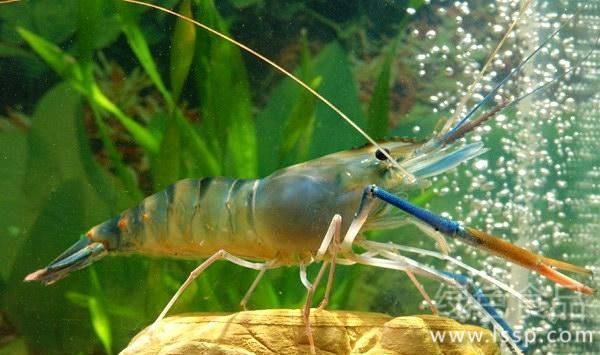
To achieve high yield and good profits from freshwater shrimp and river crabs, grasping six key points is very important
For high yield and good profits from freshwater shrimp and river crabs, grasping the "six key points" is very important
-
Key Technical Points for Cultivating Oyster Mushrooms in the High-Temperature Season
For many years, many mushroom growers have tried to avoid cultivating oyster mushrooms in the high-temperature season, for reasons that are none other than high contamination rates, severe pests and diseases, and drastic market fluctuations. In response to these problems, a set of key points for cultivating oyster mushrooms in the high-temperature season is introduced here. Varieties must be selected accurately: choose varieties of the medium-to-high temperature type with strong stress resistance, pure white and dense mycelium, strong wall-climbing ability, and few aerial hyphae, and resolutely avoid medium-to-low temperature and low-temperature type varieties. The cultivation site must be chosen well: cultivation can be done beside courtyards, under tree shade, or in wild woods, but care must be taken to choose a place with good ventilation,
-
How to Achieve High Quality and High Yield in Continuous Oyster Mushroom Cultivation
In some old mushroom-growing areas where oyster mushrooms are cultivated continuously, devastating diseases such as oyster mushroom walnut disease and button disease often occur, reducing yields by 50% in mild cases and causing total crop failure in severe cases, bringing certain economic losses to mushroom farmers. Therefore, changing traditional cultivation techniques is very important. 1. Select disease-resistant varieties. Through experimental comparison, choose Keda Heiping and Xide 99, which are both disease-resistant and high-yielding; next are Jiangdu 5526 and Xinyi No. 1. 2. Prepare a high-yield substrate. The recommended formula is: cottonseed hulls 75%, corncob 15%, wheat bran 7%, quicklime 3%, diammonium phosphate 0.50
-
High-quality Oyster Mushrooms Grown with Charcoal Powder
Method: Add 1 kg of charcoal powder, 1 kg of calcium carbonate and 0.01%-0.02% carbendazim to 100 kg of growing substrate, mix thoroughly, then seal and ferment for later use. Principles: 1. Charcoal powder can regulate the carbonic acid ratio in the growing substrate. 2. Charcoal powder is rich in available potassium, phosphorus, calcium and other effective components, which can make up for the nutritional deficiencies of the growing substrate. 3. Charcoal powder has the function of absorbing heat and raising temperature, which is conducive to the rapid growth of mycelium.
-
What new high-yield oyster mushroom varieties are recommended?
There are many varieties of oyster mushrooms promoted and applied in production, currently mainly Tuiguang No. 1, Xin 831, Qingfeng No. 1, Jiangdu 109, Yuanlin 802, etc. These varieties all have a certain influence among the vast number of mushroom farmers, and some mushroom farmers, because they prefer a particular variety, often do not change varieties for several consecutive years. This is not necessarily beneficial for achieving high yields of oyster mushrooms, because long-term use of a single variety may lead to variety degeneration, such as reduced variety resistance and decreased yield, thereby affecting the benefits of mushroom cultivation. In recent years, many new oyster mushroom varieties have been introduced, and through trial comparison
-
Detailed Explanation of High-Quality, High-Yield Oyster Mushroom Cultivation Techniques in Early Spring
Artificial heating: When the temperature inside the mushroom shed is below 8°C, oyster mushrooms grow slowly, and below 4°C their growth is inhibited. To ensure normal growth and development of oyster mushrooms, the temperature inside the shed is best kept at 10°C-20°C, using artificial fires or other heating measures, but carbon dioxide and other harmful substances produced during heating must be discharged outside the shed. Reasonable humidification: During the spring fruiting period, the temperature is 10°C-25°C, suitable for oyster mushroom growth; increase the relative humidity of the ambient air to about 85%, reduce direct sunlight, and prevent a sudden rise in temperature in late spring from creating a high-temperature, high-humidity fruiting environment.
-
How to grow oyster mushrooms for higher yields? These six tips are very practical
First, casing soil. After the mycelium has grown throughout the substrate, cover the mushroom bed with 1 cm of sandy loam soil, which generally increases the yield by about 10%. Insert-sheet stimulation: after the mycelium of the mushroom bed is fully grown, insert small wooden pieces, bamboo pieces, glass pieces or metal pieces into the mushroom bed, and within 1 week mushroom buds will emerge in large numbers along the inserted pieces. Second, hormone stimulation. During the young bud stage, spray with 0.001‰ triacontanol, which can increase the yield by 10%-15%. Spray once with 0.5‰ ethephon solution at the oyster mushroom bud stage, young mushroom stage and cap expansion stage, per square
条件筛选