-

How can cold-water fish farming effectively prevent and control pathogens?
1. Establish a strict quarantine system. When introducing and exporting fish eggs and fry, all farming areas must strictly carry out quarantine to prevent and control the occurrence of diseases. Farms should set up quarantine ponds to isolate introduced fish species; only after the introduced fish are confirmed free of important diseases may they be temporarily reared. Quarantine ponds are generally located at the end of the drainage ditch. The length of quarantine time should be determined by the transport season, water temperature, and the characteristics of the disease. When the average temperature is not lower than 12°C, 20 days are required; when the water temperature is higher, it can be shortened, which is determined on the basis that the lower the temperature, the longer the incubation period. If
-
What are the four key points to get right for fish farming at the start of spring?
1. Fertilization: In early spring, when the pond water temperature stabilizes at 8°C-10°C, start applying supplemental fertilizer to cultivate natural food organisms in the water. The amount of fertilizer should be determined according to the fertility of the water quality and the quality of the fertilizer. Generally, apply 60-90 kg of human excrement and urine per mu; or 100-150 kg of livestock manure. If chemical fertilizer is used, follow a nitrogen-to-phosphorus-to-potassium ratio of 1:1:0.5. When applying, first crush and mix with water, then splash evenly over the whole pond, with a total amount of 3-7 kg per mu, and an interval of 5-10 days between each application. Keep the pond water quality yellow-brown or yellow-green, with a transparency of 30 cm
-
Techniques for the Four Key Periods of Yellow Catfish Farming
Carrying out yellow catfish farming in lakes, reservoirs, ponds, rivers and other water bodies can effectively utilize the water body and obtain relatively high economic benefits, and is an effective way for the vast number of farmers to adjust their planting and breeding structure and increase income. However, because the yellow catfish has omnivorous feeding habits, broodstock cultivation is quite difficult, and it is a scaleless fish with different requirements for feed and farming management at different growth stages. To achieve high yield and high efficiency in farming, one must master the farming techniques for four key periods. 1. Broodstock cultivation period 1. Broodstock collection As broodstock, fish are required to have bright body color, a plump body shape,
-
What are the main farming arrangements for tea farmers in August
In August, the hot climate favors the occurrence of pests and diseases. At present, the focus of tea farming is the prevention, rescue and control of drought and heat damage in tea gardens and pest and disease control. Prevention and rescue of drought and heat damage: Under the attack of high temperature and drought, tea plants will show symptoms of drought and heat damage such as scorched spots, scorched leaves, and shrinkage of terminal buds and tender stems after about 8-10 days, especially in young tea gardens, which are more severely affected. Preventive measures: First, timely plowing and hoeing. Timely weeding can reduce evaporation of surface soil moisture and is an effective measure to prevent drought. Production practice has proven that before the hot weather begins, if
-
Practical tips for saving feed in yellow catfish farming
Currently, yellow catfish (Pelteobagrus fulvidraco) farming is quite widespread, and it is a major farmed species through which fisher-farmers in many places increase their income. However, during the farming process, many farmers, in their one-sided pursuit of output, do not know how to save feed and continuously put excessive feed and fertilizer into the farming water body, which not only drives up farming costs day by day but also causes the water quality to deteriorate continuously, affecting the growth of yellow catfish and resulting in low farming returns. How can feed costs be saved in production practice? Strictly remove trash, clear the pond and disinfect. Clearing and disinfecting the pond can both kill wild trash fish and reduce
-
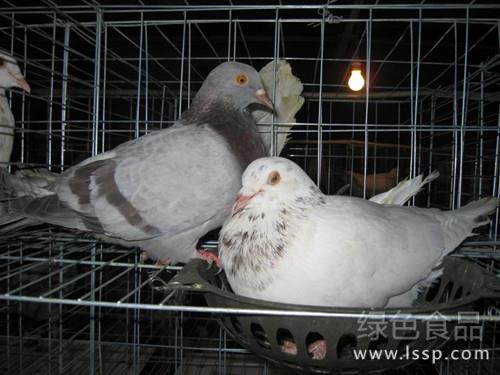
Pollution-free squab farming and management methods make green food more popular with the public
Green food is more popular with the public: pollution-free squab farming and management methods
-
Winter pruning of goji berry is timely now; growers should not miss the farming season
After a year of growth, the goji berry tree has numerous branches and a messy canopy, and while new fruiting branches form, some fruiting branches have already begun to age. Therefore, goji berry must be pruned in winter, otherwise the yield and quality of the following year will be affected. Through pruning, out with the old and in with the new, selecting and retaining the old-eye branches and seven-inch branches with strong fruiting capacity, and cutting off non-productive branches, can lay a good foundation for the old-eye branches to bear fruit and grow new fruiting branches the following year. Top cutting: for ease of management, the tree height needs to be controlled by top cutting. Generally, tree height should
-
Precautions for farming freshwater sharks in northern regions
Freshwater sharks are mainly distributed in Southeast Asia. According to body color, freshwater sharks can be divided into four types: black shark, white shark, gray shark and red shark. The first three body-color types are mostly raised as food fish, with the gray shark growing the fastest; the red shark, also known as the crystal pangasius, is mostly raised as an ornamental fish at the juvenile stage. Freshwater sharks are tropical fish, with a suitable growth temperature of 20-30°C and an optimum water temperature of 22-28°C. Their tolerance to low temperatures is relatively weak. When the water temperature drops below 18°C, the fish's food intake and activity level decrease markedly, and when the water temperature
-
How to prepare feed during snake farming?
(1) Live animals Snakes are primarily carnivorous reptiles, and their feed sources are extensive. Snakes mainly feed by swallowing, and they can swallow small animals several times larger than their own heads. Moreover, snakes' eyes easily detect moving objects, so in principle live small animals should be fed, such as nutrient-rich frogs, rodents, fish, birds, earthworms, rabbits, chickens, lizards, etc. Different species of snakes have different requirements for feed. Generally speaking, the many-banded krait likes to eat eels and loaches; cobras prefer to feed on rodents; and the king cobra specifically eats
-
What are the clever uses of Sichuan pepper in livestock farming? Explained clearly in one article
1. Treating bovine rumen bloat. 500 mL of vegetable oil, 250 g of plant ash, 30 g of seedless Sichuan pepper ground into powder. Heat the oil until boiling, add the plant ash and Sichuan pepper powder, mix well, then add boiling water to dilute, wait until lukewarm and administer orally. 2. Treating rheumatic joint disease in livestock. Grind 50 g of Sichuan pepper and 100 g of table salt together into a fine powder, mix evenly with vinegar, then apply to the affected joint. 3. Treating pig colds. Take an appropriate amount of Sichuan pepper, lightly fry and grind into powder, cut a small slit at the tip of the sick pig's tail, fill the slit with the Sichuan pepper powder, then wrap the outside with cloth and it
条件筛选