-
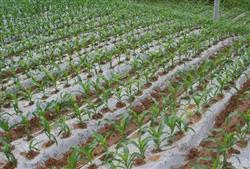
What are the key technical points for sowing and ensuring seedling survival in spring corn?
1. Enrich the seedling bed: Practice seedling raising on a fertile bed. Choose a rapeseed seedling bed or a dry-raised rice seedling pool as the seedling bed for spring corn. Set aside a sufficient seedling bed according to the ratio. For seedling raising with 5 cm pot diameter, the ratio of seedling bed to field area is 1:20; for large-pot seedling raising with a pot diameter above 7 cm, the ratio of seedling bed to field area is 1:10-15. In early...
-
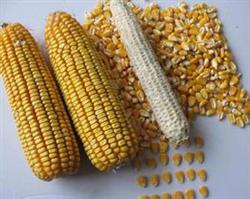
Things to note when choosing seeds for spring-planted corn, these aspects cannot be ignored
How to choose good corn seed is a key issue that affects whether yields can be increased in autumn. When choosing good corn seed, farmer friends should follow these principles: 1. Choose seed according to heat resource conditions. The local heat resources are related to the growth period of the corn variety. Corn varieties with a long growth period have good yield performance and...
-
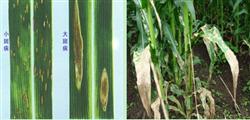
Control Techniques for Northern Corn Leaf Blight and Southern Corn Leaf Blight
Northern corn leaf blight and southern corn leaf blight mainly damage the leaves, and sometimes also infect the leaf sheaths and husks; southern corn leaf blight, in addition to damaging the above parts, can also damage the ear. In many regions these two diseases are collectively called "corn leaf blight." 1. Symptom identification: The typical symptom of northern corn leaf blight is that small lesions rapidly expand into large elongated spindle-shaped spots...
-
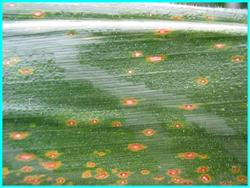
Occurrence Patterns and Control Methods of Curvularia Leaf Spot in Corn
Corn Curvularia leaf spot, also known as yellow spot disease and called yellow leaf disease by farmers, is another important disease of corn in our province in recent years, following large and small spot diseases and rust. After the onset of Curvularia leaf spot, the leaves are covered with lesions, and when they merge, the leaves dry up and die, seriously affecting corn growth and reducing yield. I. Symptoms: ...
-
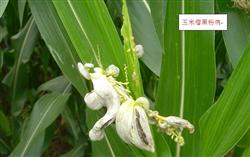
Control of corn smut disease cannot be ignored
The symptoms of this disease can occur on all aboveground parts of the corn throughout the entire growth period, and are especially obvious at the tasseling stage. Tumor-like growths of varying sizes develop on the affected parts. Initially, the tumors are covered with a white membrane, which later turns gray and, after drying and cracking, releases black powdery material, namely the spores of the pathogen. On the leaves, bean-sized tumor-like masses are easily produced, while on the tassel...
-
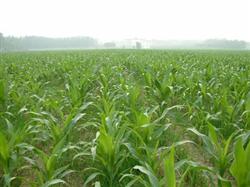
What are the precautions for herbicide use in corn cultivation
1. If the base fertilizer is insufficient, apply a top dressing to supplement the base fertilizer. The advantage of supplementing the base fertilizer with farmyard manure in a top dressing is that it increases the soil's organic matter content and improves the soil's granular structure. However, most farmers often overlook this in corn cultivation and do not pay attention to the application of base fertilizer. If the base fertilizer is insufficient and only a top dressing (mainly chemical fertilizer) is used to supplement it, the soil will only become more and more barren the more it is planted, and the more...
-
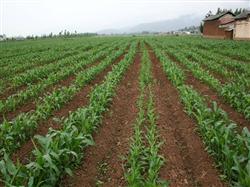
How to cultivate corn? A detailed explanation of the key points of planting techniques
I. Land selection 1. For irrigated corn, choose plots with flat terrain, good structure, good air permeability, and relatively high soil fertility. 2. For film-mulched corn, you may choose dry flat land with medium or higher fertility, land at the foot of hills, level terraced fields, shaded land, mildly saline-alkaline low wetland, high-cold open meadow, and single-water land. Never choose steep slopes...
-
Detailed Guide to Identifying Nutrient Deficiency Symptoms in Corn
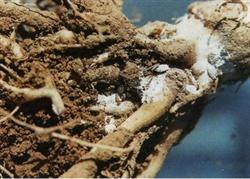
In recent years, the occurrence range of the corn root mealybug has continued to expand, and the severity of outbreaks has increased year by year, posing a serious threat to corn production and making it a major pest constraining corn yields. The corn root mealybug belongs to the order Homoptera, family Pseudococcidae. In Hebei, this insect produces 3 generations per year, with the second generation (mid-June to early-to-mid August) causing damage...
-
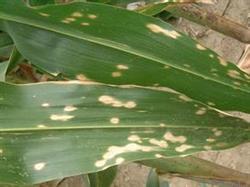
How to prevent and control corn gray leaf spot? A full analysis of the technical key points
Corn gray leaf spot can occur throughout the entire growth period, but the disease is most severe at the tasseling and grain-filling stages. In the early stage of the disease, water-soaked light brown spots appear. These streaks extend parallel to the leaf veins, are often rectangular, and are more obvious when held up to the light. The center of the lesion is gray, and the edge has a brown line. The lesion size is 2-4 x 10-24 (mm), and...
-
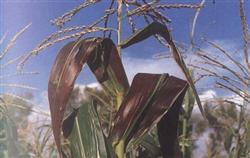
How can corn red leaf disease be controlled effectively?
Symptoms: When improved varieties bred with Huangzaosi encounter low temperatures and rainy, overcast weather during the grain-filling stage, their leaves turn red, which is called red leaf disease. Cause: The occurrence of this disease is related to the fast grain-filling of this variety. When large amounts of synthesized sugars cannot be quickly converted due to metabolic disorders, they become anthocyanins, and the green leaves turn red. Control methods: (1) In areas where it occurs severely, do not...
条件筛选