-
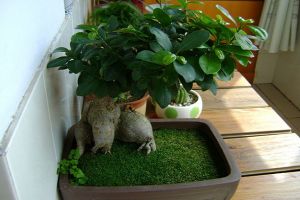
What should I do if the leaves of a ginseng ficus develop black spots and also turn yellow and drop off?
It originally grows in tropical regions, and when grown in our country, its leaves may develop black spots. The most likely cause of this outcome is that it has become diseased, and in that case we need to treat it promptly; the next possibility is that water splashed onto its leaves during watering, and in that case the water should be wiped off promptly.
-
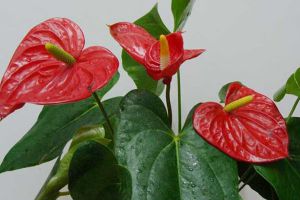
Reasons and solutions for blackening leaves of hydroponic Anthurium
Many gardening enthusiasts like to grow Anthurium in plain water, but some have found that after growing it for a while, the leaves actually turn black. What exactly is going on? How can this blackening problem be solved?
-
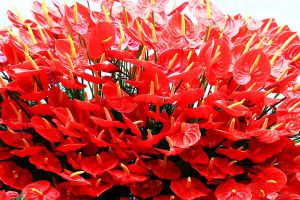
Reasons and solutions for black spots on hydroponic anthurium leaves
It is also known as "Anthurium" and "flamingo flower". Its flowers come in red, pink, white and other colors, and are very charming. However, beautiful flowers also need green leaves to set them off. If black spots appear on the green leaves, it will definitely affect the appearance. So, what should be done when this happens?
-
Sprinkle a spoonful of this on your flowers, and the leaves will turn jet-black and glossy, growing vigorously even without repotting
Spring is the time for repotting again, but quite a few gardening friends are worried, because for various reasons, the plants at home simply cannot be repotted. What should be done? Don't worry, today Huahua will teach you a little trick. Just feed your plants a bit of this, and they will grow vigorously even without repotting. Super simple!
-
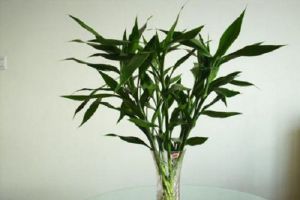
What to Do When Lucky Bamboo's Roots Turn Black? Causes and Solutions
Lucky bamboo (Dracaena sanderiana) is a plant widely loved by everyone, and it is believed that besides flower enthusiasts, some people who are not very familiar with plant cultivation also grow it. This is not only because it carries an auspicious meaning, but also because of its graceful form and extremely high ornamental value. During the process of growing it, if its roots turn black, it will greatly affect our enjoyment of it. What factors cause this?
-
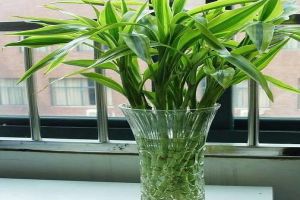
Reasons for Blackened Leaves on Lucky Bamboo and Solutions
This is a very good foliage plant and is also very popular. If we grow one, then what we mainly care about is its leaves, including the shape and color of the leaves, and so on. So, if the color of the leaves turns black, affecting its ornamental value, then it will certainly make us very troubled. So, what is the reason that causes its leaves to turn black? What should we do to prevent and treat this situation?
-
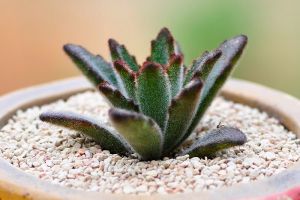
Propagation Methods for Kalanchoe tomentosa 'Black'
Speaking of Kalanchoe tomentosa 'Black', many of you may think of Kalanchoe tomentosa 'Moon Rabbit' - but they are not the same plant, they are actually close siblings. Many of you have asked me before: Can Kalanchoe tomentosa 'Black' be propagated by cuttings? Are there any special requirements for dividing Kalanchoe tomentosa 'Black'? Today I'll answer these questions for you.
-

What are the control measures for black spot disease in orchids?
Orchid black spot disease, also known as round spot disease, occurs in Fujian, Yunnan, Jiangsu, Shanghai, Nanjing and Guangdong. In 1983, a major outbreak of orchid black spot disease occurred in Guangzhou, with the incidence rate in some nurseries reaching 92.8% and the mortality rate 26.8%, causing great economic losses. The control measures are as follows: 1. Strengthen quarantine, paying particular attention to...
-
How to Treat Black Spot Disease in Orchids? Practical Control Methods Shared
Orchids are plants whose "foliage is more worth viewing than the flowers." When an orchid is infected with black spot disease, the best way to cure it completely is to remove the diseased leaves, but this reduces the ornamental and economic value of the orchid (especially rare varieties). The following three methods can effectively cure black spot disease in orchids without removing the diseased leaves. Gentian violet method: when you find an orchid suffering from black...
-
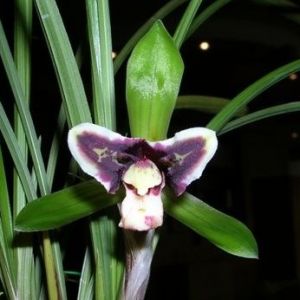
Appreciation of the Variety Characteristics of the Chunlan 'Black Cat' Ruibutterfly
Discovered around 1990 by Lü Jianjun of Zhoushan when he went up the mountain to collect orchids. The leaves are slanted and drooping, with deep leaf grooves, thick and hard leaf texture, dark green and glossy leaf color, coarse serrations on the leaf margins, and an elegant plant form. The flower bud has a pale green base color, fine purple veins, pink-purple clouding, and green coloration at the tip. The flower stalk is slender and round, rising level with the leaf frame. The outer three sepals are bamboo-shaped, the main sepal is slightly angled, and the petals...
条件筛选