What are the key technical points for foliar spraying of micronutrient fertilizers on vegetables?
Micronutrient fertilizers are indispensable nutrient elements in the growth and development of vegetables. Diluting micronutrient fertilizers and applying them as foliar fertilizer costs little, takes effect quickly and gives high returns. The key technical points are: 1. Spraying concentration. Only a suitable concentration can achieve good results; in particular, the concentration must not be too high, otherwise it is not only useless but harmful....
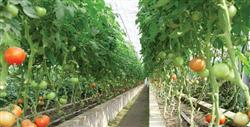
Micronutrient fertilizers are indispensable nutrient elements in the growth and development of vegetables. Diluting micronutrient fertilizers and applying them as foliar fertilizer costs little, takes effect quickly and gives high returns. The key technical points are:
1. Spraying concentration. Only a suitable concentration can achieve good results; in particular, the concentration must not be too high, otherwise it is not only useless but harmful. The suitable concentrations for spraying various micronutrient fertilizers on vegetables are: borax or boric acid 0.05%-0.25%, ammonium molybdate 0.02%-0.05%, zinc sulfate 0.05%-0.2%, manganese sulfate 0.05%-0.1%, ferrous sulfate 0.5%-1%, rare earth nitrate 0.03%-0.1%, rare earth animal and plant treasure 0.1%-0.15%.
2. Spraying period. The spraying period should be determined according to different vegetable varieties and the different uses of trace element fertilizers; generally, spraying from the seedling stage to before flowering is suitable. It is best to choose an overcast day for spraying; on sunny days, it is suitable to spray in the afternoon when the sunlight is not too strong, so as to extend as much as possible the retention time of the fertilizer solution on the vegetable stems and leaves, facilitate absorption by the leaves and improve the spraying effect.
3. Number of sprayings. When micronutrient fertilizers are used as foliar fertilizer, the amount of fertilizer used is small, and spraying once can hardly meet the needs of the entire growth and development stage, so the effect is poor. The number of sprayings should be determined according to the length of the vegetable growth period, generally 2-4 times. It is also necessary to adapt to local conditions and vary according to the vegetable, and pay attention to combining it with seed treatment (seed soaking, seed dressing) or application as base fertilizer.
4. Spraying amount. The spraying amount of micronutrient fertilizer solution should be determined according to the vegetable growth amount. In the early stage, when the seedlings are small and there are few leaves, spray less; in the later stage, when the branches are luxuriant and the leaves are dense, spray more, with the plant stems and leaves being moistened as the limit. Spray finely and evenly so that both the front and back sides of the leaves are covered. Generally, spray 40-50 kg of fertilizer solution per mu.
5. Reasonable mixed spraying. Reasonably mixing micronutrient fertilizers for spraying or mixing them with other fertilizers and pesticides saves labor and effort, and can also play the role of "one spraying, multiple effects." However, when mixing, attention should be paid to the physical and chemical properties of the fertilizers and pesticides; when mixing with pesticides, consideration should be given to ensuring that neither the fertilizer effect nor the pesticide effect is affected. Generally, various micronutrient fertilizers should not be mixed with alkaline fertilizers or alkaline pesticides, and zinc fertilizer should not be mixed with phosphate fertilizer.