-
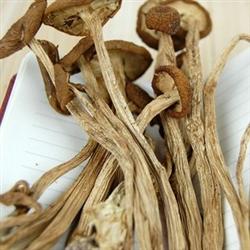
Corn intercropping with tea tree mushroom: planting methods and technical key points
How to intercrop tea tree mushroom with corn? Please refer to the following methods for corn intercropping with tea tree mushroom: 1. Choose a plot with flat land, sheltered from the wind and facing the sun, with convenient water sources, suitable for intercropping in a corn field. 2. Cultivation season. Meet the requirements for tea tree mushroom mycelium growth temperature of 10°C-35°C, optimum temperature 22°C-27°C; fruiting...
-

Detailed Explanation of Liquid Spawn Cultivation Methods for Tea Tree Mushroom
How to cultivate Tea Tree Mushroom with liquid spawn? Please introduce. You can refer to the following methods for cultivating Tea Tree Mushroom with liquid spawn: 1. Seasonal arrangement. The optimum temperature for the mycelial growth of Tea Tree Mushroom is 22-26°C, and 18-25°C is suitable for fruiting body growth. Due to the relatively long cycle of traditional cultivation methods, at most two seasons can be done in a year, namely spring...
-
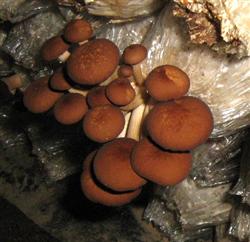
Detailed Explanation of Key Technical Points for Cultivation and Management of Tea Tree Mushroom
How to cultivate and manage Tea Tree Mushroom? Please introduce. Agrocybe aegerita, also known as poplar mushroom, columnar Agrocybe, willow pine mushroom, willow ring fungus, etc., is one of the newly developed edible mushroom varieties in recent years. The fruiting bodies of Agrocybe aegerita are delicious and fragrant, with a crisp and tender texture, and are rich in protein. It is one of the most popular edible mushrooms in Europe and Southeast Asia...
-
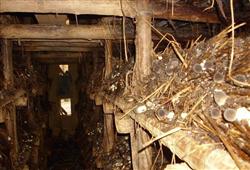
What are the precautions for growing straw mushrooms in summer?
What should be noted when growing straw mushrooms in summer? Please advise: When growing straw mushrooms in summer, note the following points: 1. Prevent insufficient nutrition. In a mushroom bed or straw pile with sufficient nutrition, the mycelium grows vigorously, the fruiting bodies are plump, the mushroom-producing period is long, and both yield and quality are good. Therefore, when cultivating straw mushrooms, choose high-quality, golden-yellow...
-
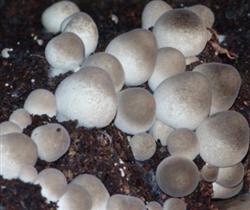
How to Grow Straw Mushrooms for Higher Yields? Practical Methods Explained
What methods can increase the yield of straw mushrooms? Please give guidance. To increase straw mushroom yields, you can refer to the following methods: Secondary inoculation. Adopting a secondary inoculation measure helps increase straw mushroom yields. Straw mushroom mycelium grows too fast and is extremely prone to aging, which weakens its vitality and prevents it from effectively using the nutrients in the substrate...
-
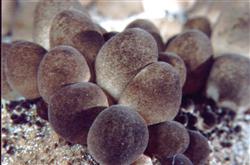
How to prevent straw mushroom death? A detailed guide to practical methods
How to prevent straw mushroom death? Here is an introduction. To prevent straw mushroom death, you can refer to the following methods for prevention and control: 1. Poor ventilation. Straw mushroom is a high-temperature aerobic fungus, and its growth and development require sufficient oxygen. During cultivation, in order to raise the compost temperature, the plastic film is sometimes left in place for too long, causing excessive carbon dioxide in the compost pile and leading to oxygen deficiency. The small mushrooms, due to poor ventilation and poor gas exchange, find it difficult to grow normally and become wilted.
-
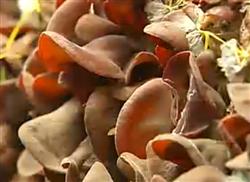
What are the cultivation methods for Auricularia polytricha?
How is Auricularia polytricha cultivated? Please give guidance. Auricularia polytricha is a medium-to-high temperature type fungus with a relatively wide temperature adaptation range; the young fruiting body is cup-shaped, gradually growing into an ear shape, with many ear pieces connected together in a chrysanthemum shape; the diameter is generally 10 cm-20 cm, and after drying it shrinks strongly into a horny texture, hard and brittle...
-
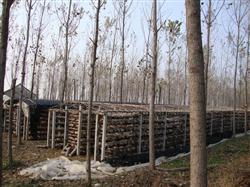
Key Techniques for Summer Cultivation of Black Wood Ear (Auricularia heimuer) in Forest Intercropping
How do you cultivate black wood ear in forest intercropping in summer? Please provide guidance. Under normal conditions, black wood ear grown in forest intercropping should produce 3 flushes. However, at present, after some first-flush wood ears are harvested, the bags become infected with contaminant microorganisms before the second flush even emerges, causing reduced yields or even total crop failure in the second and third flushes, which hurts profits. I. Causes of contaminant microorganism infection during flush transition: (1)...
-
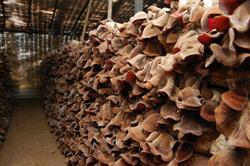
Detailed Explanation of Key Management Techniques for Oversummering Wood Ear Mushroom (Auricularia polytricha)
How to manage oversummering wood ear mushroom (Auricularia polytricha)? Please give an introduction. Oversummering wood ear mushroom (Auricularia polytricha) can be managed by referring to the following methods: 1. Making fungus logs. For soil-covered oversummering cultivation of wood ear mushroom (Auricularia polytricha), the inoculation time for making fungus logs should be postponed by 30-45 days compared with conventional spring cultivation, that is, from late April to early May. At this time, the temperature is 20-30°C, which is just suitable for...
-
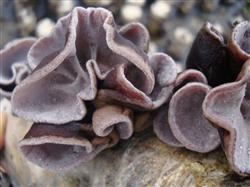
Cultivation Methods and Technical Key Points for Oversummering Auricularia polytricha
How to cultivate oversummering Auricularia polytricha? Please give guidance. For substitute-material cultivation of Auricularia polytricha and Auricularia maxima, there are two types: spring cultivation and autumn cultivation, and in most regions it is spring cultivation. However, in spring cultivation, the early stage generally has low temperatures, making mycelial growth difficult; in the later stage, the fruiting temperature is high, resulting in many malformed fruiting bodies. To solve this problem, soil-covering oversummering cultivation is carried out. Feeding 200...
条件筛选