-
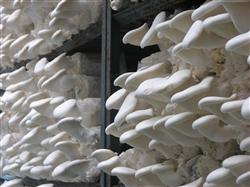
How should white king oyster mushrooms be cultivated to produce high quality?
How do you grow high-quality white king oyster mushrooms? Here are the methods. To grow high-quality white king oyster mushrooms, you can refer to the following methods: white king oyster mushrooms are extremely sensitive to temperature. Their mycelium can tolerate a relatively wide temperature range and can survive at 4-37°C, with 23-28°C being optimal. The fruiting temperature range is 0-25°C. In the early growth stage, the mushroom bud...
-
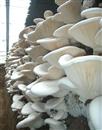
How to achieve pollution-free pest and disease control in white ferula mushroom (Pleurotus nebrodensis) cultivation?
How do you achieve pollution-free pest and disease control when growing white ferula mushroom? Please explain the methods. For pollution-free pest and disease control in white ferula mushroom, you can refer to the following methods: maintain good environmental hygiene at the mushroom yard, disinfect and sterilize before use, promptly wash and disinfect tools, transport discarded material to a place far from the mushroom house, ensure the growing substrate is fresh, free of mold, and thoroughly sterilized, ...
-
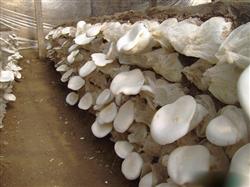
What methods are there for growing white beech mushrooms?
What methods are there for growing white beech mushrooms? Please give an introduction. The following growing methods can be referred to for growing white beech mushrooms: after the mushroom bags of white beech mushrooms are fully colonized with mycelium, they cannot fruit directly like oyster mushrooms; they must go through a mycelial maturation period before they can fruit, and this maturation period often becomes a technical obstacle that many mushroom growers find hard to overcome...
-
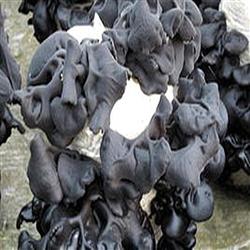
Methods for controlling contaminant fungi and pests in wood ear mushroom cultivation
How do you control contaminant fungi and pests when growing wood ear mushrooms? Please explain the methods. For growing wood ear mushrooms, you can refer to the following methods to control contaminant fungi and pests: 1. Cultivation site: choose a spot facing the sun, sheltered from the wind, with good ventilation and convenient drainage. The site should be cleaned and disinfected regularly; you can spray lime powder, 200x dichlorvos or trichlorfon...
-
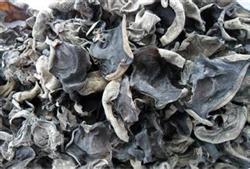
How to prevent and control pests during the storage of wood ear mushrooms?
How do you prevent and control pests in stored wood ear mushrooms? Please explain the methods. The following methods can be used for pest prevention and control when storing wood ear mushrooms: 1. Eliminate pest sources. The pests that damage wood ear mushrooms include the long-horned grain beetle, termites, grain moths, and so on. They often overwinter in warehouse cracks, debris, packaging materials, and other places, so before storing wood ear mushrooms, the indoor...
-
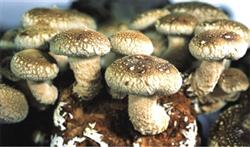
What are the control methods for shiitake mushroom deformity disease?
How do you prevent and control shiitake mushroom deformity disease? Please explain the control methods. During the growth of shiitake fruiting bodies, "candle mushrooms" (stalked with no cap), "pinecone mushrooms" and "lychee mushrooms" (caps clustered together with no stalk or not opening) often appear; these are deformed mutant mushrooms of shiitake and belong to physiological diseases. The control methods include the following...
-
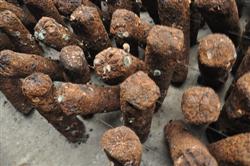
What Is Green Mold Disease in Shiitake Mushrooms? A Complete Guide
What is green mold disease in shiitake mushrooms? An introduction. Green mold is the most common and most damaging competitive contaminant fungus in shiitake mushroom production. If management methods are improper and prevention and control are not timely, it can cause major losses to shiitake mushroom production. 1. Symptoms and conditions of green mold outbreak. In the early stage of green mold outbreak, the mycelium appears as white patches, then...
-
What harm does Aspergillus cause in shiitake mushroom cultivation?
What harm does Aspergillus cause to shiitake mushrooms? Please give an introduction. Aspergillus is widely distributed in soil, air, various grains and their by-products such as wheat bran, rice bran and other organic matter. The suitable temperature for Aspergillus growth is 20 to 35°C, the relative humidity is 65% to 85%, and the pH is neutral or slightly alkaline. Aspergillus is commonly found in shiitake mushroom spawn...
-
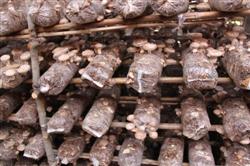
How to prevent mite damage in shiitake mushrooms? These control methods you need to master
How to prevent mite damage in shiitake mushrooms? Please explain. Mites can only be mainly prevented, primarily by keeping the area around the cultivation site clean and sanitary, away from chickens, pigs, warehouses, feed sheds and similar places. The site can be sprayed with 73% propargite emulsifiable concentrate at 3000 times dilution to prevent and kill latent mite sources. During the cultivation process, 9 raw materials must be selected fresh and...
-
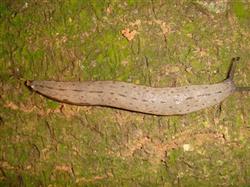
What harm do slugs cause to shiitake mushrooms?
What harm do slugs do to shiitake mushrooms? Please explain: slugs hide by day and feed in groups at night, after rain and on overcast days. They reproduce once a year. Eggs are laid inside the inoculation holes of the mushroom bags, 10 to 20 per cluster. They often live in dark, damp grass, under fallen leaves or beneath soil and stones. The suitable temperature is 15 to 25°C; above 26°C...
条件筛选