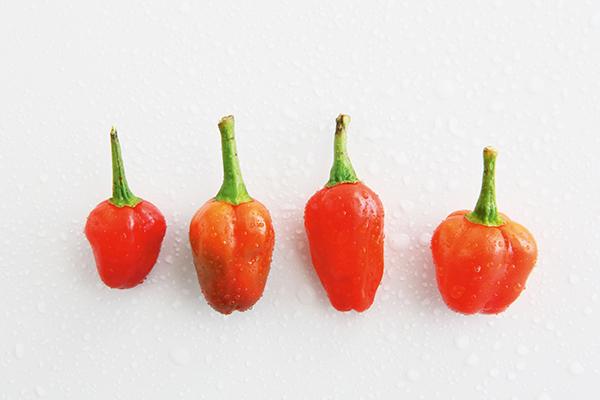
Introduction to ten common chili pepper varieties: the heat levels and characteristics of facing-heaven chili and sweet chili, habanero
Many people love spicy food - adding chili sauce to noodles, sprinkling chopped chili into stir-fries, and chili powder being indispensable when eating pizza... one could say they can't enjoy a meal without spice. Nowadays many people use the potted chili growing method to grow chilies, but there are hundreds of chili varieties - do you recognize
Many people love spicy food - adding chili sauce to noodles, sprinkling chili flakes into stir-fries, and chili powder being indispensable when eating pizza... one could say they can't enjoy a meal without spice. Nowadays many people use potted chili growing methods to grow chilies, but there are hundreds of chili varieties - which ones do you know?There are many chili varieties, and their heat levels also differ.
Facing-heaven chili: Hot Pepper
The red fruit is small in shape, with thin skin and fierce heat. It can be used in dishes or pickled to make a sauce to accompany food. Japanese hell ramen uses this chili to make its soup base.
Falcon claw chili: Cone pepper
Named for its shape, which has a hooked form like a falcon's claw. It has a numbing spicy flavor and can be chopped to make sauce. Many Japanese ramen shops also add falcon claw chili to their soup base.
Dried chili: Dried chilli
Made by drying red chilies. The color is darker, the aroma is strong, and the heat is low. Because the moisture content is extremely low, it is suitable for long-term storage. The famous Sichuan dish Kung Pao chicken uses it.
Green chili: Green chilli
Harvested before the chili has ripened. Depending on the variety, the heat level varies, and it is not completely non-spicy. Peeled chili is made by processing this.
Sweet chili: Sweet chilli
Its shape is uneven and bumpy, with little heat, yet it has a special pungent aroma. It can be stir-fried with shredded meat, dried tofu and other ingredients like green bell pepper, or stir-fried on its own, or made into roasted vegetables.
Mexican chili: Jalapeno
Native to Peru and Mexico. It starts out green, then turns from green to red later, with sweetness gradually increasing and heat decreasing. It is widely used in Latin American cuisine and can be made into the famous Mexican stuffed jalapenos or used with pizza.
Habanero: Habanero
It has astonishing heat yet also possesses a unique fruity fragrance. It is generally used dried or processed into chili powder, chili oil, chili sauce, or chili extract.
Cayenne pepper: Cayenne
There are about 90 varieties known worldwide as cayenne pepper. Because in the 16th century chilies about 5-6 cm in size were spread around the world and were called Cayenne at that time, it is not a single variety but a general term for red chilies. At present, cayenne pepper in Taiwan, China is most often used in cooking in the form of chili powder. It is quite heat-tolerant, and even long cooking will not affect its flavor.
Paprika: paprika
Paprika has two types, Spanish paprika and Hungarian paprika, both mildly spicy and sweet. Spanish paprika has a lighter flavor, and some is smoked and dried, carrying a smoky taste; Hungarian paprika has a rich flavor and is mainly sun-dried, without a smoky taste. It can be used to marinate meat or sprinkled on vegetables before going into the oven. It is a very useful and common spice that can both add color and season.
Kashmiri red chili powder: Kashmari red chilli power
A chili powder commonly used in Indian cooking. It is not spicy; its main purpose is to help with coloring, and it also helps draw out the moisture from chicken during marinating. When making tandoori chicken, it is very suitable to use this chili powder to help with coloring.