Urea: Characteristics and Scientific Application Methods Explained
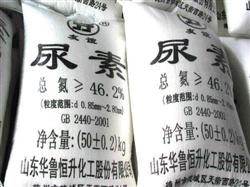
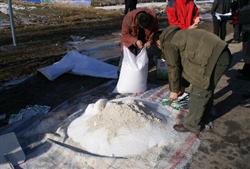
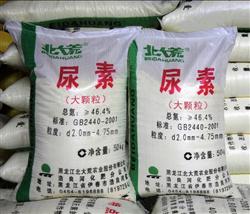
Urea is one of the most widely used nitrogen fertilizers in agricultural production. It usually appears as white crystals or granules and dissolves easily in water. Its nitrogen content is on the high side among common nitrogen fertilizers, generally reaching about 46 percent. With its high nutrient concentration and strong fertilizing effect, it has always been used in large quantities.
Urea is a neutral fertilizer with a wide range of applications. It can be used both as a base fertilizer and as a top dressing, and it suits many types of soil and crops. After urea is applied to the soil, it must be converted into ammonium nitrogen under the action of urease before roots can absorb it in large amounts. This conversion process is clearly affected by temperature; when the temperature is low, conversion is slow, and the fertilizer effect is delayed accordingly. This also explains why urea takes effect rather slowly in winter and early spring, while ammonium bicarbonate often performs better.
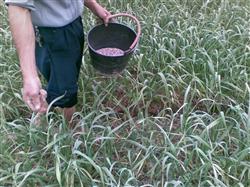
When applying urea, deep placement with soil covering is recommended, and surface broadcasting should be minimized as much as possible to avoid nitrogen volatilization and loss. When used as a top dressing, it can be applied in split doses together with watering to improve fertilizer use efficiency. Urea is highly water-soluble and can also be diluted with water and sprayed as a foliar fertilizer to quickly supplement nitrogen, but the concentration should be carefully controlled, and spraying should be avoided during periods of high temperature and strong light to prevent leaf burn.
In addition, urea should not be mixed directly with alkaline fertilizers, and during storage it should be protected from moisture and caking. It differs from nitrogen-containing fertilizers such as urea ammonium in composition and fertilizing characteristics. In practice, the choice should be made by comprehensively considering soil conditions, crop needs and seasonal climate, so as to achieve scientific fertilization and fertilization on demand.
Related Reading