Is large-granule urea good or not? Read this analysis of its pros and cons and you will know.
Is large-granule urea good or not? What are its characteristics? I hope friends who know about it can help explain. In the current agricultural input market, there is a distinction between large-granule urea and small-granule urea. The particle size of small-granule urea is about 1.5 mm, while large-granule urea is generally 2.00-4.75 mm. Zhongdiwang has compiled the characteristics of large-granule urea,...
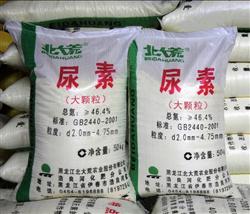 Is large-granule urea good or not? What are its characteristics? I hope friends who know about it can help explain
In the current agricultural input market, there is a distinction between large-granule urea and small-granule urea. The particle size of small-granule urea is about 1.5 mm, while large-granule urea is generally 2.00-4.75 mm. Zhongdiwang has compiled the characteristics of large-granule urea, listed below for netizens' reference.
Characteristics of large-granule urea:
Characteristic 1:Low dust content, relatively high compressive strength, good flowability, can be transported in bulk, not easily broken or caked, suitable for mechanized fertilization.
Characteristic 2:After large-granule urea is applied to the soil, its dissolution rate is slightly slower. In addition, because the weight of a single granule is relatively large, when applied in paddy fields it can sink deeper into the soil, reducing volatilization loss.
Characteristic 3:Because the processing technology has different requirements for urine concentration, the biuret content in general large-granule urea products is reduced, which is beneficial to crops.
Characteristic 4:Because large-granule urea has a larger particle size, compared with small-granule urea, its specific surface area is smaller. In soil, its dissolution rate is slower and its fertilizer efficiency is relatively high, but this also makes its time to take effect longer than small urea granules. However, because large-granule urea granules themselves are heavier, they can penetrate deeper into the lower soil in paddy fields, reducing volatilization loss and making the fertilizer effect more lasting and effective.
Precautions:Large-granule urea cannot be mixed with highly hygroscopic chemical fertilizers such as ammonium nitrate, sodium nitrate, and ammonium bicarbonate.
Click to get more nitrogen, phosphorus, and potassium application techniques
Click to get more chemical fertilizer application techniques