What exactly is the difference between urea ammonium and urea?
What are the differences between urea ammonium and urea? Is urea ammonium more effective than urea? We'd also like experienced netizens to help explain. Nitrogen-containing fertilizers such as urea ammonium, urea, ammonium sulfate, ammonium bicarbonate, ammonium chloride and ammonium nitrate are all nitrogen fertilizers, but the utilization rate of nitrogen fertilizers varies greatly, so the effects after use differ. 1...
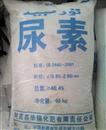 What are the differences between urea ammonium and urea? Is urea ammonium more effective than urea? We'd also like experienced netizens to help explain.
Nitrogen-containing fertilizers such as urea ammonium, urea, ammonium sulfate, ammonium bicarbonate, ammonium chloride and ammonium nitrate are all nitrogen fertilizers, but the utilization rate of nitrogen fertilizers varies greatly, so the effects after use differ.
1. Urea is an amide nitrogen fertilizer. After being applied to the soil it must be converted into ammoniacal nitrogen before crops can absorb it, so its fertilizer effect is somewhat slow. Urea ammonium, by contrast, is an ammoniacal nitrogen fertilizer. After being applied to the soil it does not need to be decomposed and converted again, and crops can absorb it directly, so its fertilizer effect is very fast.
2. Urea has a by-component: biuret. Biuret is a harmful substance. Excessive or long-term application of urea often causes soil salinization and poor air permeability, easily harms crop roots and affects crop growth, so urea should not be used too much or over the long term. Urea ammonium does not contain the component biuret. It is non-toxic and harmless and is truly an environmentally friendly high-efficiency nitrogen fertilizer. After being applied to the soil it neither destroys soil structure nor harms roots, greatly increasing crop yield by 20-30%.
3. The nitrogen element in urea is lost quickly and volatilizes quickly, so its utilization rate is low, reaching only 20-30%. Urea ammonium, however, is produced through high-tower melt granulation fertilizer reaction and is also supplemented with medium elements such as sulfur, magnesium, calcium and boron as well as slow and controlled release agents. Its loss is small and it does not volatilize easily, so it has both fast-acting and long-lasting effects, greatly improving the utilization rate of the fertilizer, with a utilization rate of more than 85%. (Therefore, urea ammonium can match the fertilizer effect of 120 jin of urea.)