Why is ammonium bicarbonate more effective as a fertilizer than urea in winter and spring?
Why is urea less effective as a fertilizer in winter and spring? Why should ammonium bicarbonate be used instead of urea in winter and spring? We invite knowledgeable readers to share their insights. Urea is a high-concentration nitrogen fertilizer, a neutral quick-acting fertilizer, and can also be used to produce various compound fertilizers. Urea is the most common and the most abundant nitrogen fertilizer variety, which...
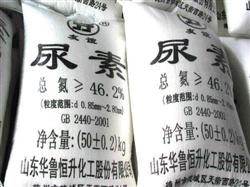 Why is urea less effective as a fertilizer in winter and spring? Why should ammonium bicarbonate be used instead of urea in winter and spring? We invite knowledgeable readers to share their insights.
Urea is a high-concentration nitrogen fertilizer, a neutral quick-acting fertilizer, and can also be used to produce various compound fertilizers. Urea is the most common and the most abundant nitrogen fertilizer variety, which leads to urea often being applied as a base fertilizer or top dressing even in winter or early spring when temperatures are low. In fact, applying urea regardless of season is not a scientific practice. Although ammonium bicarbonate volatilizes and is lost easily under high-temperature conditions, applying ammonium bicarbonate under low-temperature conditions in winter and spring is better than applying urea.
The reason is that ammonium bicarbonate has a faster fertilizer effect than urea. This is because after urea is applied to the soil, it cannot be directly absorbed by crops; it must be converted from amide nitrogen to ammonium nitrogen before it can be utilized, and its conversion rate is proportional to temperature, converting very slowly under low-temperature conditions. According to experiments, at 10°C, urea requires 10 days to convert, while ammonium bicarbonate can decompose even below 5°C. Therefore, after applying ammonium bicarbonate under low-temperature conditions, it can still be absorbed and utilized by crops relatively quickly.
At the same time, urea loses more nutrients than ammonium bicarbonate. When the temperature is below 20°C, ammonium bicarbonate volatilizes very little; after being applied to the soil, it immediately decomposes into ammonium ions and carbonate ions, which are firmly adsorbed by soil colloids and then slowly released for crops to absorb and utilize. Its adsorption capacity is about 8 times that of urea, and under low-temperature conditions its volatilization loss is only one-third that of urea. Nutrient loss is minimal. On the contrary, after urea is applied to low-temperature soil, because it is difficult to convert and exists in molecular form dissolved in the soil solution, it cannot be adsorbed by soil colloids and is easily leached by irrigation water or rainwater, causing loss of nitrogen nutrients. Some people have conducted experiments showing that topdressing wheat fields with ammonium bicarbonate in winter can improve its effect by 1 to 1.5 times compared with application in high-temperature seasons.
At this point, this gardening website suggests that readers apply ammonium bicarbonate to crops in winter and spring, and save urea for application in high-temperature seasons.
When ammonium bicarbonate is applied under low-temperature conditions, whether as a base fertilizer or as a top dressing, deep application of 10 cm is best, resulting in high fertilizer utilization and significant yield increase.