What precautions should be taken when applying urea? A detailed guide to the correct fertilization method
What should be noted when applying urea? Are there any netizens who know about this and can help explain it? Urea is an indispensable fertilizer in agricultural production, but improper operation during urea application can cause the opposite effect. Therefore, Zhongdi Network has compiled the unsuitable methods of urea application, listed in detail below for netizens' reference....
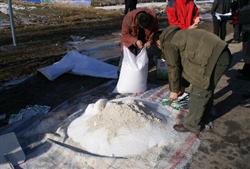 What should be noted when applying urea? Are there any netizens who know about this and can help explain it?
Urea is an indispensable fertilizer in agricultural production, but improper operation during urea application can cause the opposite effect. Therefore, Zhongdi Network has compiled the unsuitable methods of urea application, listed in detail below for netizens' reference.
Note 1: Urea must not be mixed with alkaline fertilizersor applied at the same time, because after application, urea must be converted into ammoniacal nitrogen before it produces a fertilizing effect, and under alkaline conditions, most of the ammoniacal nitrogen will turn into ammonia gas and volatilize away. Therefore, urea must not be mixed or applied at the same time with alkaline fertilizers such as lime, plant ash, and calcium magnesium phosphate fertilizer. Generally speaking, in summer and autumn, urea and alkaline fertilizers should be applied 3-4 days apart, and in winter and spring they should be applied 7-8 days apart.
Note 2: Urea is not suitable as a seed-dressing fertilizer, because during the production process, urea often produces a small amount of biuret. When the biuret content exceeds 2%, it will poison seeds and seedlings. When such urea enters seeds and seedlings, it will denature proteins, affecting seed germination and seedling growth, so it is not suitable as a seed fertilizer. If it must be applied as a seed fertilizer, contact between seeds and fertilizer should be avoided, and the dosage should be controlled.
Note 3: Do not water immediately after applying urea, because urea is an amide-form nitrogen fertilizer. It must be converted into ammoniacal nitrogen before it can be absorbed and used by crop roots. The conversion process varies in duration depending on soil quality, moisture, temperature, and other conditions, and generally takes 2-10 days to complete. If irrigation or drainage is done immediately after application, or if it is applied in dry land before heavy rain, the urea will dissolve in water and be lost. Generally, in summer and autumn, irrigation should be done 2-3 days after application, and in winter and spring, irrigation should be done 7-8 days after application.
Note 4: Urea is not suitable for surface broadcasting, because when urea is broadcast on the surface, it takes 4-5 days of conversion at room temperature before it can be used, and most of the nitrogen is likely to volatilize during ammonification. The actual utilization rate is generally only about 30%. If it is broadcast on alkaline soil and soil with high organic matter content, nitrogen loss will be faster and greater. Moreover, shallow application of urea makes it easy for weeds to consume. Deep application of urea integrates the fertilizer into the soil, keeping the fertilizer in a moist soil layer, which is conducive to exerting its fertilizing effect. As a topdressing, it should be applied in holes beside the seedlings or in furrows at the side of the seedlings, with a depth of about 10-15 cm. In this way, urea is concentrated in the dense root layer, making it easier for crops to absorb and use. Experiments have shown that deep application can increase the utilization rate of urea by 10%-30% compared with shallow application.
Note 5: Urea should not be applied in excessive amounts, because urea has a high nitrogen content, the application amount should not be too large, so as to avoid unnecessary waste and "fertilizer burn." Generally, 5-15 kg per mu is applied, and 15-20 kg per mu for paddy fields. If too much is applied, it cannot be absorbed by the soil before being converted into ammonium bicarbonate, and it is easily leached away by rainwater and can easily harm crops. At the same time, if too much urea is applied, most of it will be lost and enter groundwater, which will lead to nitrogen pollution of water bodies, cause the deposition of nitrites, and seriously affect the safety of humans and livestock.
Note 6: When spraying urea on leaves, the concentration should not be too high, because among all nitrogen fertilizers, urea is the most ideal foliar fertilizer. When urea is sprayed, the amount and speed of protein synthesis by crops exceed those of other nitrogen fertilizers. However, when spraying on leaves, the concentration of the urea solution must not be too high, otherwise it will burn the leaves and also poison the plants. Usually, for corn, rice, and similar crops, the suitable spraying concentration is 2%; for vegetables and melons, 0.5%-1.5% is suitable.
Note 7: Urea is not suitable for single application, because the effective component of urea is nitrogen, and its nutrients are single, while crop growth and development require multiple nutrients. Therefore, urea should be applied in combination with organic fertilizers and phosphorus, potassium fertilizers, etc., to meet the needs of crops for various nutrients. Moreover, reasonable mixed application of urea with organic fertilizers and chemical fertilizers can also effectively improve its utilization rate.
For example, mixing urea with superphosphate can transform unstable ammonium bicarbonate into stable ammonium phosphate, thereby greatly reducing natural nitrogen volatilization. Mixing urea with organic fertilizers produces organic acids during fermentation, which can also accelerate the conversion and decomposition of urea, allowing it to be quickly absorbed by crops and improving the utilization rate of urea.
Note 8: Urea is not suitable for application to celery,because celery requires a large amount of nitrogen fertilizer as topdressing throughout its entire growth period, but urea must not be applied. This is because topdressing with urea will increase celery fiber, making it thicker, cause plant aging, slow growth, and give it a bitter taste when eaten, resulting in poor quality. Celery is suitable for ammonium bicarbonate, ammonia water, and decomposed organic fertilizers, which help improve quality.
Is large-granule urea good?
The roles of nitrogen fertilizer, phosphorus fertilizer, and potassium fertilizer