Slow-release urea fertilizer has a steady and long-lasting effect, and mastering the application method is important
Slow-release urea is a slow-release nitrogen fertilizer made by modifying ordinary urea, usually through coating, adding inhibitors, or chemical modification to slow down the release rate of nitrogen nutrients so that the fertilizer effect matches the crop's absorption rhythm more closely. Its appearance is similar to ordinary urea, but the nutrient release is steadier and the fertilizer effect lasts longer.
Compared with ordinary urea, slow-release urea does not release nitrogen in a concentrated burst over a short time after being applied to the soil; instead, it transforms slowly according to conditions such as temperature and moisture, which can reduce nitrogen volatilization and leaching losses and improve nitrogen use efficiency. At the same time, applying a slightly larger amount at one time is less likely to cause problems such as seedling burn or excessive vegetative growth, making it suitable for crops with a longer growth period and for management methods that apply all the base fertilizer at once.
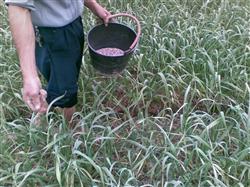
In production, slow-release urea is mostly used as a base fertilizer and can be applied all at once in combination with land preparation, reducing the number of topdressings in the middle and late stages and saving labor. It is widely used on field crops such as corn, rice, and wheat, as well as on long-term crops such as fruit trees. If used as a topdressing, it should be applied early and deep so that the nutrient release peak coincides with the crop's peak nutrient demand.
When applying it, the amount should be determined according to soil fertility and the crop's fertilizer requirements, and inputs should not be increased blindly; coated products are generally not sprayed directly as foliar fertilizer. In sandy soil or when growing crops with a short growth period, the characteristic of relatively slow nutrient release should be taken into account, and a small amount of quick-acting nitrogen fertilizer should be used together when necessary to ensure sufficient nutrient supply during the seedling stage.
Related Reading