-

Complete Guide to Longhorn Beetle Control Methods: Teach You How to Effectively Eliminate Longhorn Beetles
Longhorn beetles can be controlled using four methods: utilizing natural enemies, physical control, chemical control, and forestry control. Among these, physical control and chemical control are the more common methods in daily life. Physical control mainly uses methods such as manual capture, garden cleanup, and water immersion, generally carried out after rain
-
How to use a variety of feeds in wild boar farming?
Wild boars are especially fond of green succulent feed, which can account for more than 50% of the daily ration; combined with a small amount of concentrated feed, this is enough to raise robust wild boars. ① Green feed: commonly used ones include alfalfa, purple celery root, amaranth, sweet potato vine and leaves, green-cut corn, green-cut barley, etc. Green feed
-
Key Technical Points and Methods for Snail (Field Snail) Farming Explained
Farmers can achieve considerable economic benefits by using small water surfaces or rice paddies to farm field snails. The field snail farming techniques are introduced as follows: 1. Selection of field snail farming site. The field snail farming site should be chosen in a place with abundant water, good water quality, humus soil and convenient transportation.
-
Intensive Cage Culture Techniques for Largemouth Bass
Using cages for intensive culture of largemouth bass can also achieve excellent economic benefits. Cages can be set up in reservoirs, lakes, rivers, or ponds. 1. Cage preparation and placement. The cage is a Lishi-type double-layer covered cage, with specifications of 4 m x 4 m x 2 m, and mesh size of 2.5 cm.
-
Peanuts grown under plastic film mulch see doubled returns
After peanuts are covered with plastic film, soil temperature can be raised and sowing improved; using solar radiation energy can increase effective accumulated temperature by 200-300, with effects of drought resistance, disease prevention and weed suppression, maturing 10-15 days earlier than open-field peanuts, increasing yield by 20%-50%, and achieving returns of over a thousand yuan per mu. Film-mulched peanut cultivation
-
Practical experience sharing on growing plums in greenhouses
In order to explore the early fruiting and early high-yield techniques of cultivating plums in greenhouses, our station conducted experimental research from 1997 to 2000. The greenhouse was covered in the winter of the second year after planting, and in 2000 a 4-fen plot greenhouse produced 1000 kg of plums. The output value was more than 10,000 yuan, and the maturity period was about 60 days earlier than open-field cultivation. Through the experiment
-
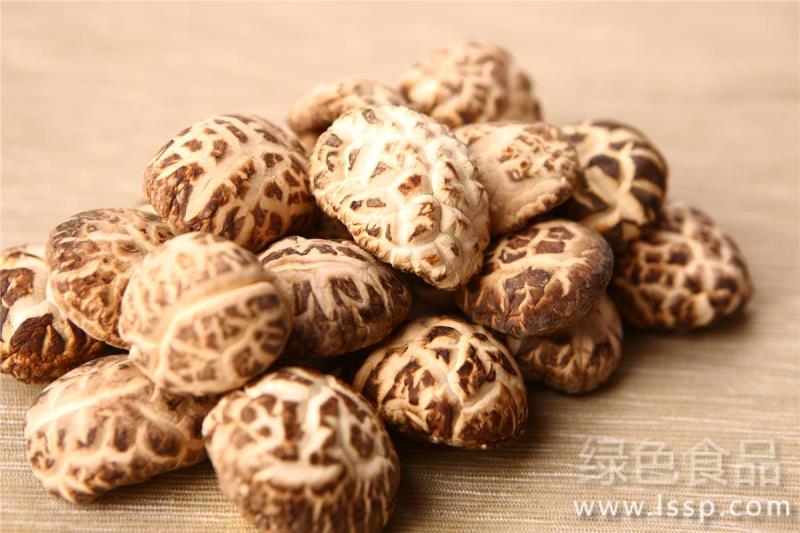
How to artificially create and rationally utilize the cultivation conditions for flower shiitake
Artificial creation and rational utilization - the cultivation conditions for flower shiitake
-
How can the new functional components of soybeans be developed and utilized?
China is the homeland of soybeans, and over the long course of history, "soybeans have nurtured the Chinese nation." Modern science has discovered that the functional components of soybeans that nurtured the Chinese nation are mainly found in soybean meal. High-temperature soybean meal is the highest-yield product of the soybean oil processing industry. Whether the effective components in high-temperature soybean meal can be extracted is key to revitalizing China's soybean oil processing industry. The National Soybean Deep Processing Technology Research and Promotion Center invented a process using high-temperature soybean meal as raw material to continuously extract high-purity soybean oligopeptides, soybean isoflavones,
-
How Are Russian Olive Foods Developed and Utilized? A Full Explanation of Pathways and Value
Russian olive (Elaeagnus angustifolia L.), also known as Guixiang willow, silver willow, or Qilixiang, belongs to the Elaeagnaceae family, genus Elaeagnus. It is an evergreen shrub. Russian olive is light-demanding, cold-tolerant, highly resistant to wind-blown sand and saline-alkali conditions, grows fast, has wide uses, and holds high economic value. Russian olive is distributed in Shaanxi, Gansu, Inner Mongolia, Ningxia, **, Qinghai and other places; in ** it is found in the Taklamakan Desert and along the banks of various rivers, and it is also distributed in Yili, Toksun and other places in northern **. Russian olive is a "treasure tree" of desert saline-alkali land; its edible value and medicinal value are both very high, and it has great potential for development into green foods.
-
How to efficiently utilize the second crop of Oriental lily flowers
Oriental lily bulbs are generally grown for only one crop abroad, then dug up and discarded. Based on China's national conditions, Chinese lily growers have developed a reuse technique for Oriental lily bulbs, which is now applied in many places. However, because the second-crop flowers produced by reusing Oriental lily bulbs are mostly harvested and marketed from June to August, when the selling price of lily cut flowers is relatively low, the economic benefit is limited. In the past two years, the Gansu Provincial Flower Engineering Technology Research Center, in cooperation with Gansu Lintao County Meilan Flower Company and the Lintao County Seed Farm, has explored a
条件筛选