-
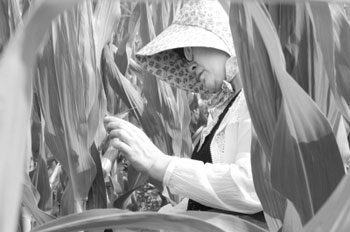
Automated pest and disease monitoring and forecasting enables full-process tracking, with forecasts that are both accurate and fast
Full-process tracking: automated pest and disease monitoring and forecasting is accurate and fast
-

Where do safe vegetables come from? Full-process supervision secures every checkpoint
Strengthen full-process supervision to build safe vegetables with all efforts
-
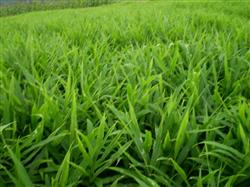
Full-process fertilization technical guide for ginger cultivation
Ginger is an indispensable vegetable variety in daily life. Since this year, supply has been tight, prices have been relatively high, and returns have been good. 1. Plot selection. Ginger should not be grown continuously; it should be rotated with rice, cruciferous vegetables, and leguminous plants. Ginger has a long growth period and is not tolerant of strong light. In the early stage, it can be intercropped with spring-sown crops or vegetables, and in the later stage...
-
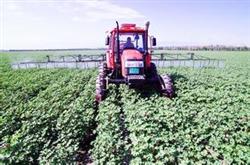
Detailed Explanation of the Key Points of Full-Process Chemical Regulation Technology for Cotton
Cotton has an indeterminate growth habit, and its vegetative growth and reproductive growth proceed simultaneously and overlap. If fertilizer and water management is improper in production or climatic conditions change, cotton plants are highly prone to excessive vegetative growth or delayed maturity with excessive green growth, which is very unfavorable for achieving high and stable cotton yields. This problem is generally solved through chemical regulation. At present, the...
-

How to make a pine bonsai? A detailed full-process guide to get you started easily
The process of making a pine bonsai
-
Ministry of Agriculture Promotes Full Mechanization of Major Crop Production
In August this year, the Ministry of Agriculture issued the "Opinions on Carrying Out the Action to Promote Full Mechanization of Major Crop Production," deploying across the country an action to promote full mechanization of major crop production. The "Opinions" proposed striving to achieve a national comprehensive mechanization level of over 68% for crop cultivation and harvesting by 2020, among which the comprehensive mechanization level for cultivation and harvesting of the three major grain crops should all reach over 80%, and the levels of mechanized plant protection, mechanized straw handling and mechanized drying should be substantially raised. With the main production areas of grain, cotton, oil and sugar as key regions, about 500 demonstration counties should be built that take the lead in basically achieving full mechanization of production.
-
Agricultural machinery cooperatives pass through three gates, providing full "nanny-style" service
Socialized agricultural machinery services are the mainstream in promoting agricultural mechanization, and agricultural machinery cooperatives are the leading force in delivering socialized agricultural machinery services. Today, new types of agricultural business entities such as large grain growers, family farm owners and farmers' professional cooperatives are constantly emerging, and in the course of developing agricultural mechanization services, agricultural machinery cooperatives are merging and interpenetrating with these new types of agricultural business entities, presenting 3 different development models and showing the characteristics of staged, progressive development: first, purely engaging in full-process "nanny-style" service, which is called the "first gate"; second, while engaging in agricultural mechanization services, leasing land to develop crop farming, livestock farming and deep processing of <span id="stock_sz000061"><span class="keyword">agricultural products</span></span>, which is called the "second gate"; third, using land as equity to seek a breakthrough in the mode of operation, which is called the "third gate".
-
Full mechanization of cotton could save 70% of labor costs in the future
In recent years, the Cotton Research Institute of the Chinese Academy of Agricultural Sciences, together with the Nanjing Institute of Agricultural Mechanization, has intensified research and development of full mechanization in the cotton regions of the Yellow River Basin and the Yangtze River Basin, achieving the integration of agronomy and agricultural machinery. The whole process has basically achieved mechanization, which can save about 70% of the labor cost of cotton planting
-
Seedling factories don't just grow seedlings; they also provide full-process planting and harvesting and soil-testing formula services
What does a seedling factory do? Grow seedlings? At the seedling factory of the Shanghe Farmers' Cooperative in Lintang Village, Chiba Town, Jianli County, Hubei Province, what Chairman Ouyang Bin talks about most is not seedling raising. Last year, when reporters came here for an interview, Ouyang Bin enumerated one by one the benefits the seedling factory brought to farmers.
-
How can food security be guaranteed? Full-process supervision from field to table
Problems such as irrational farming, excessive planting, excessive use of pesticides and chemical fertilizers, and neglect of the application of organic fertilizers are fed back through links such as grain production, processing, and livestock and poultry breeding to final consumers as the continuously increasing personal health risks brought by residual pollution from pesticides, chemical fertilizers, and the like.
条件筛选