Detailed Explanation of the Key Points of Full-Process Chemical Regulation Technology for Cotton
Cotton has an indeterminate growth habit, and its vegetative growth and reproductive growth proceed simultaneously and overlap. If fertilizer and water management is improper in production or climatic conditions change, cotton plants are highly prone to excessive vegetative growth or delayed maturity with excessive green growth, which is very unfavorable for achieving high and stable cotton yields. This problem is generally solved through chemical regulation. At present, the...
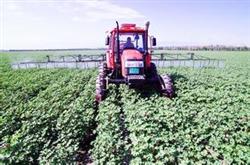
Cotton has an indeterminate growth habit, and its vegetative growth and reproductive growth proceed simultaneously and overlap. If fertilizer and water management is improper in production or climatic conditions change, cotton plants are highly prone to excessive vegetative growth or delayed maturity with excessive green growth, which is very unfavorable for achieving high and stable cotton yields. This problem is generally solved through chemical regulation. At present, applying important plant cultivation techniques to carry out chemical regulation of cotton has become one of the important techniques for high-yield cotton cultivation, and the application of growth regulators has changed from the original passive, small-number-of-application symptomatic spraying to active, multiple-application inductive spraying, implementing full-process chemical regulation. In production, the following periods should mainly be grasped well.
1. Seed soaking at sowing time. For delinted cottonseed, a (100-200) x 10-6 (that is, 1 gram of original powder added to 10 kg or 5 kg of water) mepiquat chloride solution can be used. For non-delinted cottonseed, a (200-300) x 10-6 mepiquat chloride solution can be used for soaking seeds, generally soaking for 5-8 hours, then removing and accelerating germination before sowing. If mechanical sowing is required, after the seeds are removed they need to be slightly air-dried, and sown after they are slightly dry. Cotton seedlings treated by seed soaking generally grow steadily and have well-developed root systems.
2. Foliar spraying at the bud stage. After cotton buds appear, use 0.5-1 gram of mepiquat chloride original powder per 667 sq m, mixed with 10-15 kg of water for spraying. This can promote rooting and strengthen seedlings and coordinate the supply of water and fertilizer.
3. Foliar spraying at the early flowering stage. After flowers are seen in the cotton field, use 1-2 grams of mepiquat chloride original powder per 667 sq m, mixed with 15-20 kg of water for spraying. This can shape the plant type, optimize the canopy structure, delay row closure, promote early boll setting and cotton boll development, and can simplify mid-season pruning.
4. Foliar spraying at the full flowering stage. After bolls have formed on the middle and lower parts of the cotton plant (usually at the end of July), use 2-4 grams of mepiquat chloride original powder per 667 sq m, mixed with 20-30 kg of water for spraying. Spraying at this time can promote the setting of more early autumn bolls, increase boll weight, and at the same time prevent delayed maturity with excessive green growth.