-

-
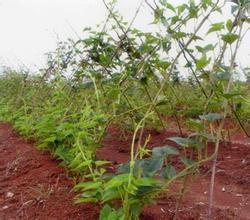
How to grow yam for high yields? New methods help you increase production
1. Shallow topdressing and skillful watering: When fertilizing, apply into the shallow soil layer so the yam roots can absorb it. Shallow topdressing or less topdressing can both ensure high yam yields. Yam fears waterlogging but should not be too dry either; if too dry, it will seriously affect the swelling of the yam. Spray New High Lipid Film to reasonably match water and fertilizer distribution. 2. Build sturdy trellises: After seedlings emerge, set up trellises in time...
-
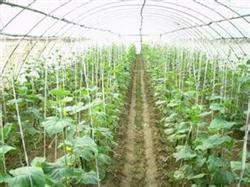
Spring cucumber planting is all about management: master the key technical points to boost yields
Cucumber is one of people's favorite vegetables. It contains various sugars, free amino acids, vitamins, cucurbitacin, and calcium, phosphorus, iron, and more. Among these, cucurbitacin has anti-tumor effects. Cucumber also has the effects of clearing heat and promoting diuresis, detoxifying, and relieving sore throat and heat-related abdominal pain. Cucumbers are generally planted at 3500 plants per mu, with a yield of 5000-8000 kg per mu...
-

Techniques for Achieving High-Quality, High and Stable Yields in Rapeseed through Heavy Application of Boron Fertilizer
Rapeseed is a boron-demanding crop, and especially high-yield, high-quality cabbage-type "double-low" hybrid rapeseed is particularly sensitive to boron deficiency. Boron deficiency at the seedling stage causes slow rooting, dark green and wrinkled leaves, and stunted growth; boron deficiency at the bud-bolting stage causes swelling of the root crown, leaves turning purple to blue-purple, and abnormal flower bud development; boron deficiency at the flowering stage causes plant dwarfing and abnormal pollen...
-
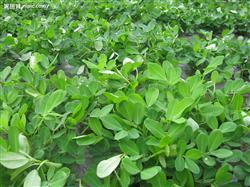
For high peanut yields, manage these four key points well in the late stage
The late growth stage of peanuts runs from when 50% of the plants show filled pods to when most pods mature and are harvested. The growth characteristics of this period are: vegetative growth gradually declines and stops, the pods gradually fill out and become plump, and the increase in pod weight generally accounts for 500%-70% of the total pod weight, making it the main period for pod yield formation. Field management technical measures for this period...
-
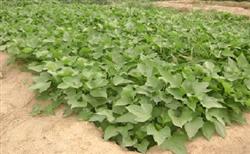
How to manage sweet potatoes for high yields? A detailed explanation of key cultivation techniques
High-yield cultivation and management techniques for sweet potatoes: 1. Apply sufficient base fertilizer and prepare the land properly. 1. Fertilization: Because sweet potatoes are generally planted on sandy, thin soil, sufficient base fertilizer must be applied to improve soil fertility and achieve high yields. Generally, about 5 cubic meters of farmyard manure per mu, 25 kg of diammonium phosphate, and 25 kg of potassium sulfate are appropriate. 2. Land preparation...
-
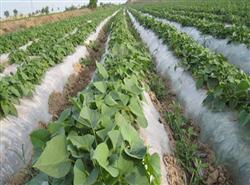
Properly controlling excessive vine growth in sweet potatoes can promote high yields
Sweet potato is a crop with high and stable yields. It has the characteristics of wide adaptability, strong stress resistance, drought and barren tolerance, and relatively few pests and diseases. When planted in places with good water and fertilizer conditions, it can generally yield 2000--3000 kg per mu. However, due to differences in natural conditions and cultivation levels, the yield per unit area is also extremely uneven. In order to fully...
-
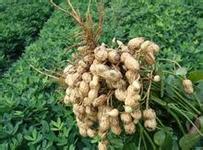
What kind of soil conditions do peanuts need for high yields?
(1) Deep full soil layer. For a high-yield field, the full soil layer should be more than 50 cm deep. 99% of the peanut root system is distributed within 50 cm, while the main root reaches deep, more than 1 m down, so a deep soil is very important for the growth and development of the peanut root system. (2) Loose and active cultivated layer. A thickness of 30 cm is the loose, active and fertile cultivated layer, and...
-
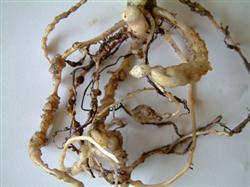
Practical Tips for Using Calcium Fertilizer to Boost Peanut Yields
Peanut root-knot nematode disease is a major disease of peanuts, generally reducing yields by 20-30%, and in severe cases by 70-80%, or even resulting in total crop loss. 1. Symptoms This disease mainly damages the roots. All parts of the peanut that can enter the soil (roots, pods, etc.) can be harmed by nematodes. About half a month after sowing, when the peanut taproot begins to grow, the nematodes...
-
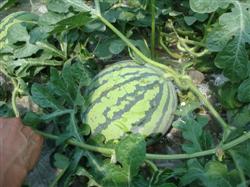
How can spring open-field watermelons be grown for high yields?
Currently it is the season for sowing and raising seedlings of open-field watermelons. In order to do a good job of watermelon cultivation and increase farmers' income, the key points of spring open-field watermelon cultivation techniques are introduced as follows: 1. Choosing varieties. Varieties should be selected according to market demand, choosing varieties with good quality, high yield and strong disease resistance, such as Qinghongbao...
条件筛选