-
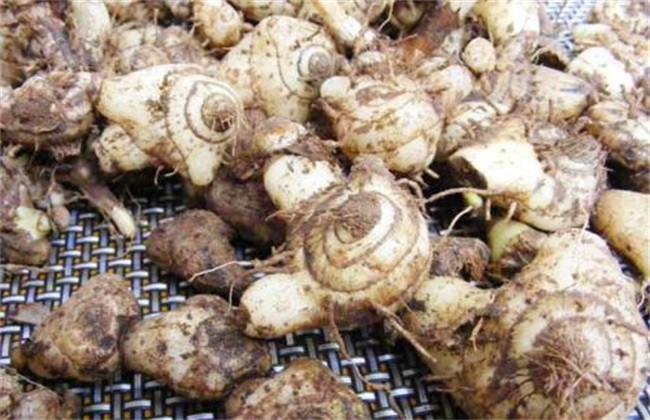
Detailed explanation of high-yield cultivation techniques for Bletilla striata: master the key points for higher yields
High-yield cultivation techniques for Bletilla striata
-

-

Detailed key points of chicory field management, do these well for higher yields
Key points of chicory field management
-

How to cultivate Chinese tallow tree for high yields? Key technical points explained
High-yield cultivation techniques for Chinese tallow tree
-

How to grow Gastrodia elata for high yields? A detailed guide to the latest cultivation techniques
Gastrodia elata is a precious Chinese medicinal herb, containing nutrients such as gastrodin, calcium oxide, magnesium oxide, vanillyl alcohol, and vitamin A. It has the functions of dispelling wind and relieving convulsions, relieving pain, resisting convulsions, and lowering blood pressure. It mainly treats headache, dizziness, high blood pressure, rheumatic waist and knee pain, numbness of the limbs, infantile convulsions, insomnia, and cerebrovascular diseases. It has important value in medicine, and currently the product is in short supply, with prices rising year after year, reaching more than 200 yuan per kilogram, and export prices are even more expensive. Gastrodia elata used to be wild, generally growing in mountain forests at an altitude of 500-150
-
What are the five main causes of low yields in Gastrodia elata (tianma)
Recently, the editor has often received consultation calls from people saying that the Gastrodia elata they cultivate does not yield much, with some even below 3 kg/sq m. The reporter specifically consulted Cao Debing, a Gastrodia elata expert at the Provincial Academy of Agricultural Sciences, about these issues. According to him, based on the growth principles of Gastrodia elata, there are many causes of low yields. He listed the following five causes, and farmers can check their own production conditions to see whether any of the following situations apply: 1. Armillaria mellea has been subcultured many times, becoming aged and degenerated. Armillaria mellea is the only source of nutrition for Gastrodia elata, so the quality of Armillaria mellea directly has an irreversible impact on Gastrodia elata. In general production, it is required to use detoxified, isolated pure strains, or to use such strains to cultivate fungal material before planting, so as to ensure results; however, in order to reduce costs, some farmers either use ordinary strains, or use old fungal material as "starter", mixing in some new linden wood to let it "transfer the fungus". If a pure strain was used the first time, this method can be used the next year, but it must not exceed three years. Unlimited continuous "fungus transfer" will inevitably lead to strain degeneration and reduced vigor, causing reduced Gastrodia elata yields.
-
How to prevent low yields in Gastrodia elata? Master these measures
1. Poor quality Armillaria mushroom-wood material. Most farmers habitually use old wood logs from previous years' Gastrodia elata planting as mushroom-wood material, that is, the old-log-plus-new-log method of cultivating Gastrodia elata. Old wood logs have poor wood quality; not only have most of the nutrients already been consumed and used up, and the Armillaria aging phenomenon is serious, but there are also many factors carrying miscellaneous molds, which not only harms the growth of Gastrodia elata but also destroys the environmental conditions for Armillaria growth, so that the Armillaria source cannot well supply nutrition to Gastrodia elata, resulting in low per-unit yield of Gastrodia elata, or even total crop failure. 2. Use of multi-generation seed with degraded varietal characteristics
-
How can outdoor cultivation of Gastrodia elata achieve high yields?
Artificial cultivation of Gastrodia elata adapts to a very wide range of conditions; regardless of the height of the mountain, regardless of shady or sunny slopes, and regardless of sandy or loess soil, Gastrodia elata production can be developed. So how can high yields be obtained? ① Flat planting on hillsides. In mountainous areas with heavy autumn waterlogging and rain, when Gastrodia elata is planted in pits, except in a few well-drained places, the pits mostly accumulate water, causing rot and reduced yields. Cultivation by piling soil on the slope surface occupies much land and is easily affected by summer drought and high temperatures, which is unfavorable to the growth of Armillaria mellea and Gastrodia elata, making high yields difficult to obtain. However, bed planting or horizontal cultivation can achieve high yields. The method is: on slopes above 25°C, because rainwater
-
Pruning honeysuckle can increase yields; mastering the method is key
Experiments have shown that pruning aging honeysuckle in early autumn can achieve a bumper harvest of honeysuckle the following year. In the production of Chinese medicinal materials, pruning honeysuckle, especially pruning it in early autumn, is an effective technical measure for regulating stem and vine growth, promoting flower bud differentiation, extending plant lifespan, and ensuring stable, high yields. Pruned honeysuckle can generally increase yields by 35-45%, with some reaching more than double. After pruning measures are taken for honeysuckle plants entering the aging stage, their flowering period can also be extended by 5-6 years. When honeysuckle enters the aging stage
-
Intercropping honeysuckle yields well, with high returns from multiple harvests on one plot
Honeysuckle is a commonly used bulk Chinese medicinal herb, with wide uses and high value. It is currently in short supply on the market, and there is even a phenomenon of a price with no goods available. According to the growth characteristics of honeysuckle, adopting a high-efficiency intercropping model of widening rows and reducing plant spacing, rational close planting, intercropping medicinal herbs, and using "medicinal herbs" to support "flowers" can achieve the effect of "planting flowers in the current year, seeing results in the current year." Scientific close planting increases yield and income 1. Field cultivation. In autumn, winter or early spring, on the selected plot, apply 5000 kg of organic fertilizer, 100 kg of superphosphate, and 30 kg of sulfur
条件筛选