How to manage sweet potatoes for high yields? A detailed explanation of key cultivation techniques
High-yield cultivation and management techniques for sweet potatoes: 1. Apply sufficient base fertilizer and prepare the land properly. 1. Fertilization: Because sweet potatoes are generally planted on sandy, thin soil, sufficient base fertilizer must be applied to improve soil fertility and achieve high yields. Generally, about 5 cubic meters of farmyard manure per mu, 25 kg of diammonium phosphate, and 25 kg of potassium sulfate are appropriate. 2. Land preparation...
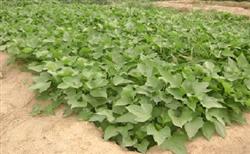
High-yield cultivation and management techniques for sweet potatoes:
1. Apply sufficient base fertilizer and prepare the land properly
1. Fertilization: Because sweet potatoes are generally planted on sandy, thin soil, sufficient base fertilizer must be applied to improve soil fertility and achieve high yields. Generally, about 5 cubic meters of farmyard manure per mu, 25 kg of diammonium phosphate, and 25 kg of potassium sulfate are appropriate.
2. Land preparation: Sweet potato is a root tuber crop and grows best in an environment with deep soil layers, loose soil, and good aeration. Deep plowing can thicken the soil layer, improve soil aeration, and help the tubers expand. The depth of deep plowing is generally 30 cm. Plots with better soil fertility are best cultivated on ridges, but sandy land with thin fertility and high sand content should be cultivated flat or with low ridges.
2. Select excellent varieties, plant early at the right time, and use rational close planting
1. Seed selection: Choose high-quality, high-yield varieties. Such as virus-free Beijing 553, virus-free Xushu 18, Xinnong No. 1, Xinong 431, Yanshu 27, Sushu No. 8, Yushu No. 7, and other short-vine high-yield varieties.
2. Planting time: Because there is a late frost in our area before May 1 every year, in order to avoid frost damage, the planting time should be after May 1.
3. Density: Long-vine varieties and plots with relatively fertile soil should be planted sparsely, while short-vine varieties and thin land should be planted densely. On fertile land with long-vine varieties, plant 3000-3500 plants per mu; on thin land with short-vine varieties, plant 4000 plants per mu, with a row spacing of 60-70 cm and a plant spacing of 30 cm.
3. Field management
1. Planting: Select strong seedlings and plant them by the horizontal shallow planting method, with the seedling heads facing southeast and planted along the wind direction to prevent the wind from damaging the seedlings. It is appropriate to bury the soil 1.5-2 cun deep and leave 3-4 leaves exposed above ground. Water thoroughly when planting, and replant in time to ensure a full stand.
2. Early cultivation, frequent weeding, and early-stage management. Cultivation can loosen the soil, increase soil aeration, raise soil temperature, and eliminate weeds. Sweet potato is a drought-tolerant crop, so generally it should not be watered much in the early stage, but if the soil is too dry, a small amount of water can be given. For long-vine varieties, when the stems and vines grow to about 1 chi, pinch off the growing tips to encourage shorter, thicker stems and vines and more branches, which has a certain effect on increasing yield.
3. Mid-stage vine control: July-August is a season of high temperature and frequent rain, when stems and leaves grow quickly while tubers expand slowly, so control should be the main approach to prevent excessive vegetative growth. For long-vine varieties, spray paclobutrazol 2-3 times per mu; for short-vine varieties, if the stems and vines are vigorous, it can also be sprayed appropriately. Farmers growing sweet potatoes in our area all have the habit of turning the vines after rain, but turning the vines damages the stems and leaves, reduces photosynthesis, and cannot increase yield; instead, it reduces yield. Turning the vines should be changed to lifting the vines. Lift the vines at the right time, raise the stems and vines, and then put them back in place without damaging or flipping the stems and leaves, which prevents adventitious roots from growing at the stem nodes and controls excessive vine growth, thereby achieving the goal of increasing yield.
4. Late-stage management: In our area, after August there is less rain, and drought often occurs, affecting tuber expansion. Watering can prevent premature senescence of stems and leaves and promote tuber expansion. For plots where the leaves are too yellow and the stems and leaves senesce early, combine watering with 10 kg of urea per mu as a tuber-promoting fertilizer, which has a certain effect on increasing yield. This period is the tuber expansion period. Spraying sweet potato tuber expansion agent can increase root absorption of fertilizer, shorten internode length, increase leaf thickness and chlorophyll content, induce nutrients to transfer to the tubers, and accelerate tuber expansion. Spray 2 times per mu, with an interval of 15 days, and yield can be increased by more than 10%.
4. Harvest at the right time: Sweet potatoes do not have a fixed harvest period. Farmers can harvest at the right time according to their own circumstances on the premise of obtaining the greatest benefit. However, harvesting should be completed by the end of October at the latest to avoid frost damage and affect income.