-

Ministry of Agriculture Deploys Corn Armyworm Prevention and Control Work, Going All Out to Secure Grain from Pest Damage
According to this website, August is an important stage for corn growth and yield formation in the main producing areas of Northeast China, North China, and the Huang-Huai region, and it is also a critical period for armyworm outbreaks. On July 30, the Ministry of Agriculture issued an urgent notice on doing a good job in corn armyworm monitoring and prevention and control, requiring relevant areas
-
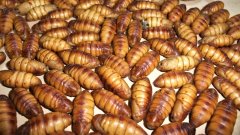
Antibacterial substances from silkworm pupae can be added to animal feed to reduce antibiotic use
In recent years, the Miaoli District Agricultural Research and Extension Station (hereinafter referred to as the Miaoli Station) has found through research that antibacterial substances produced by silkworm pupae can be further developed into functional animal feed additives, a move expected to effectively reduce the amount of antibiotics added when raising economic animals.
-
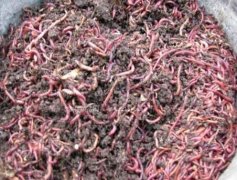
Key Management Techniques for Raising Earthworms in Open Fields in Winter
Earthworm farming now brings high economic returns, which has led many people to raise earthworms, so what are the key management points for earthworms, do you know? 1. Daily management should be done carefully, including checking temperature and humidity, egg laying and hatching, feeding conditions, pest intrusion and abnormal phenomena
-
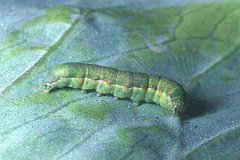
What do beet armyworm larvae and adults look like? A detailed breakdown of their morphological features
We know that the beet armyworm is a pest, but do you understand its ecological habits and morphology? Let's take a look together. Ecological habits: The adult beet armyworm hides by day and comes out at night, resting on the undersides of leaves or in dark places during the day, and beginning activity and mating after sunset.
-
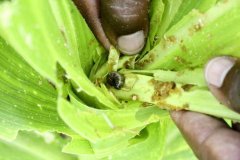
What Is the Fall Armyworm? A Detailed Guide to Its Damage, Impact and Control Methods
The fall armyworm is a moth native to the tropical and subtropical regions of the Americas, and is recognized by the United Nations Food and Agriculture Organization (FAO) as a major global agricultural pest. It is also a common corn pest. The larvae of the fall armyworm eat many different crops, feeding mainly on
-
How many years does it generally take for a Rosa roxburghii to bear fruit after planting?
Rosa roxburghii is the fruit of the plant Rosa roxburghii in the Rosaceae family, also known as cili and mulizi, and is a nutritious treasure fruit for nourishing and strengthening the body. So how many years does Rosa roxburghii take to bear fruit? After planting in the first year, Rosa roxburghii bears fruit the following year. The harvest period of Rosa roxburghii is less than 30 days. Rosa roxburghii is a wild small shrub, from April to June
-
How to control small white worms in flower soil?
Many people like growing flowers, but some flower growers have found small white worms in the flower soil, crawling around in the soil, and do not know how to solve it. So, what should be done about small white worms in flower soil? 1. What should be done about small white worms in flower soil? The small white worms in flower soil may be
-
Which pesticide is effective for controlling cutworms?
The cutworm is a common underground pest during the seedling stage of various crops in our country, and its harmfulness is relatively great. The crops it damages include cotton, corn, sorghum, millet, wheat, potatoes and other tuber crops, beans, hemp, alfalfa, tobacco, sugar beet, rapeseed, cucurbits, many kinds of vegetables, as well as lawns.
-
What pesticide is effective for controlling leaf roller worms?
Leaf roller worm is a common plant pest, also called green worm, oil worm, etc., mainly harming mulberry trees, so what pesticide is used for leaf roller worms? 1. Basic introduction to leaf roller worm. The Chinese scientific name of leaf roller worm is mulberry pyralid, an insect of the family Pyralidae, genus Glyphodes.
-
The correct way to use worm castings for growing flowers
Summary First, you can sprinkle the worm castings directly on the surface of the soil, then water slowly so that the worm castings and the soil blend together. You can also take half soil and half worm castings, mix the two together, and then use it to grow flowers. Fresh worm castings
条件筛选