-
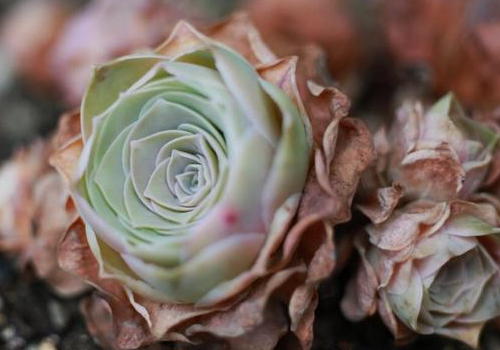
How to care for Mountain Rose in summer, and will it die after blooming?
Mountain Rose (Greenovia) is also a type of succulent plant, and it is loved by a huge number of people. So how do you care for Mountain Rose in summer? Will it die after blooming? How to care for Mountain Rose in summer: For summer watering, you can control the amount of water given, but you cannot stop watering altogether. You can choose the pot-soaking method.
-

Fruit and vegetable prices generally fall after the Spring Festival; building dedicated cold-chain fruit and vegetable trains to prevent fruit and vegetable prices from falling
Last year, Taipei Agricultural Products Marketing Corporation saw overall vegetable auction prices drop by 30% due to multiple factors such as a surge in fruit and vegetable supply, weak consumption, and consecutive market closures. This year, subsidies are expected to help Taipei Agricultural Products Marketing Corporation build a cold-chain system to extend the freshness period of fruits and vegetables. Let's take a look. Connecting production areas, using cold chain
-
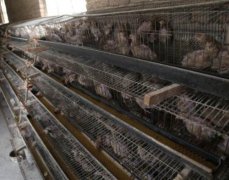
How to Raise Quail Without Them Dying? Breeding Methods and Techniques
How exactly do you raise quail? Do you know? What should you pay attention to when raising quail? Would you like to find out? Then let us take a look together. Raising young quail: Before 40 days of age they are young quail. After the small quail hatches and its down dries, it can be placed in a
-

Will potato tubers continue to enlarge?
The tuberization stage is the period when tubers form and rapidly expand. Water consumption during the peak tuberization stage accounts for more than half of the total water requirement of the whole growth period. Soil moisture content should be maintained at about 70% of field capacity, that is, when picked up it forms a ball, and when dropped from a height of one meter it breaks apart; this is ideal. In the late tuberization stage, that is, one week to 10 days before harvest, irrigation should be stopped to facilitate harvest.
-
Sweet William
Scientific name Dianthus barbatus, genus Dianthus, classified as a biennial herb, plant height about 45 cm, seed germination 5-8 days, maturity time 90-10 days, flowering season summer, used part flower, blooms in showy double-colored flowers with a rich fragrance. Uses: the flowers can be brewed as tea, made into salads and jam, and used to decorate food; it is a widely used edible flower. Cultivation: full sun, good ventilation, and well-drained sandy loam or deep loamy soil are best. Sow seeds directly, 3 per hole
-
Propagation Methods and Management Tips for Sweet William (Dianthus barbatus)
Propagation methods: sowing and cutting propagation. 1. Sowing propagation can be done in spring or autumn. In autumn, sow in the open field from September to October. The optimum germination temperature is 1-0 to 20°C. Sweet William seedlings need a month and a half of low-temperature vernalization before they can differentiate flower buds, so seeds sown in spring will not bloom that year, producing only leaves, and will not bloom until early summer of the following year. Before frost, seedlings should be 2-3 cm tall. For field sowing, sow 200 seeds per sq m. If growing seedlings for transplant production, move them elsewhere after they become established, and the rate can be doubled, that is, 400 seeds per sq m; sowing in a greenhouse
-
How do you make Five Willow Fish Head? The detailed cooking steps are all here
Ingredients: silver carp fish head, shredded ham, shredded rehydrated shiitake mushrooms, shredded bamboo shoots, shredded pickled red chilies, shredded green bell pepper, scallion, ginger, garlic, cooking wine, soy sauce, vinegar, white sugar, refined salt, MSG, pepper powder, sesame oil, water starch, salad oil, etc. Method: Remove the gills from the fish head and rinse it clean, then split it open from the lower jaw with a knife, but do not cut it all the way through, so it opens into one large piece shaped like a "hinge." After rinsing clean, marinate briefly with cooking wine and refined salt, place on a plate and steam over high heat for about 15 minutes, then take it out and pour off the liquid from the plate. Heat a wok over the fire, pour in oil, and add the several kinds of shredded ingredients to the wok to stir-fry
-
Hydrangea Fertilizer and Water Management Tips: Do These Well and It Will Bloom More Vigorously
Hydrangea, also known as florist's hydrangea, has many flowers, large blooms, bright colors, a long flowering period, and high ornamental value. Hydrangea can grow normally and bloom smoothly in fertile, well-drained acidic soil. Therefore, when caring for hydrangea, you must master the fertilizer and water management tips well: in early spring each year, combine repotting with improving the potting soil to prevent the soil from compacting and becoming alkaline. When repotting, remove about two-thirds of the old potting soil, use 5 parts leaf mold, 4 parts fully decomposed pond mud, 1 part clean fine river sand, mix in 15-20 grams of ferrous sulfate, stir thoroughly and evenly, then prepare
-
Will rice suffer from quinclorac phytotoxicity after reseeding
Question: 4 mu of direct-seeded rice is at the 3-leaf 1-heart stage. Very few seedlings emerged after sowing, there are no seedlings in the low-lying areas, and the emergence rate is less than 50%. The sowing rate was 7-7.5 kg per mu. Not long ago, quinclorac was used for the "second kill" weed control. May I ask, if rice is reseeded in the areas of this field where no seedlings emerged, will the reseeded rice suffer from quinclorac phytotoxicity? Answer: Quinclorac is a selective herbicide for controlling barnyardgrass in paddy fields. It is generally applied at the 2-leaf 1-heart stage of rice, and applying it too early easily causes phytotoxicity. Before the 1-leaf stage of the seedlings, especially at the needle standing stage, applying quinclorac at the conventional rate
-
What are the key points of cotton seedbed management? Do these well and the seedlings will be stronger
This year the weather during cotton sowing was good, with plenty of sunlight. At present, the large-area cotton has full stands and has entered the seedbed management stage. The following points should be grasped in detail: 1. After full emergence, spray each 10 sq m of seedbed with 3 ml of "Zaofa No. 1" plus 0.6 kg of water; spray once more after 8-10 days to prevent leggy seedlings and cultivate large, strong seedlings. 2. After full emergence, choose sunny weather to sun the bed and disperse moisture, and at the same time spray chemicals to prevent disease. 3. For the few dry, stiff cotton seedlings lacking water and fertilizer, promptly supplement fertilizer and water. Before 9 a.m., ventilate first and then remove the film to supplement water, and water with urea plus diluted manure water. After drying, scatter dry fine soil, then cover with film to keep warm.
条件筛选