How to care for Mountain Rose in summer, and will it die after blooming?
Mountain Rose (Greenovia) is also a type of succulent plant, and it is loved by a huge number of people. So how do you care for Mountain Rose in summer? Will it die after blooming?
How to care for Mountain Rose in summer:
1. Summer watering
You can control the amount of water given, but you cannot stop watering altogether.
You can choose the pot-soaking method. Just soak the pot shallowly in water for a brief moment; do not soak it in too much water. As long as there is moisture at the bottom of the pot, that is enough.
You can also use the sprinkling method. Generally, sprinkling once a month or soaking the pot once a month is enough. If you water too much, the roots of the Mountain Rose will easily rot and cause death.
2. Proper ventilation
Ventilation is most emphasized in summer. You can place it in an air-conditioned room, or by a window with all-day ventilation. You can hang a gentle breeze ceiling fan near the plant for an even better effect.
3. Proper sunlight in summer
In summer we need to prevent it from being exposed to very strong direct sun, so we should place the Mountain Rose in a spot where it can absorb sunlight well, or we can also use shade cloth to block part of the sunlight for it. This way the sun will not shine all its light directly onto the Mountain Rose, which would cause sunburn problems and affect the normal growth of the plant.
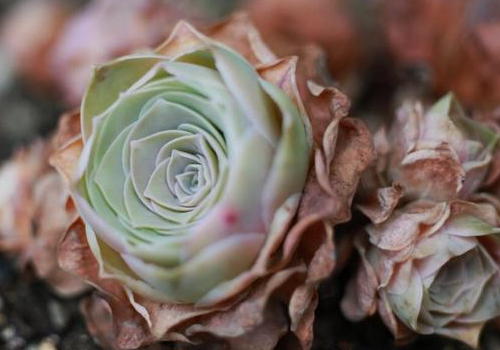
Will Mountain Rose die after blooming:
After the Mountain Rose blooms, as the seeds mature, the mother plant will gradually wither, but tender shoots will grow from its base.
So to some extent, it can be said that the Mountain Rose dies after blooming, and Mountain Roses can only be crossbred within the genus.
That is all for the summer cultivation methods of Mountain Rose. After blooming, there is a possibility of death.
Will Mountain Rose die after blooming
Mountain Rose is quite sought after among flower enthusiasts, and precisely because of this, flower enthusiasts keep asking whether Mountain Rose dies after blooming. If it dies after blooming, it is such a heartache~ What I want to tell flower enthusiasts here is that Mountain Rose does wither and die after blooming. Below let us look at the whole process from blooming to withering of a flower enthusiast Kite's Mountain Rose.There are quite a few varieties of Mountain Rose, and the information is not very complete. This genus has a rather beautiful growth state, especially in the dormant state, when it looks very much like a rose. Kite was fortunate enough to obtain some varieties. First let us talk about one of them, greenovia diplocycla ssp, also called Giant Cypress. This variety has thick fleshy leaves, does not tend to grow side shoots, and has yellow flowers. It is a large variety among Mountain Roses.
For the growing medium, Kite used coal cinder mixed with peat and added perlite, with the ratio focused on air permeability, and the surface was topped with granular river sand. During the growing period, water thoroughly after the soil dries out; during the dormant period, cut off water resolutely. The picture below is from December of last year in winter. The temperature was already very low, and it was watered about 2 times a month. In winter, the water requirement is still very small. Avoid moisture. In winter the air does not circulate and the temperature is low. This variety can tolerate low temperatures of minus 3°C to minus 5°C, and no lower temperatures were tried. I could not bear to.
By mid-February, it began to grow flower buds. I originally wanted to pinch off the buds to let the plant grow bigger, but unexpectedly, after pinching off one bud, two more came out beside it. Dizzy, it can really grow. I did not dare to break them off again. Flower spikes also grew from the leaves below. There was no way, so I just watched the flowers.
The bud development time is quite long. Having flowers to look at is also a good thing. After this variety blooms, the mother plant will die, 5555555, otherwise it would be a big loss. It also does not like to grow side shoots, and it cannot be pollinated (only one plant). Feeling a bit gloomy.
The flowers are still very beautiful when they bloom. After blooming, it is almost time to go dormant. The temperature gradually rises. This year's weather is too abnormal; spring and summer cannot be told apart. The other Mountain Rose varieties nearby have already begun to dry out their leaves and close their leaves, slowly entering the dormant period. The miracle of life, this is also what makes succulents fascinating. Each year they grow for only a very short time, and the rest is spent sleeping. Whether growing or dormant, the forms they display are all very graceful. After blooming, what accompanies it is withering and death.
Mountain Rose Greenovia aizoon Mountain Rose illustrated guide: How to grow Mountain Rose / How to propagate Mountain Rose
Mountain Rose profileMountain Rose Greenovia aizoon
Aliases: Alpine Rose, Mountain Rose
Classification: Succulent and fleshy plants
Family and genus: Plantae, Angiosperms, Dicotyledons, Rosales, Crassulaceae, Aeonium
Full bloom period: Spring and summer
Mountain Rose is a succulent plant of the Crassulaceae family and Aeonium genus (many species in the Crassulaceae family and Aeonium genus have the characteristic of spreading their leaves during the growing period and closing them during the dormant period, just not as obviously as Mountain Rose, such as the well-known Aeonium arboreum 'Zwartkop'). The fleshy leaves are arranged in a rosette shape. The plant width varies greatly depending on the variety. The small variety 'Aeoniumaizoon' is only 2 to 4 cm, while the large variety 'Aeoniumdiplocyclum' can grow to 30 cm to 40 cm or larger. Leaf colors include gray-green, blue-green, or emerald green. After exposure to strong sun, the leaves sometimes develop reddish-brown markings...
Mountain Rose cultivation methods and precautions Mountain Rose introduction
Mountain Rose is a succulent plant of the Crassulaceae family and Aeonium genus (many species in the Crassulaceae family and Aeonium genus have the characteristic of spreading their leaves during the growing period and closing them during the dormant period, just not as obviously as Mountain Rose, such as the well-known Aeonium arboreum 'Zwartkop').
The fleshy leaves are arranged in a rosette shape. The plant width varies greatly depending on the variety. The small variety 'Aeoniumaizoon' is only 2 to 4 cm, while the large variety 'Aeoniumdiplocyclum' can grow to 30 cm to 40 cm or larger. Leaf colors include gray-green, blue-green, or emerald green. After exposure to strong sun, the leaves sometimes develop reddish-brown markings. Some varieties also have a slight white powder and fine hairs on the leaf surface, and the leaf margins have "eyelashes." Its flowering period is from late spring to early summer, with racemose inflorescences and yellow flowers. After blooming, as the seeds mature, the mother plant will gradually wither, but small shoots will grow from its base. It was originally an independent genus, and later was merged into the Aeonium genus (Aeonium). There are varieties such as Greenovia aizoon, Greenovia aurea, Greenovia diplocycla, and Greenovia dodrentalis. There are about 5 varieties, and common ones include Mountain Rose, Golden Rose, Green Rose Buds, and others.
Morphological characteristics of Mountain Rose
Mountain Rose has alternate fleshy leaves arranged in a rosette shape. The plant width varies greatly depending on the variety, ranging from 2 cm to 40 cm. Leaf colors include gray-green, blue-green, or emerald green. The flowering period is from late spring to early summer, with racemose inflorescences and yellow flowers. After blooming, as the seeds mature, the mother plant will gradually wither, but small shoots will grow from its base. During the dormant period, the outer leaves wither, and the central leaves tighten into a rose shape, resembling rosebuds about to bloom one after another. After entering the growing period, the originally "soul-stirring" rose shape will quickly open into a rosette within a few weeks. Because during its dormant period it avoids unfavorable climate conditions such as strong light and extreme heat, the outer leaves age and wither while the central leaves are tightly wrapped together, making the plant resemble rosebuds about to bloom one after another. It is precisely this characteristic that drives succulent plant enthusiasts crazy.
During the summer dormant period, Mountain Rose wraps its leaves tightly together, resembling a "rosebud" about to bloom. When the growing period arrives, they all open up, looking like a blooming lotus, while the central leaves remain layered and very similar to a rose. Its fresh and elegant temperament has made it one of the quite popular succulents in recent years. The flowering period of Mountain Rose is from late spring to early summer.
Ecological habits of Mountain Rose
Mountain Rose is native to the Canary Islands and nearby islands such as Gran Canaria, Tenerife, El Hierro, La Gomera, and La Palma, growing in ravines, rock crevices in mountainous areas, and coniferous forest areas. The dormant period is from July to August. During dormancy, the outer leaves wither, and the central leaves tighten into a rose shape. In summer, ventilation, little water, and 50% shading can maintain its "soul-stirring" state.
Mountain Rose likes a cool, dry, and sunny environment. It is tolerant of drought and partial shade, and afraid of waterlogging and stuffy, humid conditions. It has the habit of going dormant in high-temperature seasons and growing in cool seasons. The growing period is from autumn to late spring, when it should be given sufficient sunlight. If the light is insufficient, the plant will become leggy, resulting in a loose plant shape and thinner leaves.
The growing period is from mid-September to June of the following year. Moving it indoors in winter allows normal growth; pay attention to frequent ventilation. After entering the growing period, the originally "soul-stirring" rose shape will quickly open within a few weeks, and at this time its form is very close to other varieties of the Aeonium genus (Aeonium). This may be the reason it was merged into the Aeonium genus (Aeonium).
Its summer is dry with little rain, and its winter is cool and humid. According to observation, different varieties choose different ways to get through summer. Some varieties gradually tighten their rosette leaf clusters, and the outer leaves turn orange-red, tightly wrapping the plant to reduce water evaporation. Some varieties spread their leaves to dissipate heat. Still other varieties discard most of the old leaves and keep only the central leaves fresh. In autumn, as the temperature drops and rainfall increases, the plant gradually begins to grow, taking on a new appearance within a few weeks and presenting a new look.
After the Mountain Rose blooms, the mother plant will wither and die, while side shoots will sprout to continue life. Some enthusiasts cut off the flower stalk to preserve the mother plant.
Cultivation techniques of Mountain Rose Cultivation points
Mountain Rose likes a cool, dry, and sunny environment. It is tolerant of drought and partial shade, and afraid of waterlogging and stuffy, humid conditions. It has the habit of going dormant in high-temperature seasons and growing in cool seasons. The growing period is from mid-September in autumn to late spring in June of the following year. At this time, the plant should be given sufficient sunlight. If the light is insufficient, the plant will become leggy, resulting in a loose plant shape and thinner leaves. Moving it indoors in winter allows normal growth; pay attention to frequent ventilation. It should be given sufficient sunlight, and the potting soil should always be kept slightly moist. There are no strict requirements on whether to fertilize; generally, placing some granular slow-release fertilizer in the soil can meet its growth needs. The dormant period is from July to August.
Although the plant will not die at around 0°C in winter, growth often stops, so it is best to have a minimum temperature of around 5°C and a day-night temperature difference of around 10°C. The summer dormant period requires good ventilation and controlled watering, so that the plant can pass the hot summer in a ventilated, dry, and cool environment. Avoid scorching sun exposure, and even more avoid rain, so as not to cause plant rot due to stuffy, humid conditions. Repotting Mountain Rose is best done in autumn. The potting soil should be loose, breathable, somewhat granular, and contain a small amount of organic matter. Generally, a small amount of grass peat or peat soil mixed with vermiculite, perlite, or other granular materials is used for planting.
During the growing period, the potting soil should always be kept slightly moist. Both waterlogging and excessive drought are unfavorable for plant growth. In particular, avoid water accumulation in the center of the leaf rosette, otherwise it is very easy to cause heart rot. There are no strict requirements on whether to fertilize; generally, placing some granular slow-release fertilizer in the soil can meet its growth needs.
This overall plant state resembling a rosebud only appears during the summer dormant season. In the other three seasons, its leaves, like those of other Aeonium plants, open normally in a rosette shape. If you observe carefully, you will find that the flower bud formed by all the leaves of Mountain Rose curling toward the center during dormancy is very similar to the leaf center appearance of many Aeonium plants in summer. Also, a reminder: in actual cultivation, please try not to let water accumulate in the center of the leaves, otherwise it is very easy to cause heart rot, especially in indoor environments with poor ventilation. If water accidentally accumulates in the leaf center, after absorbing it with a cotton swab, it is best to ventilate as much as possible.
Seasonal requirements
The growing period of Mountain Rose is from autumn to late spring.
Light requirements
It should be given sufficient sunlight, and the potting soil should always be kept slightly moist. Avoid scorching sun exposure, and even more avoid rain, so as not to cause plant rot due to stuffy, humid conditions. Apart from appropriate shading during the summer dormant period, it should be given sufficient sunlight at other times, which is consistent with most Crassulaceae plants.
Fertilization requirements
There are no strict requirements on whether to fertilize; generally, placing some granular slow-release fertilizer in the soil can meet its growth needs.
Precautions
1. Although the plant will not die at around 0°C in winter, growth often stops, so it is best to have a minimum temperature of around 5°C and a day-night temperature difference of around 10°C.
2. The summer dormant period requires good ventilation and controlled watering, so that the plant can pass the hot summer in a ventilated, dry, and cool environment.
3. Repotting Mountain Rose is best done in autumn. The potting soil should be loose, breathable, and somewhat granular. Generally, a small amount of grass peat or peat soil mixed with vermiculite, perlite, or other granular materials is used for planting.
Cultivation methods of Mountain Rose
Substrate
The ventilation of an enclosed indoor balcony is poor, so the non-granular portion in the substrate is used in very small amounts, with only about 1/6 rice hull ash and peat; the remaining 5/6 is all various granules, including honeycomb coal cinder, orchid stone, pumice, ceramsite, perlite, small stones, etc.; in addition, 2 mm diameter maifan stone and small stones are used for topdressing. The granules at the bottom of the pot can be larger, but the granule size in the middle is best kept at 3 mm or less, because the root system of Mountain Rose is relatively fine, and overly large granules will be unfavorable for root growth. Personally, I do not put insecticides in the substrate, and I rarely use fungicides other than potassium permanganate. All substrates are soaked in water and then microwaved on high for 20 minutes before use, sacrificing part of the beneficial microbial community in exchange for peace of mind by avoiding pesticide residue poisoning.
Watering
Nanjing's air humidity is relatively high, there is relatively more rain, and light intensity is also insufficient, so generally water is given only once every 4 weeks, which helps control the plant shape. I personally prefer pot soaking. The water surface is about at 2/3 the height of the pot; soak for a few seconds and then take it out, keeping the substrate surface dry year-round, which can avoid heart rot as much as possible. Another advantage of pot soaking is that it allows free control of the amount of water given. For example, in late spring, to be safe, many growers gradually reduce the amount of water and then transition to cutting off water for the entire summer. But I have never cut off water for Mountain Roses in summer; at most I quickly soak them shallowly in water and then take them out, keeping moisture at the bottom of the pot. Facts have proven there is no problem, especially for small seedlings. In summer there is basically no need to cut off water; at most, slightly control the water.
Ventilation
Mountain Rose must have strong ventilation to get through summer. For example, place it by an open window during the day. At night everyone generally turns on the air conditioner. If the air conditioner is not turned on, then place it by an open window all day. If you are really worried, you can even hang a gentle breeze ceiling fan nearby. As long as ventilation is good and the plant roots are healthy, they can safely get through summer. But it is best not to put it here in the morning and there at night, constantly moving it every day; that kind of excessive pampering is instead unfavorable for normal plant growth. To grow plants well, the key is not what you want to give them, but rather trying hard to figure out what they want.
Light
A south-facing window is ideal. Of course, an even more ideal state is outdoor cultivation, but unfortunately for most balcony households this is only a dream. So apart from enthusiasts in blessed places like Kunming, most Crassulaceae enthusiasts rarely get to see Mountain Rose turn red from sun exposure. What a charming purplish-red with a grayish-white base that is!
Cultivation points
This overall plant state resembling a rosebud only appears during the summer dormant season. In the other three seasons, its leaves, like those of other Aeonium plants, open normally in a rosette shape. If you observe carefully, you will find that the flower bud formed by all the leaves of Mountain Rose curling toward the center during dormancy is very similar to the leaf center appearance of many Aeonium plants in summer. Also, a reminder: in actual cultivation, please try not to let water accumulate in the center of the leaves, otherwise it is very easy to cause heart rot, especially in indoor environments with poor ventilation. If water accidentally accumulates in the leaf center, after absorbing it with a cotton swab, it is best to ventilate as much as possible.
Propagation methods of Mountain Rose
Mountain Rose propagation usually uses sowing, cuttings, or division of offset shoots.
Seed propagation
Mountain Rose propagation can be done by sowing during the growing season, with autumn being the best. Evenly scatter the seeds onto the soil surface, do not cover with soil, place in a spot without direct sunlight, and use the "pot soaking" method for watering to avoid the tiny seeds being washed away by water. They germinate 5 to 10 days after sowing. During the seedling stage, keep the soil moist and give sufficient but soft light. When the seedlings are too crowded, divide them promptly so as not to affect growth. You can also break off side shoots during the growing season, let them dry for 3 to 5 days, and after the wounds are dry, plant them directly in pots; they can survive with or without roots.
Sowing and raising Mountain Rose seedlings is also very simple. The key is that seed-grown plants are best adapted to their environment, and their resistance is definitely better than that of purchased plants. For Crassulaceae seeds, I personally like to sow them as soon as they are harvested. Although the best sowing period is a time when the minimum is around 10 degrees and the maximum is just over 20 degrees, which humans also find very pleasant, considering the issue of seed freshness, I still sow Crassulaceae year-round, depending only on when the seeds arrive. After all, striving for a higher germination rate is my goal. Although Crassulaceae seeds may germinate delayed, I would rather pursue the germination rate of sowing as soon as harvested. As for the delayed-germinating seedlings, I just treat them as bonus surprises. The substrate is roughly the same as for adult plants. For the topdressing granules, it is best to choose 1 mm maifan stone, which makes it easy for seedlings to take root, and try not to use peat, instead using rice hull ash. As British enthusiasts say, peat very easily attracts fungus gnats, and fungus gnat larvae will quickly gnaw away your beloved seedlings within a few days, unless you bury sufficiently toxic insecticide in the substrate.
Before sowing, it is best to soak those Mountain Rose seeds, which are as big as dust, in a very low-concentration potassium permanganate solution (judged by a faint purplish-red color, better too light than too dark) for 30 minutes, because the seeds often contain impurities such as seed coats, and if not disinfected properly, they tend to mold under high humidity. Then pour them together with the potassium permanganate solution onto the substrate. They must not be covered with soil; they are light-germinating. Then put a transparent top cover on the pot (such as a spherical top cover from a milk tea cup, or plastic wrap with ventilation holes poked in it), place it by a south-facing or east-facing indoor window, open the top cover every evening for 30 minutes of ventilation, and keep it covered the rest of the time until the seeds begin to germinate.
In my sowing experience, Mountain Rose can germinate in as little as 5 days. After germination, gradually increase the daily ventilation time until fully ventilated to prevent seedling rot. In areas with low humidity, low temperatures, and weak light, the seedlings can even be kept covered all the time, depending on the specific situation. Covered seedlings grow at an astonishing rate. The stems of seedlings are relatively long and tend to fall over in summer, so you can gently bury the stems with 1 mm diameter maifan stone-type granules that have been high-temperature sterilized.
Leaf cutting propagation
Besides sowing, leaf cuttings of Mountain Rose are very difficult.
Basically it can only be propagated by beheading. Usually in autumn, use dental floss or fishing line around the plant at mid-height, pull it tight, and the core and base can be separated. Leave the base in the original pot, and be careful not to let the wound touch water, otherwise it will easily rot. Soon n side shoots will sprout between the leaves. Put the cut-off core in a ventilated place to dry the wound. Depending on the plant size and environmental humidity, dry it for 2 or 3 days to a week, then plant it in moist soil with dry planting (moist soil with dry planting means the substrate is moist but not wet; it clumps when squeezed by hand and falls apart when released), and wait for it to take root. Once signs of growth are observed, it can be watered and cared for normally.
Disease and pest control of Mountain Rose
For newly purchased Mountain Rose plants, if the outer leaves have all withered, then it is best to peel off the withered leaves, otherwise after potting they will easily mold and then infect the plant. In addition, before potting, it is recommended to remove the withered root system and keep only healthy, plump roots. After drying for 2-7 days, plant in moist soil with dry planting. Plants recover faster after root trimming.
Variety classification of Mountain Rose Species classification
Greenovia aizoon is relatively rare, distributed in the southern high island of Tenerife, in remote areas of the north slope at an altitude of 950 m. The leaves are dark green, covered with a very thin layer of fine hairs. Compared with other plants in the Aeonium genus, it is smaller. In its natural growing state, it is generally 2 to 4 cm in diameter, and in spring many side shoots grow from the base. The flowering period is from February to April, the inflorescence can grow to 12 cm, and the flower color is golden yellow. After the flowers fade, the mother plant withers and the side shoots continue to grow.
Greenovia aurea, the Canary Golden Mountain Rose, is distributed in rock crevices in the coniferous forest areas of north-facing slopes at an altitude of 1000-1900 m on GranCanaria, Tenerife, El Hierro, La Gomera, and La Palma. The leaves spread to a diameter of 20-25 cm. The leaf color is light blue, with a layer of white powder on the surface. The flowering period is from May to July, the flower color is creamy yellow, and after blooming there are a large number of seeds. It can likewise grow many side shoots.
Greenovia diplocycla, the rose with thick petals, is distributed in open areas in coniferous forests at about 650 m altitude on the north side of La Palma, El Hierro, and La Gomera, often growing mixed with Golden Rose. It is 10-20 cm in diameter, and its plant shape is also difficult to distinguish from Golden Rose. It may have slightly smaller flower arrangement phyllotaxis, but larger flowers. The leaves are slightly yellowish green, with the surface covered in a layer of white powder. In summer the leaves close into a cup shape, wrapped by dry leaves.
Greenovia dodrentalis is distributed in remote eastern and western areas of Tenerife at an altitude of 350 m. Due to tourism development, wild plants are increasingly reduced. It is 10 cm in diameter, very easily grows side shoots, and the inflorescence is 20 cm tall.
Distribution range of Mountain Rose
The main place of origin of most Mountain Roses is Tenerife, the largest and most famous tourist destination in the Canary Islands. When purchasing, sellers often write "ex" after the species name, followed by a place name or plantation name. Here "ex" does not indicate the order of the namer or whether it was formally published, but means "from," expressing information such as place of origin or source, and does not mean this is a different variety. For example, Greenovia aureum ex Tenerife means the Jade Princess Camellia from Tenerife. Unless you are one of those super Crassulaceae enthusiasts who specially collect the same variety from different origins, there is not much need to collect the same variety from all sorts of origins.
It is distributed in rock crevices in the coniferous forest areas of north-facing slopes at an altitude of 1000-1900 m on the Canary Islands and nearby islands such as Gran Canaria, Tenerife, El Hierro, La Gomera, and La Palma, in the southern high island of Tenerife in remote areas of the north slope at an altitude of 950 m, and in open areas in coniferous forests at about 650 m altitude on the north side of La Palma, El Hierro, and La Gomera.
Cultural background and history of Mountain Rose
Mountain Rose refers to the plants of the genus greenovia. In fact, after 2003 this small genus greenovia no longer existed, because in 2003 it was merged by taxonomists into the genus Aeonium. But for convenience of description, it is still called greenovia below. The reason the Mountain Rose series is so popular is mostly because they look so adorable when dormant.
Origin of the name Mountain Rose Origin of the name
They are called Mountain Roses because the place of origin of plants in the genus greenovia (the Canary Islands and other places) is at relatively high altitude, often heading toward two thousand meters; at the same time, the English name of its representative variety Greenovia aurea is Mountain Roses, which literally translates as Mountain Rose. Other common English names include Golden roses, Green Rose Buds, and others. Given the high altitude of the place of origin, getting Mountain Rose through summer is a bit more troublesome, and beginners should try not to acquire them in summer.
The genus Greenovia is a very small genus. The generally accepted view is that there are at least 5 original species within the genus greenovia: Greeenovia aizoon; Greenovia aurea (synonym Greenovia aureum); Greenovia diplocyclum; Greenovia diplocyclum var. gigantea; Greenovia dodrantale (synonym Greenovia dodrentalis). After being merged into the Aeonium genus, only 4 formerly greenovia species are now officially confirmed: Aeonium aizoon (Bolle) T.H.M.Mes; Aeonium aureum (C.Sm. ex Hornem.) T.H.M.Mes (that is, Greenovia aurea); Aeonium diplocyclum (Webb ex Bolle) T.H.M.Mes; Aeonium dodrantale (Willd.) T.H.M.Mes.
aizoon is Greek, with a meaning similar to the Latin Sempervivum, namely "long life." The Japanese call Greeenovia aizoon "Green Jade Cup." Actually, this variety is the one among Mountain Roses least deserving of being called Green Jade Cup, unless you have seen someone's cup grow green fuzz. The biggest difference between Greeenovia aizoon and other varieties is that its leaf margins are covered with fine green hairs. Its body is very petite, and the leaf surface diameter usually does not exceed 4 cm.
aureum means "golden yellow," which should specifically refer to its flower color. So the English name of Greenovia aureum is "Canary Golden Mountain Rose." This variety is currently the most commonly seen on the market, easily producing side shoots and forming multi-headed clusters of more than ten or even dozens. The leaf color tends toward blue-green. The Japanese call it "Jade Princess Camellia," meaning a jasper-colored camellia.
aurea can be considered the most commonly seen rose on the market, a heading monster. The number of aizoon is relatively much smaller.
diplocyclum means "double-ringed." Limited by knowledge, it is unclear what exactly it refers to. This variety is very similar in appearance to Jade Princess Camellia and is difficult to identify. According to German enthusiasts, basically they can only be distinguished when the flowering season arrives in late spring and early summer, because its flowers are much larger than those of Jade Princess Camellia. In addition, this species does not grow side shoots as easily as other Mountain Roses.
Greenovia diplocyclum var. gigantea was named in 2001. gigantea means "giant, tall." It is said that the leaf surface diameter of adult dipocyclum is usually 10-20 cm, while the adult leaf surface diameter of the gigantea variety can reach 40 cm. But as of now this variety has not yet had its independent status officially confirmed, and it is listed here only for everyone's reference. From my personal cultivation, the plants labeled gigantea are indeed a size larger than diplocyclum. In summer dormancy, gigantea balls up into a very beautiful spherical shape, basically not showing the inner core.
The meaning of dodrantale is unclear. Like diplocyclum, the Japanese have not yet given the two Chinese character names, so only the Latin species names can be written here. Its leaf surface diameter is slightly smaller, basically around 10 cm. dodrantale also likes to split heads, and splits them all over the place, slightly lacking in reserve...
diplocyclum is relatively self-contained, individualistic, and solitary, and this one is extremely beautiful in the dormant season. After the leaves curl up, it is truly a perfect rosebud, absolutely adorable.
Flower language of Mountain Rose
Mountain Rose flower language: the green rose that never withers.
The flower language of roses is love and beauty, so does the green rose that never withers represent more enduring love and beauty?
Mountain Rose pictures