-
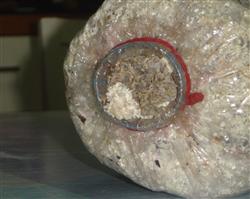
Causes and Control Methods of Neurospora Mold Contamination in King Oyster Mushroom (Pleurotus eryngii) Bags
King oyster mushroom bags are seriously contaminated by Neurospora mold - what is the cause? How to prevent it? The causes and control methods for serious Neurospora mold contamination of king oyster mushroom bags are as follows: 1. High water content makes contamination easy; the water content you mentioned is basically suitable, keep it at around 60%. 2. Using cotton plugs at the bag mouths, which have high water content...
-
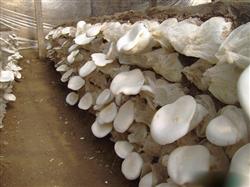
Causes and Control Methods of Contamination by Foreign Fungi in Bai Ling Gu Mushroom Bags
Causes and control methods of contamination by foreign fungi in Bai Ling Gu mushroom bags? Please explain. Bai Ling Gu is a rare edible mushroom with high edible and medicinal value. Its fruiting body is pure white in color, fine in texture, and delicious in taste, and it has long been known by the laudatory names "White Lingzhi of the West" and "Divine Mushroom of the Tianshan Mountains." To produce high-quality Bai Ling Gu, attention should be paid to contamination by foreign fungi during artificial cultivation and measures should be taken promptly.
-
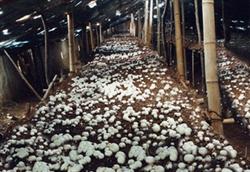
Mushroom Greenhouse Cultivation Methods and Key Technical Points
How to grow mushrooms in a greenhouse? You can refer to the following methods for greenhouse mushroom cultivation: Greenhouse mushroom cultivation technique - composting and fermentation. 1. Outdoor pre-fermentation: 2 days before building the pile, cut the rice straw into 2 segments and pre-wet it, watering while turning; the straw pile should not be too thick, and the middle and lower parts must be thoroughly wet. 3 to 4 days before building the pile...
-
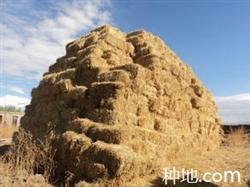
What to Do When Straw Mushrooms Die? Causes and Prevention Methods
My hometown has a lot of wheat straw. Can wheat straw be used to grow straw mushrooms? Wheat straw can be used to grow straw mushrooms, but the following points need attention: The straw mushroom is a high-quality edible fungus and a typical high-temperature mushroom species, suitable for summer cultivation. The optimal temperature for straw mushroom mycelium growth is 30-39°C, with the optimum at 36°C. Below 15°C or above 4...
-
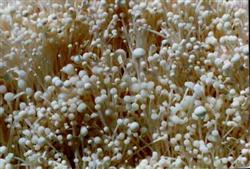
How to reuse enoki mushroom waste? Practical methods shared
During the spawn-running period, enoki mushrooms (Flammulina filiformis) often show abnormal phenomena due to improper management and other reasons. The causes and preventive measures for the main problems reported by mushroom growers are introduced below for reference. 1. Spawn blocks fail to germinate. After inoculation, the spawn does not germinate, and the mycelium turns yellow and withers. Causes: (1) The spawn has been stored for too long...
-

A Detailed Explanation of the Common Causes of Deformed Mushrooms and Their Prevention and Control Methods
The manifestations of deformed mushrooms are diverse, and the main ones commonly seen in production are: landmine mushrooms, hollow mushrooms, big-butt mushrooms, hard opening and early opening, red roots, and water rust spots. Landmine mushrooms. The main cause of their formation is that the casing soil material is too coarse, the soil texture is somewhat hard, the casing soil is relatively thick, the surface layer of the casing soil contains relatively little water, while the temperature and humidity conditions of its lower part and the substrate are suitable for the occurrence and growth of fruiting bodies, so fruiting bodies are easily differentiated and formed on the surface of the substrate or in the middle and lower layers of the casing soil, and then emerge through the soil surface. Solution: select high-quality humus soil, and according to a certain ratio
-
What to do when sawtooth mushrooms appear? Causes and control methods
The young mushroom fruiting bodies develop normally, but the edges of the caps look like sawteeth, uneven and jagged. The main cause of this disease is stimulation by strong wind. When the wind is strong, humidity drops, and the young tender oyster mushroom fruiting bodies are affected by these adverse environmental conditions, which disrupts their metabolism, damages the tissue cells at the edge of the caps, and produces sawtooth-shaped oyster mushrooms. Control methods: In windy weather, do not open ventilation openings or open fewer of them. If ventilation is urgently needed, when the wind is from the north open only the vents on the south side, and when the wind is from the south open only the vents on the north side. At the same time, increase the amount of water sprayed to raise the humidity in the mushroom shed.
-
Causes and Control Methods of Yellow Mushroom Disease in Pleurotus pulmonarius
In recent years, because Pleurotus pulmonarius has good economic returns and can fill the gap in summer edible mushroom products, its production in Jiangshan City has developed rapidly, and by 2004 the total had exceeded 8 million bags. However, in the recent period, some mushroom farms in Jiangshan have experienced mushroom death. Through observation, it was clearly determined that the dead mushrooms were caused by yellow mushroom disease. 1. Symptoms of yellow mushroom disease. Yellow mushroom disease is a bacterial disease caused by infection with Pseudomonas bacteria, which causes the fruiting bodies to discolour, rot and stink, and the incidence rate is generally higher in the first flush. When the disease occurs, a slime-like pathogen appears on the surface of the mushroom bags, part of the mycelium shows yellowing symptoms, and in severe cases the pathogen directly attacks the mushroom bodies, causing the affected mushrooms to develop lesions, turn yellow, and even die. It takes only a few hours from infection of the mushroom body by the pathogen to the appearance of symptoms (dead mushrooms). ① Dry rot type: it can occur from the young mushroom stage to the mature stage; after onset, the cap or stipe shows localized scorched yellow, causing light-coloured mushrooms to become yellow mushrooms, and the mushroom bodies grow slowly, gradually becoming rigid until the whole mushroom body shrinks and dries up, like being dried by lack of water. ② Wet rot type: the affected site or the entire cluster of mushrooms has a sticky, moist feeling; in severe cases, all diseased mushrooms show pale yellow water-soaked rot, with sticky secretions and a foul odour.
-
Causes and Control Methods of Twisted Mushrooms
The main symptom of twisted mushrooms is that the stipe elongates in a spiral shape, and when broken open, the stipe changes from cylindrical to flat and strip-like; growers call them "fried dough twist mushrooms." Although they are edible, they do not meet canning standards. Twisted mushrooms usually occur only sporadically within mushroom clusters. Apart from being related to the cultivated variety, the causes include weak development of young mushrooms, overly dense mushroom clusters, insufficient growing space, and constantly changing light direction, all of which can cause excessive twisting of the stipe. The prevention method is to thin out the cultivation bags and not casually move bags (bottles) that have already produced fruiting bodies.
-
Causes and Control Methods of Mushroom Bud and Young Mushroom Death
1. Excessive temperature. When mushroom buds form and grow, if the temperature in the mushroom shed (room) suddenly rises or stays above 20°C for several consecutive days, combined with poor ventilation, the mushroom buds will shrivel, turn yellow, and eventually die. This situation often occurs in late autumn or early spring. Because the mushroom buds form under low-temperature conditions, their nutrients are transported from the mycelium to the fruiting body. When the temperature suddenly rises, the nutrients flow back from the fruiting body to the mycelium, and the mushroom buds die from lack of nutrients. Control methods: Pay close attention to temperature changes, and adjust
条件筛选