Causes and Control Methods of Contamination by Foreign Fungi in Bai Ling Gu Mushroom Bags
Causes and control methods of contamination by foreign fungi in Bai Ling Gu mushroom bags? Please explain. Bai Ling Gu is a rare edible mushroom with high edible and medicinal value. Its fruiting body is pure white in color, fine in texture, and delicious in taste, and it has long been known by the laudatory names "White Lingzhi of the West" and "Divine Mushroom of the Tianshan Mountains." To produce high-quality Bai Ling Gu, attention should be paid to contamination by foreign fungi during artificial cultivation and measures should be taken promptly.
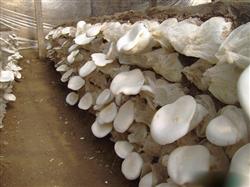
Causes and control methods of contamination by foreign fungi in Bai Ling Gu mushroom bags? Please explain
Bai Ling Gu is a rare edible mushroom with high edible and medicinal value. Its fruiting body is pure white in color, fine in texture, and delicious in taste, and it has long been known by the laudatory names "White Lingzhi of the West" and "Divine Mushroom of the Tianshan Mountains." To produce high-quality Bai Ling Gu, attention should be paid to contamination by foreign fungi during artificial cultivation and measures should be taken promptly.
I. Causes of contamination
1. Incomplete sterilization of the growing substrate. When the growing substrate is not completely sterilized, it can generally be detected 4-6 days after inoculation. Its specific feature is that foreign fungi appear not only on the surface of the growing substrate, but more often at different positions within the growing substrate; that is, before the Bai Ling Gu mycelium has extended to reach them, the foreign fungi have already taken the lead in the upper, middle, and lower parts of the growing substrate.
2. Impure spawn carrying foreign fungi. If contamination is caused by impure spawn, the foreign fungi first appear not on the growing substrate, but on the inoculation block.
3. Contamination during inoculation. When the spawn source is pure, if the initial site of the foreign fungi is found within the inoculation area on the surface of the growing substrate, this contamination mostly belongs to contamination caused by lax aseptic technique, with external foreign fungi being introduced during inoculation. Inoculation contamination is the most common in Bai Ling Gu cultivation, and the vast majority is caused by carelessness during inoculation operations, or by a lack of basic knowledge and basic skills of aseptic technique.
4. Uneven mixing of the growing substrate. During the process of making cultivation bags, if the growing substrate is not mixed evenly during preparation or contains dry material or clumped material during fermentation, then even if the sterilization process meets conventional requirements, it will still cause incomplete sterilization and lead to contamination.
5. Improper management during the cultivation period. During the spawn-running period after inoculation, if the air humidity in the spawn-running area is greater than 70%, ventilation is poor, or the temperature is too high, foreign fungi will take the opportunity to enter and spread rapidly, causing contamination by foreign fungi.
6. Contamination from micropores in the mushroom bags.
II. Preventive measures
1. Purify the environment. The spawn preservation room, inoculation room, cultivation room, and cooling room should maintain a certain distance from the raw material warehouse, mushroom house, and mixing yard, or have good anti-contamination isolation barriers. The surrounding environment should minimize contamination sources as much as possible, such as livestock sheds and poultry houses, septic tanks, sewage pits, garbage dumps, and waste material piles, and daily sanitation and cleaning as well as regular disinfection should be carried out well. The higher the degree of purification of the production environment and the stricter the measures for controlling disease and insect infection, the more favorable it is for improving and stabilizing the finished-product rate of the mushroom bags.
2. The growing substrate must be prepared reasonably. Bagging must be done quickly. The growing substrate formula must be reasonable, and the raw materials used must not be moldy or deteriorated. After the growing substrate has been fermented well, it must be bagged promptly. The longer the interval, the more likely it is to cause contamination by foreign fungi; therefore, bagging must be done quickly.
3. The growing substrate must be thoroughly sterilized. After the growing substrate is put into plastic bags, it must be sterilized promptly. In production, the common method of normal-pressure sterilization is used. After the temperature inside the stove reaches 100°C, a sterilization time of 12-16 hours must be maintained, and the temperature cannot drop during this period. The bags of growing substrate should not be placed too crowdedly in the stove; air passages must be left, and there must be no dead corners where sterilization is incomplete.
4. The spawn used must be pure. For Bai Ling Gu spawn used in large-scale production, from mother culture to spawn for cultivation, propagation should be done with extreme caution, strictly following aseptic operating procedures and carefully checking quality to ensure the purity and vigor of the spawn.
5. Inoculation must strictly follow aseptic operating procedures. The inoculation room, inoculation tent, inoculation tools, and the arms of inoculation personnel must all be strictly disinfected. Inoculation movements must be quick, achieving quick bag opening, quick inoculation, and quick tying of the bag mouth. If a batch has not been fully inoculated, personnel should not enter or leave the inoculation room.
6. During the period of cultivating the mushroom bags, the spawn-running area must be managed scientifically. It must be cleaned thoroughly in advance and disinfected and disinsected. After the mushroom bags are placed in the spawn-running area, the air humidity must not exceed 70%, the temperature must be controlled at around 25°C, and ventilation should be frequent. Avoid creating an environment with high temperature (above 30°C), high humidity (air humidity above 70%), and no ventilation, which favors the growth of foreign fungi. Do not use plastic bags with micropores, and handle the mushroom bags gently during transport.
Click to get more Bai Ling Gu cultivation techniques
Click to get more edible mushroom cultivation techniques