-
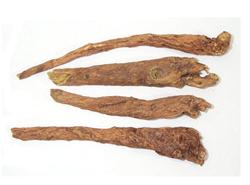
Skullcap (Scutellaria baicalensis) Benefits, Uses and Growing Methods
What is the medicinal herb skullcap used for? How is it grown? Please explain. Skullcap is a commonly used traditional Chinese medicinal herb with effects such as clearing heat, detoxifying and stopping bleeding. It is used to treat upper respiratory tract infections, colds, lung-heat cough, vomiting blood, enteritis, dysentery and other conditions, and is one of the currently popular varieties on the Chinese medicinal herb market. For growing methods, you can refer to the following techniques...
-
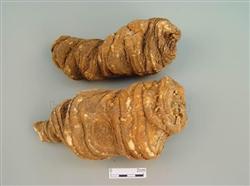
What are the uses of Paris polyphylla? A detailed guide to planting and management methods
What is Paris polyphylla used for? How do you plant and manage it? Please give an introduction. Paris polyphylla is also called Dulian (one-horn lotus), Qiyeyizhihua (seven leaves and one flower), Chonglou yizhijian (Paris polyphylla one arrow), etc. It belongs to the Liliaceae family and is a perennial herbaceous plant. It is one of the main ingredients of nationally protected traditional Chinese medicines such as "Yunnan Baiyao" and "Gongxuening". The medicinal part is the dried tuber of Paris polyphylla. Paris polyphylla tastes...
-
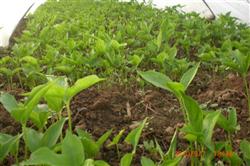
Open-field and greenhouse cultivation methods and techniques for Pinellia ternata (dry Pinellia)
How to grow dry Pinellia in a greenhouse? Please give an introduction. Dry Pinellia, also known as three-leaf Pinellia, Sanbujiao, and Mayuguo, is a commonly used Chinese medicinal herb, found growing wild in both northern and southern China. In recent years, due to the reclamation and use of barren hillsides and the heavy use of herbicides in farmland, its ecological environment has been damaged, resources have decreased year by year, and prices...
-
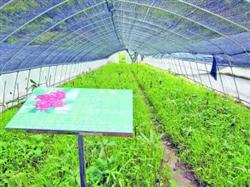
Greenhouse Cultivation Methods and Technical Key Points for Pinellia ternata
How to grow Pinellia ternata in a greenhouse? Please introduce the methods. Pinellia ternata, also known as three-leaf pinellia, three-step jump, and hemp jade fruit, is a commonly used Chinese medicinal herb, with wild distribution throughout both northern and southern China. In recent years, due to people's reclamation and utilization of barren hillsides and the heavy use of herbicides in farmland, its ecological environment has been damaged, resources have been decreasing year by year, and prices...
-
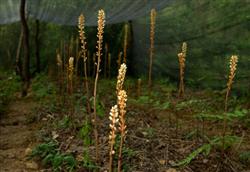
Causes of Gastrodia elata Trait Degradation and Control Methods
Degradation of Gastrodia elata traits often manifests as decreased yield of arrow gastrodia, with individuals becoming smaller and slender; a substantial reduction in the yield of rice gastrodia and white gastrodia, which turn ginger-yellow or light brown, with poor stress resistance, and the original yield and traits cannot be fully expressed. The causes are generally as follows: 1. Multiple generations of asexual reproduction. Generally after 5 to 6 generations of asexual reproduction...
-

What to Do About Cracked Fruit in Monk Fruit? Causes and Control Methods
What to Do About Cracked Fruit in Monk Fruit
-

What are the propagation methods for Rosa laevigata? Detailed introduction to the commonly used methods
Propagation methods for Rosa laevigata
-

Analysis of the Causes of Flower and Fruit Drop in Goji Berry and Control Methods
Causes of Flower and Fruit Drop in Goji Berry and Control Methods
-

Damage Caused by Cutworms to Reishi Mushrooms and Its Control Methods
Cutworms belong to the order Lepidoptera, family Noctuidae. They are not only an important pest of agricultural and forestry crops, but also a common pest in the cultivation of edible fungi such as reishi mushroom, silver ear fungus, wood ear fungus, and oyster mushroom. They are widely distributed, but the degree of damage varies. They occur more frequently in outdoor open-field sunken-bed cultivation and plastic greenhouses. Damage characteristics: The larvae feed on the mycelium of reishi mushrooms, inhibiting mycelial growth and affecting fruiting body formation, which reduces reishi mushroom yield and lowers quality. Morphological characteristics: Adult body length 16-23 mm, wingspan 42-54 mm
-
Dry Pinellia Greenhouse Planting Methods and Technical Key Points
Dry Pinellia, also known as three-leaf pinellia, three-step jump, and hemp jade fruit, is a commonly used Chinese medicinal herb, with wild distribution throughout both northern and southern China. In recent years, due to people's reclamation and utilization of barren hillsides and the extensive use of herbicides in farmland, its ecological environment has been damaged, resources have decreased year by year, and prices have continued to rise. According to surveys, dry Pinellia products are currently scarce in seventeen specialized medicinal herb markets nationwide, supply has fallen short of demand, and the market price has remained firm at 36-42 yuan/kg. Therefore, the market prospects for artificially cultivating dry Pinellia are very broad. In recent years, we
条件筛选