-
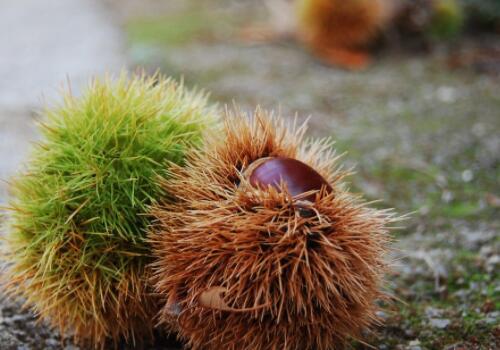
When Does a Chestnut Tree Bloom, Bear Fruit, and How to Harvest It, Where Is It Suitable to Grow, and What Excellent Varieties Are There
The chestnut tree is a tree up to 20 m tall, and its fruit has long been known as the "king of dried fruits"; it is also called kuili, maoli, fengli, and zhuili, and is widely cultivated. So when does the chestnut tree bloom and bear fruit, and when is it harvested? Where is it suitable to grow? What excellent varieties are there? What trees can be used for grafting? Learned from the Hubei termination base
-
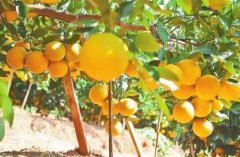
Orange Tree Planting Methods and Care: What Altitude in Meters Is Suitable for Planting?
How are orange trees planted? Take the already rooted saplings and cut off any dead or broken roots before planting. Sterilize the knife to reduce the chance of the orange tree being infected with disease. Gently pat the soil around the roots to remove air from within the soil. The
-
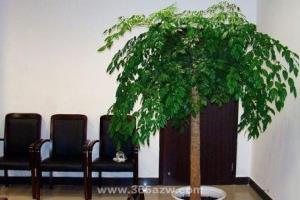
Is the happiness tree suitable for growing indoors?
Is the happiness tree suitable for growing indoors?
-
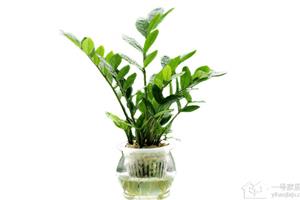
The Money Tree is suitable for growing at home, and you should know its three major functions
A great plant for the home: the three major functions of the Money Tree
-
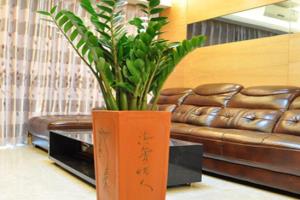
Is the money tree poisonous? Is it suitable for growing indoors?
Is the money tree poisonous? Is it suitable to grow the money tree indoors?
-
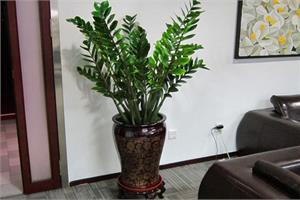
Can the money tree be kept indoors? A multi-angle analysis of its suitable growing environment
Can the money tree be kept indoors? A multi-angle analysis of the money tree's suitable growing environment
-
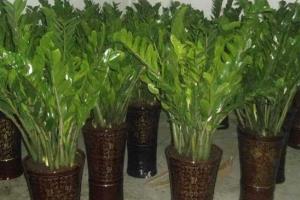
Is the Money Tree suitable for growing indoors? Is the Money Tree toxic?
Is the Money Tree suitable for growing indoors? Is the Money Tree toxic?
-
Which saplings and trees are suitable for planting in a large courtyard? Recommended courtyard tree and sapling varieties
I've found some trees and saplings that can be planted in courtyards and will introduce them to you, so you can see whether you can plant some in your own small yard too. Palm. The palm tree genus...
-

Detailed Explanation of Tea Tree Variety Regionalization: How Suitable Varieties Are Laid Out in Each Region
Research work on how tea tree varieties are distributed across different regions and how their suitable planting areas should be divided. China's tea regions are vast, spanning from 18°-38°N, 94°-122°E. In terms of vertical distribution, the highest extends to mountains at an altitude of 2600m, and the lowest to low hills at an altitude of only a few meters. The genetic characteristics of tea tree varieties and latitudinal zonality across regions give rise to a certain degree of zonality in tea types and quality styles. Tropical or southern subtropical regions in the south are suitable for the growth of arbor-type large-leaf tea tree varieties and are suitable for producing
-
The Mopan jujube is an ornamental tree suitable for courtyard planting
Aliases: Mozi jujube, Hulu jujube (Hebei), Yaohulu jujube (Gansu). It is fairly widely distributed; it is cultivated in places such as Dali in Shaanxi; Qingyang in Gansu; Jiaohe, Qingxian, Xianxian, Quyang, Daming and Weixian in Hebei; and Leling, Wudi and Xiajin in Shandong, but the quantity is very small, mostly planted scattered around the four sides [of homes and fields]. It has a long history of cultivation. The tree is vigorous, relatively large, with medium-strong trunk dominance; the crown is a natural semicircle and the tree posture is open. A 23-year-old tree: trunk height 1.1 m, trunk circumference 60 cm, tree height 7.35 m, crown diameter about 7 m. The main trunk is grayish brown, with deep bark cracks
条件筛选