Is the Money Tree suitable for growing indoors? Is the Money Tree toxic?
The Money Tree (Zamioculcas zamiifolia) has an auspicious name, and its lush green foliage gives people a feeling of vitality. But is the Money Tree toxic? If so, is it suitable for growing indoors? On such questions, we might as well see what netizens and experts say.
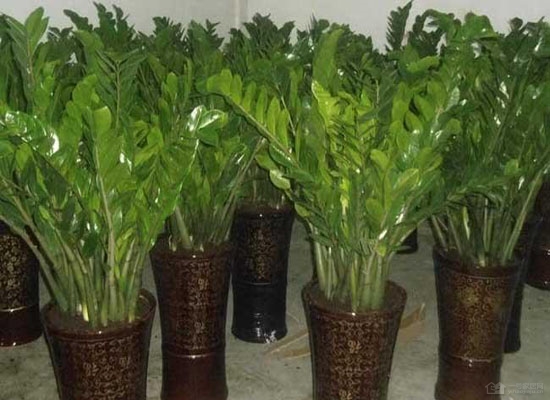
The Money Tree belongs to the Araceae family of foliage plants; species in this genus all have unique leaf shapes and colors and are excellent indoor ornamental plants. As for whether the Money Tree is toxic, one netizen's answer was quite definitive:
The Money Tree is toxic, a highly poisonous plant, even worse than Gelsemium elegans. If its leaf sap gets on sensitive skin, the facial features and teeth will swell up; plants of the wilderness, birds and beasts, and butterflies and crawling insects all stay away from it; at the same time, plants growing around it will also wither and die. So if you find other edible herbs growing in the same pot, never use them medicinally or eat them, otherwise you will die without knowing why. People who have such plants at home must absolutely handle them with care; do not add the soil of the Money Tree to other edible herbs, its poison is in the soil, otherwise it will bring endless trouble. Therefore, if you bought this plant without knowing, and are reluctant to give it up, it is best to place it in the yard, do not let the elderly or children touch it, and do not place it under a window, to avoid its toxic gas affecting the health of the people in the house.
It is said that the claim that the Money Tree is toxic may originate from its family and genus: Araceae foliage plants. According to introductions, Araceae foliage plants have fleshy, herbaceous stems and leaves with a milky sap containing a special calcium oxalate component, which severely irritates the skin and stomach, so special care is needed when propagating by cuttings.
However, Su Mingzhi, a lecturer in the Environmental Studies program at Tainan Community University, believes that the claim that the Money Tree is highly toxic is too alarmist. He stated that the Money Tree itself contains plant alkaloids; although some people with more sensitive constitutions may experience skin and mucous membrane irritation after touching it, the prerequisite is that the plant must be damaged and the sap contacted for this phenomenon to occur.
The Money Tree is a rather popular large indoor bonsai plant, especially when placed in a relatively spacious living room, study, or sitting room, where it has an elegant, simple style and a southern tropical flavor. It is a world-famous new-generation indoor foliage plant with a beautiful, neat plant shape. Although it belongs to the Araceae family, not all Araceae plants are toxic, so families growing the Money Tree need not worry too much.
In fact, as an extremely common indoor ornamental plant, if the Money Tree were really as highly toxic as the netizen in question said, it might long ago have been removed from the ranks of indoor ornamental plants.