Is the happiness tree suitable for growing indoors?
The reasons kumquats fail to bear fruit are mostly excessive fertilizer and water management, too little light, and not pinching off new shoots (no pruning), so to get kumquats to fruit you need to improve these three points. The specific methods are below.
1. Fertilizer and water management for kumquats
Kumquats are generally fertilized once every 7 to 10 days, and the concentration should preferably not exceed three tenths. When buds appear and flowers open, take care to apply sufficient phosphorus fertilizer to help fruit set. Watering should be properly controlled during the flower bud differentiation period, watering only when the upper young leaves are slightly wilted, to control excessive vegetative growth and promote flower bud differentiation. After flower bud differentiation is complete, gradually restore the amount of watering. Neither the flowering period nor the fruit-setting period is suitable for heavy watering.
2. Branch and leaf management for kumquats
How many fruits to keep on a kumquat depends on the specific situation (do not be greedy for too many). Generally, within the same leaf axil, sometimes 2-8 flower buds sprout, and one may be selected and kept, leaving 2 to 8 flower buds on each branch and keeping 1 to 2 fruits. Pinching and pruning: kumquats send out new shoots several times a year, all of which can form flower buds. You can pinch the shoot tips when the spring shoots grow to 5-6 leaves, to promote flower bud differentiation, more flowering and more fruiting. Carry out one pruning before the spring shoots sprout, so that the sprouting branches are robust and the shape is good.
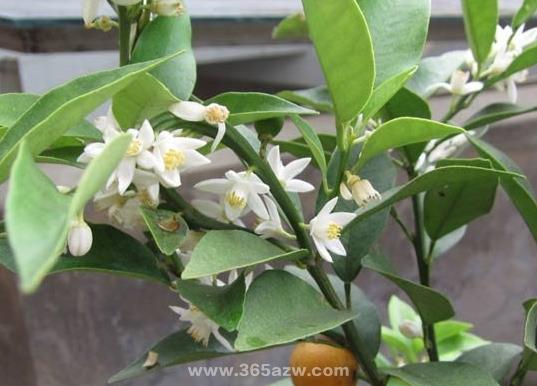
3. Daily cultivation management of kumquats
After the beginning of spring, as the air temperature rises, kumquats grow faster and must be pruned, that is, according to the need to keep branches on the upper part of a round-headed trunk, select 3-5 main branches to remain on the framework in a staggered arrangement, cut off the other paired framework branches flush with the base, then according to the strength of the retained framework, shorten them separately: strong branches can be cut leaving 4-5 buds, weaker branches can be cut leaving 2-3 buds. Regulate the growth vigor of the branches, promote each main branch to produce vigorous spring shoots, and lay the foundation for flowering.
After two months of growth, the new shoots are mostly fully grown. To control their excessive vigorous growth, a second pruning is still necessary. But the amount of pruning can be reduced, mainly tip pruning. Thereafter, once the new shoots have 8-10 leaves each, pinch the tips once, the purpose being to induce a large number of summer shoots in the hope of more flowering and fruiting. The final pinching time should be decided by whether all the summer shoots produced can form buds.
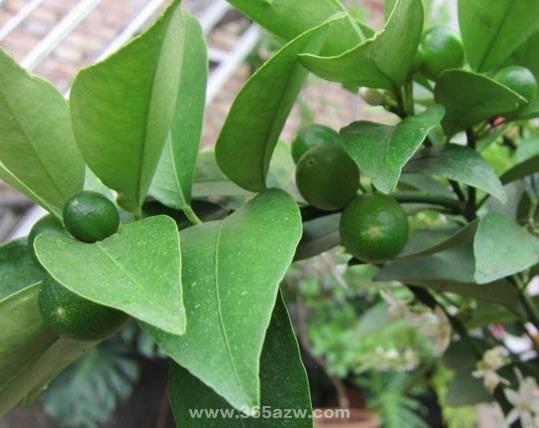
4. Precautions for kumquats
① Avoid rain exposure, and do not spray water on flowers that are open; this is neither good for pollination nor does it easily cause flower rot.
② Avoid insufficient light. Kumquats like a warm, humid environment with plenty of sunlight. Being placed in a spot with insufficient sunlight indoors for a long time makes the plant weak and affects flower bud differentiation and fruiting.
③ Avoid soil alkalization. Kumquats like acidic soil. For potted plants in the north, water once a week with fertilizer water, or apply potassium dihydrogen phosphate as a top dressing, or once a week combined with fertilizing, water with 200-250 times diluted vinegar water, which helps the leaves be dark green, the growth luxuriant, and the fruiting abundant.