Can the money tree be kept indoors? A multi-angle analysis of its suitable growing environment
Can the money tree be kept indoors? With the money tree, you can tell just from the name that its symbolism is definitely tied to bringing in wealth and treasure. For this reason, it is often placed indoors to create a fortune-attracting feng shui arrangement. But some say the money tree is toxic and cannot be kept indoors. So where exactly is the money tree best placed?
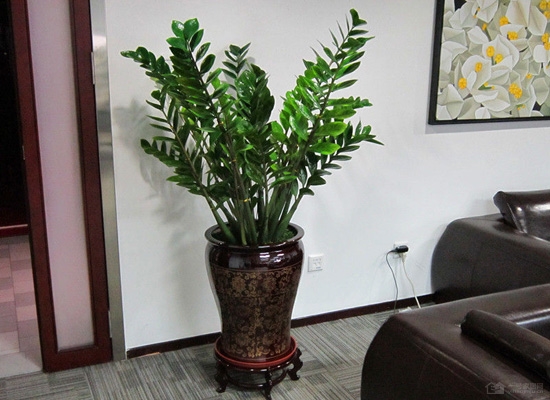
As for where the money tree is best placed, we may as well analyze it from several angles.
1. From the perspective of the money tree's growth habits
The money tree likes warm, hot and slightly dry conditions, partial shade, and an environment with little variation in average annual temperature, and it grows best at 20°C to 32°C. It is fairly drought-tolerant, but fears cold, and avoids strong direct sunlight. It requires loose, fertile, well-drained soil, and dislikes heavy, sticky soil and waterlogging in the pot. If the pot soil has poor aeration, its tubers can easily rot.
From this it can be seen that the money tree is not suitable for growing outdoors in places with harsh sunlight. Only indoors, or in a sheltered spot, does it match its habit of liking light while also being fairly shade-tolerant and avoiding strong direct sunlight, so it needs an environment with good light but also a certain degree of shade.
2. From the perspective of the money tree's value
The value of the money tree lies mainly in two aspects:
1. Ornamental value
On each even-pinnate compound leaf of the money tree, the base of the leaf rachis is thick and sturdy, as if it were a raised Buddha's belly. The middle and upper parts of the rachis are cylindrical, with irregular dark brown markings, as though covered with a layer of camouflage clothing. The oval or ovate leaflets on its compound leaves are thick and substantial, with a deep green leaf color, and in sunlight they look as if coated with a layer of glistening glaze. If several plants are grown together in an exquisite blue-and-white porcelain pot, they present a vigorous, upward vitality and a lush, dripping-green energy, giving them high ornamental value.
2. Air purification
The money tree can absorb toxic gases and release oxygen through photosynthesis, bringing fresh air. During the day, it can absorb carbon dioxide in a room while releasing oxygen, increasing the concentration of negative ions in the indoor air, and it can even take in dust that is hard for even a vacuum cleaner to capture. More importantly, it can also absorb harmful gases such as formaldehyde and benzene series compounds, kill bacteria in the air, and effectively purify the air in the process.
3. From the perspective of the money tree's feng shui meaning
True to its name, the money tree is a common feng shui tree for bringing wealth. Placing a money tree in the living room can increase financial luck and is intended to attract wealth and treasure; if it is placed in the wealth position, the effect it brings is very good. Placing this kind of flowering plant, which carries the meaning of good fortune, gathering wealth and bringing prosperity, in the living room has the effect of enhancing financial luck and attracting wealth and treasure. Especially if it can be placed in the wealth position at home, the effect will be even better, particularly a money tree with large leaves.
4. From the perspective of the money tree's toxicity
The money tree, which belongs to the Araceae family, like plants of the same family, can exude a milky sap containing calcium oxalate, so it can be irritating. If its leaf sap touches sensitive skin, the facial features, or the gums, swelling can occur. Plant alkaloids can cause discomfort in people with sensitive constitutions.
However, Ye Deming, a professor in the Department of Horticulture at National Taiwan University, says that not all Araceae plants exude milky sap containing calcium oxalate; the money tree does not, and he has never seen any academic research indicating that the money tree is toxic.
Su Mingzhi, an instructor in the environmental studies program at Tainan Community University, also believes that the money tree itself contains plant alkaloids. Although some people with more sensitive constitutions may experience skin and mucous membrane irritation after touching it, the precondition is that the plant must be damaged and the sap contacted for this phenomenon to occur.
From this it can be seen that although the money tree may be toxic, its toxicity is not enough to cause great harm to the human body. On the contrary, its ornamental value, air purification and other functions make it one of the top choices of green plants for decorating the home.