-
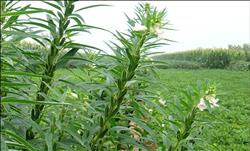
When is the best time to top sesame?
When is the best time to top sesame? What is the method for topping? We hope experienced readers can help explain. Zhongdiwang has compiled the reasons, timing and methods for topping sesame, listed below for readers' reference. Reasons for topping sesame: Topping sesame can inhibit apical growth, reduce ineffective capsules, prevent ineffective consumption of nutrients, and can increase yield by more than 10%.
-
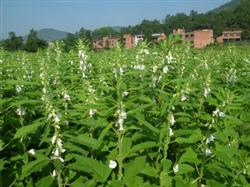
What are the key techniques for growth promotion and control cultivation of summer sesame?
How is growth promotion and control cultivation carried out for summer sesame? Please give an introduction. Based on the principles of sesame trait correlation, plant stage development, stage nutrient uptake and factor interaction, and through research on supporting cultivation techniques, a technical system for growth promotion and control cultivation of summer sesame has been obtained. Technical indicators for promotion and control: (1) Seedling-stage plants are strong but not excessive. Seedling-stage plants...
-
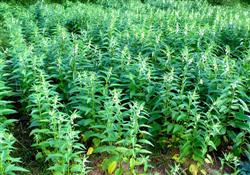
What are the key points for summer planting management of black sesame?
What are the main summer management practices for planting black sesame? Please give an introduction. For summer management of planting black sesame, you can refer to the following points: First, thin the seedlings in time and check for and fill in gaps: because sesame seeds are small and germinate in large numbers, when the first pair of true leaves appears after emergence, the seedlings should be thinned; when 2 to 3 pairs of true leaves have grown, the seedlings should be thinned further, and when 4 pairs of true leaves appear, the seedlings should be finalized, ...
-
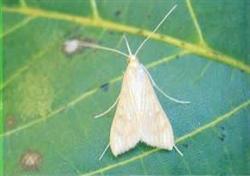
What is the sesame capsule borer? Get to know this sesame pest
What is the sesame capsule borer? Please introduce the sesame capsule borer, which is one of the main pests of sesame. It mainly damages sesame. It commonly occurs in major sesame-producing areas in China such as Henan, Hubei, Anhui and Jiangxi, generally reducing yields by 10%-20%, and by up to 30% in severe cases, causing a marked decline in sesame quality. In response to its occurrence, carefully study...
-
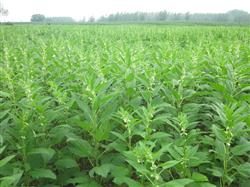
What diseases should be prevented and controlled during the cultivation of white sesame?
What diseases should be prevented when growing white sesame? Please explain that the following diseases should be prevented when growing white sesame: 1. Characteristics of major disease occurrence. The main sesame diseases include sesame stem spot blight, sesame Fusarium wilt, sesame bacterial wilt, sesame Phytophthora blight, etc. 1. Sesame stem spot blight. Sesame stem spot blight is also called sesame stem blight, sesame black root madness, etc.
-
What are the precautions for planting sesame in summer?
What problems should be noted when planting sesame in summer? Please give an introduction because during the summer sesame sowing period, temperatures are high and the weather is changeable. If drought occurs, the seedlings are easily "scorched to death," causing gaps in the stand; if heavy rain occurs, they are easily "smothered to death," also causing gaps in the stand. Therefore, mechanized sowing is recommended, sowing 0.7 kg per 667 sq m, using 2...
-
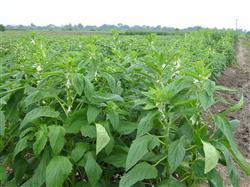
What are the key technical points for summer management of black sesame?
How should black sesame be managed in summer? Please give guidance. The summer management methods for black sesame can refer to the following: First, thinning and final thinning of seedlings, checking seedlings and filling gaps. Because sesame seeds are small and many seedlings emerge, after emergence, when the first pair of true leaves grows, the seedlings should be thinned; when 2-3 pairs of true leaves grow, the seedlings should be thinned again; at 4 pairs of true leaves, the seedlings should be finally thinned. Black sesame generally leaves about 8,000 plants per mu; if seedling gaps or broken rows occur due to poor soil moisture at sowing, transplanting dense seedlings to fill sparse areas or replanting after sprouting can be used to ensure full and strong seedlings.
-
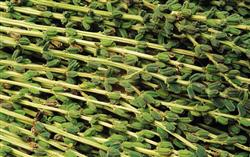
A Complete Analysis of the Key Technical Points for Growing Black Sesame
1. Land preparation and fertilization: Choose sandy loam or loam fields with loose soil, good aeration, and medium to above-medium fertility for planting, and avoid continuous cropping. Prepare the land and fertilize at the end of May and the beginning of June, applying 10-15 kg of urea or 20-25 kg of ammonium bicarbonate per mu, along with 5-10 kg of potassium chloride. 2. Seed treatment: Sun the seeds for 1-2 days before sowing. To prevent...
-
What are the key points of fertilization techniques for summer sesame?
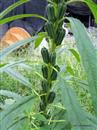
Dense-pod sesame Yizhi No. 1 is one of the higher-yielding types of sesame today, drought-tolerant, lodging-resistant, with very dense pod set, 3 to 7 capsules per leaf, layered thickly one upon another, so dense the stalks cannot be seen, seeds pure white, oil content above 55%, growth period 110 days for spring sowing and 85 to 90 days for summer sowing, yielding 100 kg to 150 kg of sesame per 667 sq m, with high yields...
-

条件筛选