What diseases should be prevented and controlled during the cultivation of white sesame?
What diseases should be prevented when growing white sesame? Please explain that the following diseases should be prevented when growing white sesame: 1. Characteristics of major disease occurrence. The main sesame diseases include sesame stem spot blight, sesame Fusarium wilt, sesame bacterial wilt, sesame Phytophthora blight, etc. 1. Sesame stem spot blight. Sesame stem spot blight is also called sesame stem blight, sesame black root madness, etc.
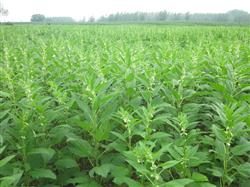
What diseases should be prevented when growing white sesame? Please explain
The following diseases should be prevented when growing white sesame:
I. Characteristics of major disease occurrence. The main sesame diseases include sesame stem spot blight, sesame Fusarium wilt, sesame bacterial wilt, sesame Phytophthora blight, etc. 1. Sesame stem spot blight. Sesame stem spot blight is also called sesame stem blight, sesame black root madness, etc. It mainly damages sesame stems, roots and seedlings. When the disease occurs at the seedling stage, the aboveground part of the diseased seedling wilts and dies, and the roots turn brown and die. After the stem is damaged, the diseased stem first shows yellow-brown water-soaked spots, which develop rapidly and become encircling spots; in the late stage, the lesions become dark brown, and later the stem becomes hollow and breaks easily. After the roots are damaged, the main root and lateral roots gradually turn brown, and a large number of black sclerotia form in the root cortex, causing the roots to die. The pathogen of this disease overwinters as sclerotia on seeds, in soil and on diseased plant residues. The following year, conidia spread in the field by wind, rain and airflow, mainly invading and damaging from the stem base, roots and leaf stalks. Sesame is most susceptible during the seedling stage and full flowering stage. Diseased plants can produce conidia that spread and cause further infection. High temperature, high humidity and abundant rain are conducive to the occurrence and epidemic of the disease, and excessive application of nitrogen fertilizer, overly dense planting and continuous cropping increase the damage. 2. Sesame Fusarium wilt. Sesame Fusarium wilt is also called half-side yellowing or yellowing, and is a typical vascular disease. The pathogen mostly invades from the root tips and wounds of seedlings. After invading from the roots, the pathogen enters the vessels and spreads along the vessels to the stems, leaves, capsules and seeds, causing the whole plant to become diseased and die. The stem base of diseased plants is reddish brown, the stem vascular bundles are brown, and the leaves turn yellow, wilt and die. Sometimes, when infection is limited to one side, it appears as disease and death on only one side. When moist, pink mold appears on the damaged parts. The pathogen of this disease overwinters in the soil, in diseased plant residues, or inside and on the surface of seeds. The disease begins in June and reaches its peak in August. Continuous sesame cropping, poor soil fertility and high field humidity are conducive to the occurrence and epidemic of the disease. 3. Sesame bacterial wilt. Sesame bacterial wilt is commonly called sesame plague and is a disease caused by bacteria. The pathogen invades from root wounds or natural openings and spreads upward from the bottom within the plant vessels. Diseased plants initially appear as if lacking water, wilting during the day and recovering at night; after a few days, they also wilt at night. The outside of the roots and stems of affected plants shows dark brown streaks, the internal vascular bundles are brown, and bacterial ooze exudes. The veins of affected leaves show dark green streaks, and diseased capsules show dark brown streaks. The pathogen of this disease overwinters in the soil with diseased plant residues and spreads by flowing water or agricultural operations. The disease peak mostly occurs in summer from July to August. After storms, a sudden rise in temperature is conducive to the occurrence and epidemic of the disease. 4. Sesame Phytophthora blight. Sesame Phytophthora blight is a devastating disease. It mainly damages the stem base, stems, capsules and leaves of sesame. After the stem base is damaged, it first appears dark green and water-soaked, then reddish brown, sunken, with longitudinal cracking of the cortex. After the stems and capsules are damaged, the diseased parts appear dark green and water-soaked, constricted and sunken, and produce cottony white mold. After the leaves are damaged, yellow-brown lesions appear, with indistinct concentric rings. The pathogen of this disease overwinters as mycelium or oospores in diseased plant residues. The following year, the pathogen infects the stem base, produces sporangia, and spreads by wind, rain and flowing water for further secondary infection. The disease begins at the sesame bud stage in July and reaches its peak in August. Damage is severe under rainy and humid conditions.
II. Integrated control techniques 1. Select disease-resistant varieties and treat seeds. Choose varieties with good quality, high yield, waterlogging tolerance and strong disease resistance, such as Yuzhi No. 8, Yizhi No. 1, etc. Before sowing, soak seeds in 55°C warm water for 10 minutes or in 60°C warm water for 5 minutes, then dry them and sow. Alternatively, dress seeds with quintozene plus thiram (1:1), with the amount used accounting for 0.5-1% of seed weight; or soak seeds in 0.5% copper sulfate solution for half an hour. All have good control effects. 2. Agricultural control. Soil-borne diseases and insect pests of sesame are serious, and continuous cropping is most avoided. A 3-5 year rotation of sesame with cotton, sweet potato and gramineous crops can better control the occurrence and epidemic of diseases. After sesame harvest, promptly remove diseased residues from the field, and burn or deeply bury them in a centralized manner to reduce overwintering inoculum sources. Promptly pull out diseased plants and take them out of the field for destruction to prevent the spread of the pathogen. Strengthen fertilizer and water management, increase base fertilizer, with the base fertilizer mainly being medium- and slow-release organic fertilizer, and apply it mixed with phosphorus and potassium fertilizers. Do not apply or apply little nitrogen fertilizer at the seedling stage, so as to cultivate healthy seedlings and make it difficult for the pathogen to invade. Adopt high-ridge cultivation, promptly clean ditches and drain water, prevent water accumulation in the field, and reduce field humidity. 3. Chemical control. The control of sesame diseases should be based mainly on agricultural control, and chemical control should be applied before disease occurrence for protective spraying, or at the early stage of disease occurrence. Control agents include 37% Kuwei Like wettable powder 800-fold solution, 40% carbendazim suspension 700-fold solution, 50% thiophanate-methyl wettable powder 800-1000-fold solution, 80% copper sulfate wettable powder 800-fold solution, etc.
Click to get more sesame cultivation techniques
Click to get more food crop cultivation techniques