A Complete Analysis of the Key Technical Points for Growing Black Sesame
1. Land preparation and fertilization: Choose sandy loam or loam fields with loose soil, good aeration, and medium to above-medium fertility for planting, and avoid continuous cropping. Prepare the land and fertilize at the end of May and the beginning of June, applying 10-15 kg of urea or 20-25 kg of ammonium bicarbonate per mu, along with 5-10 kg of potassium chloride. 2. Seed treatment: Sun the seeds for 1-2 days before sowing. To prevent...
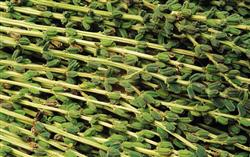
1. Land preparation and fertilization: Choose sandy loam or loam fields with loose soil, good aeration, and medium to above-medium fertility for planting, and avoid continuous cropping. Prepare the land and fertilize at the end of May and the beginning of June, applying 10-15 kg of urea or 20-25 kg of ammonium bicarbonate per mu, along with 5-10 kg of potassium chloride.
2. Seed treatment: Sun the seeds for 1-2 days before sowing. To prevent sesame black spot and stem spot blight, soak the seeds in warm water at 50-55°C for about 15 minutes, remove them after cooling, dry them, and sow. The sowing rate is 0.5 kg per mu.
3. Thinning and final thinning: Thin the seedlings when the first pair of true leaves unfolds. When 2-3 pairs of true leaves have grown, set the plants at a spacing of 15 x 20 cm between plants and rows, remove the dense and fill in the sparse, leaving 8000-10000 strong seedlings per mu.
4. Topping at the right time: 10-20 days after the early flowering stage, remove about 1 cm from the tips of the main stem and each branch.
5. Disease control: After black sesame buds appear, when the stems are growing rapidly, spray with a 50% iprodione 800-1000 times solution, once every 5-7 days, for 2-3 consecutive applications, which can effectively control black spot, leaf blight, and stem spot blight.
6. Harvest at the right time: Sesame ripens very unevenly. If harvested too early, the upper seeds cannot mature; if harvested too late, the lower seeds are prone to shattering, causing losses. Harvesting should be done half a month to 20 days after the final flowering stage, or about 5 days after topping. After harvesting, pile the plants for a period before threshing so the seeds can fully mature.