-
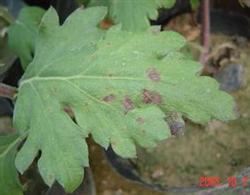
What are the control methods for black spot disease in chrysanthemums?
How do you control black spot disease in chrysanthemums? Please note that the pathogen is Septoria chrysanthemella. Also known as brown spot and leaf blotch. It is a serious disease of chrysanthemums and occurs everywhere. Symptom characteristics: on infected leaves, purplish-brown spots of round, oval or irregular shape and varying size first appear, and later...
-
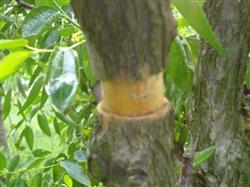
Why Doesn't the Jujube Tree Bear Fruit? An Analysis of Causes and Management Methods
Why doesn't the jujube tree bear fruit? Please explain the causes. The main reasons a jujube tree fails to bear fruit are the following three: Reason one why a jujube tree fails to bear fruit: excessive tree vigor. Solution: During the full flowering period of the jujube tree, perform ring barking (girdling) at the base of the main branches, cutting deep to the xylem, with a width of about 0.5 cm - roughly, however thick the bark is, that is how wide to cut....
-
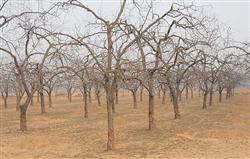
What are the methods for preventing and controlling pests and diseases of jujube trees in autumn and winter?
Please introduce the methods for preventing and controlling pests and diseases of jujube trees in autumn and winter? Detailed operation methods would be best. For the methods for preventing and controlling pests and diseases of jujube trees in autumn and winter, you can refer to the following methods: 1. Clean the orchard: Pests and diseases such as jujube rust, green plant bug, and jujube slug moth overwinter in fallen branches, leaves, or weeds under the trees. Therefore, after the jujube trees shed their leaves...
-
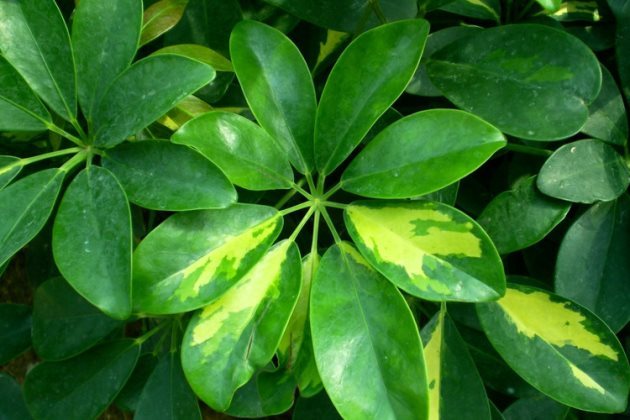
Can't grow Schefflera arboricola well? Master the method and it will flourish with lush branches and leaves
Schefflera arboricola, also known as duck-foot wood and Schefflera octophylla, is a very common landscaping plant in residential communities and parks. Schefflera arboricola is very effective at purifying the air, absorbing carbon dioxide, formaldehyde, benzene and other renovation waste gases, secondhand smoke and more...
-
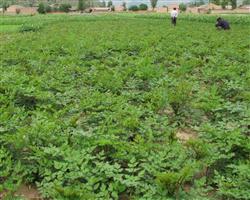
What are the control methods for Angelica sinensis pests and diseases?
How to control Angelica sinensis pests and diseases? Please give a detailed introduction. For pest and disease control in Angelica sinensis cultivation, you can refer to the following methods: (1) Root rot (Mako disease): mid-April, mid-June, early September, and early November after transplanting are the peak periods of the disease. It damages the roots, and an abundance of soil-dwelling pests favors its occurrence. Control methods: (1) Use 391...
-
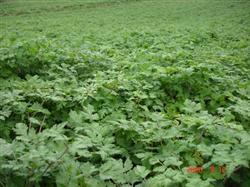
What are the control methods for Angelica sinensis pests and diseases?
How do you control diseases and pests in Angelica sinensis? Please explain the methods. Here are several control methods for Angelica sinensis pests and diseases for reference: Root rot: soak the seedlings in 1:1:150 Bordeaux mixture, sterilize and kill insects in the soil: burn and smoke the soil more in the seedling bed. Brown spot: pay attention to field hygiene, promptly remove diseased leaves, and in the middle and late stages use 1:1:150...
-
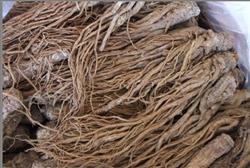
What is the correct harvesting method for Angelica sinensis?
How is Angelica sinensis harvested? Please explain: for autumn direct seeding of Angelica sinensis, it is harvested in the second year; for transplanted plants, it is harvested in the same year, after the plants turn yellow and wither in mid-October. Natural conditions vary from place to place, so the harvest time also differs to some extent. For example, in Minxian, Gansu, it is harvested 3 to 5 days after Frost's Descent; in Sichuan production areas, it is harvested around Frost's Descent; in Yan'an, Shaanxi, it is harvested in late October...
-
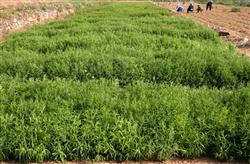
What are the propagation methods of Angelica sinensis?
How many methods are there for propagating Angelica sinensis? Please provide an introduction. Angelica sinensis is propagated by seed, generally using the method of raising seedlings and then transplanting, though direct sowing can also be used. 1. Raising seedlings and transplanting (1) Selecting seeds: After seed selection, Angelica sinensis yields about 14.6 kg more per mu than unselected seeds. The main selection method is selecting by seed head. At harvest time for Angelica sinensis, when the seed coat...
-
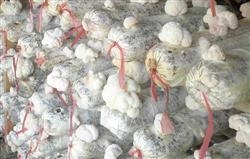
How do you manage the fruiting stage of lion's mane mushroom? These methods you need to master
How do you manage the fruiting stage of lion's mane mushroom? Here are methods you can refer to for managing the fruiting stage of lion's mane mushroom: 1. Create suitable humidity. During the growth and development of the fruiting body, water must be managed scientifically, and different amounts of water should be sprayed according to different conditions such as the size of the mushroom body, surface color, and clear weather. In summary: trenches...
-
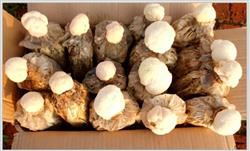
What are the high-yield cultivation methods for lion's mane mushroom?
What methods can achieve high yields when cultivating lion's mane mushroom? Please provide guidance. To achieve high yields in cultivating lion's mane mushroom, attention should be paid to the following aspects: First, select good-quality spawn. The mother culture used for production should have excellent traits, shown by fast growth, uniform and neat growth, and covering the slant within two weeks at the optimal temperature. When stored in a refrigerator, primordia often form, and microscopic examination shows a small number of chlamydospores. If there are too many spores, the yield tends to be low. If the mycelium turns yellow, is thin and weak, or sparse, it indicates that the spawn has degenerated. Uneven or irregular growth, or antagonistic phenomena, indicates that the spawn is not pure, and none of these should be used. All stock spawn should be dense and white, uniform from top to bottom, with no breaks in the mycelium, and vigorous mycelium on the surface. If the substrate shrinks, separates from the container wall, and the color darkens, it indicates that the spawn has aged. If stripes or spots of various colors appear around the wall, it indicates contamination in the spawn, and it cannot be used. Second, the age of the spawn must be appropriate. Generally, mother cultures and stock spawn stored in a refrigerator should not exceed 3 months, and at room temperature (20°C) should not exceed 20 days. If the spawn age is too long, its vigor declines, resulting not only in slow growth and low yield, but also poor stress resistance and high susceptibility to contamination. In addition, excellent varieties suitable for local production should be selected.
条件筛选