What are the control methods for Angelica sinensis pests and diseases?
How to control Angelica sinensis pests and diseases? Please give a detailed introduction. For pest and disease control in Angelica sinensis cultivation, you can refer to the following methods: (1) Root rot (Mako disease): mid-April, mid-June, early September, and early November after transplanting are the peak periods of the disease. It damages the roots, and an abundance of soil-dwelling pests favors its occurrence. Control methods: (1) Use 391...
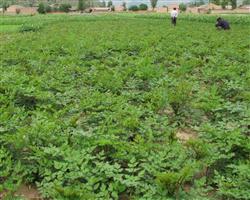
How to control Angelica sinensis pests and diseases? Please give a detailed introduction
For pest and disease control in Angelica sinensis cultivation, you can refer to the following methods:
(1) Root rot (Mako disease): mid-April, mid-June, early September, and early November after transplanting are the peak periods of the disease. It damages the roots, and an abundance of soil-dwelling pests favors its occurrence. Control methods:
(1) Mix 3 kg of 3911 granules with 15 kg of fine soil, or spray 0.5 kg of 20% isofenphos-methyl emulsion added to 2.5 kg of water onto 15 kg of soil and mix well, then broadcast and work it into the soil;
(2) Regularly drench the roots with a broad-spectrum, long-lasting insecticide: use 250 g of 40% carbendazim suspension concentrate or 600 g of thiophanate-methyl per mu, add 150 kg of water, and apply 50 g of the diluted solution per plant, drenching once in early May and once in mid-June.
(2) Sclerotinia rot: it damages the leaves and occurs readily under low-temperature, high-humidity conditions, with more severe damage in July-August. Control methods: do not grow continuously on the same land; starting half a month before the disease occurs, spray 1000-fold diluted 50% thiophanate-methyl about every 10 days, for 3-4 consecutive applications.
(3) Pests are mainly damage by adult needle bugs and small cutworms. Control methods: remove weeds inside and around the field, pile them into small heaps, replace with fresh grass every 7-10 days, and use poisonous bait to trap and kill them.
Click to get more Angelica sinensis cultivation techniques
Click to get more medicinal herb cultivation techniques