-
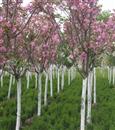
What are the key points of cherry blossom planting and management methods?
How should cherry blossoms be managed well when planted? Please provide guidance. Cherry blossoms are sun-loving flowering trees that like sunlight, tolerate cold and drought, and prefer well-drained sandy soil. They fear wind during the flowering period, so a sheltered spot should be chosen when planting; they are generally planted in mountain gullies, beside streams and in mixed forests. Cherry blossoms have a strong heliotropic tendency, so when transplanting, the original sun-facing side must still face the sun...
-
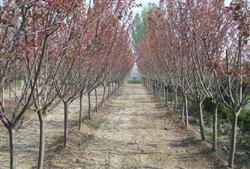
How to prune cherry blossoms? Detailed explanation of the correct methods and techniques
How to prune cherry blossoms? Please give guidance. Three points to note in shaping and pruning cherry blossoms: The shaping and pruning of cherry blossoms should focus mainly on light pruning, following the principles of a natural tree shape that is tall and robust, with branches spaced densely and evenly, and with many lateral branches that are well balanced. When shaping and pruning cherry blossoms, pay attention to the following issues: First: shaping and pruning before flowering should...
-
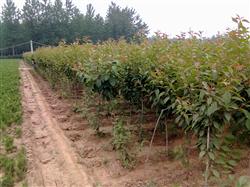
How do you plant and cultivate cherry blossoms? It's easy once you master the method
How do you plant and cultivate cherry blossoms? Here is a detailed introduction. You can refer to the following methods for planting cherry blossoms: 1. Planting is generally done in the ground, with a small amount in pots. Plant before buds break in spring, or plant in autumn when leaves fall. In the Beijing area, it is suitable to plant in a small environment with plenty of sunlight. Because cherry blossoms are a shallow-rooted tree species, the planting hole should be large...
-
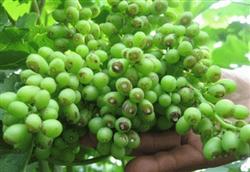
What are the control methods for grape anthracnose?
What harm does anthracnose do to grapes? How do you control grape anthracnose? We also ask netizens to help introduce it. Zhongdi Network has compiled the harm, causes and control methods of grape anthracnose, listed below for your reference. The harm of anthracnose to grapes: anthracnose mainly damages the fruit, while leaves, new...
-
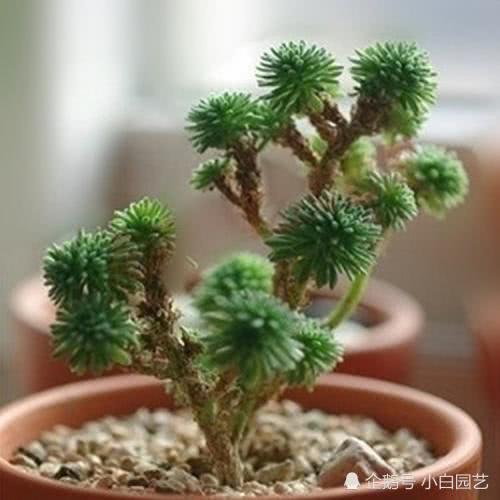
How to grow Sedum multiceps? The correct cultivation method beginners must read
Sedum multiceps, also known as dwarf stonecrop, is a very short plant, just like a mini version of a pine tree. Its appearance is very small and distinctive. From a distance, it looks like a furry ball hanging on the tip of a tree, and it is very ornamental, so it is also favored by many friends...
-
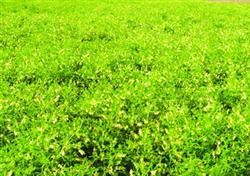
What are the control methods for purple root rot of Astragalus membranaceus?
How to control purple root rot of Astragalus membranaceus? Please explain the methods. The pathogen of purple root rot of Astragalus membranaceus is a kind of basidiomycete fungus, which mainly damages the underground roots. It first occurs on the underground fibrous roots, then spreads to the lateral roots and the main root. In the early stage of the disease, a layer of white thread-like material can be seen wrapped around the roots; as the disease develops, it turns purplish brown and...
-
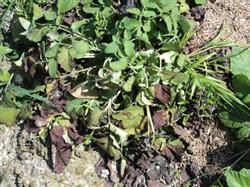
What are the control methods for root rot in red sage (Salvia miltiorrhiza)?
How do you control root rot in red sage? Please provide an introduction. Red sage root rot: 1. Harmful symptoms: Red sage root rot occurs in hot, rainy seasons and harms the plant's roots. In the early stage, only a few roots or part of the underground rhizome become diseased first, gradually spreading to the entire root system. After the roots are damaged, wet rot occurs, the outer skin turns black,...
-
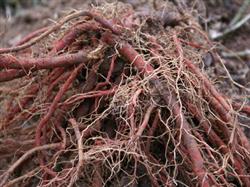
What are the control methods for root-knot nematode disease in Danshen (Salvia miltiorrhiza)?
How to control root-knot nematode disease in Danshen (Salvia miltiorrhiza)? What are the symptoms of root-knot nematode disease in Danshen (Salvia miltiorrhiza)? The control methods for root-knot nematode disease in Danshen (Salvia miltiorrhiza) can be referred to as follows: 1. Damage symptoms. The disease damages the roots of Danshen (Salvia miltiorrhiza). The affected taproots, lateral roots and fibrous roots all bear tumor-like root galls; the taproots and lateral roots become thinner, and the fibrous roots increase in number. On the galls...
-
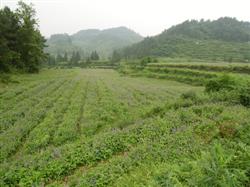
What are the cultivation methods and key technical points for Salvia miltiorrhiza?
What are the methods for growing Salvia miltiorrhiza? Please give an introduction. Salvia miltiorrhiza, also known as purple salvia, red salvia, blood salvia, and red-rooted salvia, is the dried root of the plant Salvia miltiorrhiza in the Lamiaceae family. It has the functions of removing blood stasis and relieving pain, promoting blood circulation and regulating menstruation, and nourishing the heart and relieving restlessness. It is suitable for irregular menstruation, amenorrhea, ectopic pregnancy, hepatosplenomegaly, angina pectoris, restlessness and insomnia...
-
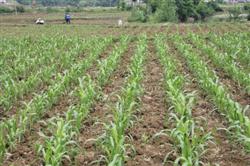
What are the methods for weed control in sorghum fields?
How do you control weeds in sorghum fields? Please explain the methods. Weeds are a major disaster in sorghum production, competing with sorghum for water, nutrients, light and space, causing a decline in sorghum yield and quality. Weed damage is especially severe in low-lying land and saline-alkali land, and it is year-round, that is, weeds cause damage at any time...
条件筛选