-
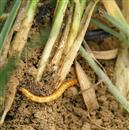
What are the control methods for click beetles in mint?
How do you control click beetles in mint? What harm do click beetles cause? We also invite knowledgeable readers to share their input. Click beetles are commonly known as "jie jie chong" or "wireworms" and are the larvae of click beetles. Common species of click beetles include the striped click beetle, the slender click beetle, the brown-striped click beetle, and the broad-backed click beetle. Zhongdiwang has compiled information on the harm caused by click beetles...
-
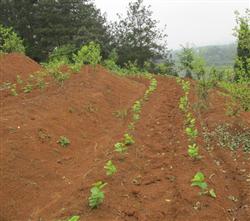
What are the methods for choosing a ginseng planting site?
How should a ginseng planting site be chosen? How should the soil be treated before planting ginseng? We ask knowledgeable readers to help explain. The fleshy root of ginseng is a famous tonic and restorative medicine, suitable for regulating blood pressure, restoring heart function, neurasthenia and physical weakness, and it also has expectorant, stomachic, diuretic and stimulant effects, which has led to...
-
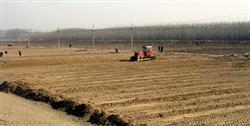
How to sow Angelica dahurica seeds? Detailed explanation of the correct sowing method
How to sow Angelica dahurica seeds properly? What should be noted? We ask netizens to help introduce this: Angelica dahurica prefers warm and humid conditions, ample sunlight, fears high temperatures, can tolerate cold, and has strong adaptability. Angelica dahurica is best propagated by seed, generally by direct sowing, and is not suitable for transplanting; transplanted plants have many forked roots and poor main root growth, affecting...
-
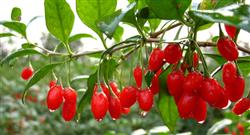
What are the control methods for leaf mold on goji berry trees?
What harm does leaf mold on goji berry trees cause, and how is it controlled? Is there a knowledgeable reader who can help explain? Zhongdi Network has compiled the harm and control methods of leaf mold on goji berry trees, listed below for readers' reference. Harm of leaf mold on goji berry trees: Leaf mold on goji berry trees mainly harms the leaves. Chlorotic yellow spots appear on the upper surface of the leaves, with blurry, indistinct edges, and dark mold spots appear on the corresponding lower surface, also with indistinct edges. Several lesions can merge into patches, or when the mold spots are densely packed, most of the lower leaf surface is covered by mold-like matter, eventually causing the leaves to turn yellow or dry up, making them inedible.
-

Achyranthes bidentata Growing Methods and Key Points for Pest and Disease Control
How is Achyranthes bidentata grown? What pests and diseases need to be controlled? Please provide guidance. For Achyranthes bidentata cultivation methods and pest and disease control, you can refer to the following methods: Site selection and land preparation. Achyranthes bidentata is a deep-rooted crop, so it is best to plant it in sandy loam soil with deep, loose, fertile soil, good drainage and a relatively low groundwater table. After selecting a good site, the soil should be...
-

What are the daily management methods for growing Achyranthes bidentata?
How do you manage Achyranthes bidentata in daily cultivation? Please provide guidance on methods. To get a good harvest from growing Achyranthes bidentata, management is needed, and the management methods can refer to the following: 1. Seedling protection: after sowing, keep a certain humidity in the field, and seedlings will emerge in 7-10 days. If drought occurs, water promptly to protect the seedlings. 2. Thinning and fixing...
-

What are the control methods for white rust in Achyranthes bidentata?
How do you control white rust in Achyranthes bidentata? Please explain the control methods. White rust in Achyranthes bidentata is mainly caused by a fungal infection of the plant. The symptoms are that all aboveground parts of the plant can be affected, and when leaves are damaged, pale yellow-green patches appear on the leaf surface, with blister-like raised spots developing on the corresponding underside, 1-2 mm in diameter. After the epidermis ruptures, a white, glossy, sticky, powdery substance is released...
-

What are the cultivation methods for leaf goji?
How do you grow leaf goji? Here is a detailed introduction to the cultivation methods. Goji has strong adaptability to soil and can grow in arid, sandy wasteland and saline-alkaline soils, but it grows best in slightly alkaline soil that is deep, loose, fertile and well drained. Goji can be planted by referring to the following methods: seed...
-
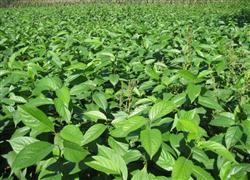
What are the methods for vegetative propagation of Eucommia ulmoides?
How is Eucommia ulmoides propagated vegetatively? Please describe the methods. For vegetative propagation of Eucommia ulmoides, the following methods can be used: 1. Root cutting for seedling raising. Dig up root segments from large plants, or use the thicker roots trimmed off when lifting seedlings, cut them into 7 to 10 cm long segments, first make holes in the seedbed with a wooden cone slightly thicker than the root segment, then insert the lower end of the root segment...
-
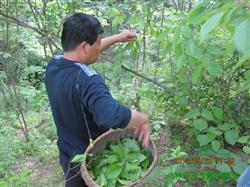
What are the harvesting methods for Eucommia bark and leaves?
How are Eucommia bark and leaves harvested? Please describe the methods. Eucommia bark and leaves can be harvested by referring to the following methods: 1. Bark harvesting. For Eucommia trees planted for 10-15 years, the bark can be harvested for medicinal use. There are 2 methods of peeling bark. (1) The felling and peeling method, also called the complete peeling method. Every year in April-May, when the tree sap begins to flow...
条件筛选