How to sow Angelica dahurica seeds? Detailed explanation of the correct sowing method
How to sow Angelica dahurica seeds properly? What should be noted? We ask netizens to help introduce this: Angelica dahurica prefers warm and humid conditions, ample sunlight, fears high temperatures, can tolerate cold, and has strong adaptability. Angelica dahurica is best propagated by seed, generally by direct sowing, and is not suitable for transplanting; transplanted plants have many forked roots and poor main root growth, affecting...
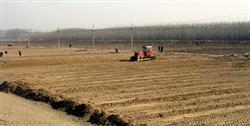 How to sow Angelica dahurica seeds properly? What should be noted? We ask netizens to help introduce this
Angelica dahurica prefers warm and humid conditions, ample sunlight, fears high temperatures, can tolerate cold, and has strong adaptability. Angelica dahurica is best propagated by seed, generally by direct sowing, and is not suitable for transplanting; transplanted plants have many forked roots and poor main root growth, affecting yield and quality. Zhongdiwang has compiled the sowing methods for Angelica dahurica seeds, listed below for netizens' reference.
Selection of cultivation site for Angelica dahurica:
Angelica dahurica has no strict requirements for the previous crop; even continuous cropping land where the previous Angelica dahurica crop grew well can be used. It is best to choose flat terrain, ample sunlight, deep plow layer, loose and fertile, well-drained sandy loam.
Land preparation before sowing Angelica dahurica:
After the previous crop is harvested, apply 2500-5000 kg of decomposed compost or barnyard manure, 100 kg of cake fertilizer and 50 kg of phosphate fertilizer per mu as base fertilizer; fertile land can be given less. After applying, plow to a depth of more than 1 chi, then sun the soil to allow full weathering, and plow once more after sunning. Deep plowing and fine harrowing are required, and the fertility of the upper and lower soil layers should be even, to prevent excessive fibrous roots caused by overly fertile topsoil, which affects yield and quality.
After leveling and fine harrowing, make beds 15-20 cm high and 1-2 m wide. The bed surface should be flat to facilitate irrigation and drainage, and the topsoil should be level and fine to help seedlings emerge.
Selection of sowing time for Angelica dahurica:
In production, sowing time is strictly required, and sowing at the right time is one of the important steps for obtaining high yield. If sown too early, seedlings grow too vigorously before winter, and some plants will bolt and flower early the next year, with roots becoming lignified or rotting, making them unusable for medicinal purposes and thus affecting yield. If sown too late, the temperature drops, affecting germination and emergence; seedlings are prone to frost damage, grow poorly, and yield is low.
Because seeds stored for a year have a low germination rate while fresh seeds have a high germination rate, fresh seeds harvested in the same year must be used for sowing in production. Generally, autumn sowing is the main method; spring sowing gives low yield and poor quality. The suitable sowing time varies with climate and soil fertility. If the temperature is high, sow later; otherwise, sow earlier. Fertile soil allows appropriately later sowing; conversely, slightly earlier sowing is suitable.
Sowing methods for Angelica dahurica:
Drilling, hole sowing and broadcasting can all be used, but drilling is generally the most common.
Drilling method: with row spacing of 25-30 cm, open shallow furrows (about 4-5 fen deep), sow the seeds evenly into the furrows, and cover with a thin layer of fine soil. Generally, 1-1.5 kg of seed is used per mu.
Click to get more Angelica dahurica cultivation techniques
Click to get more medicinal herb cultivation techniques