What are the control methods for click beetles in mint?
How do you control click beetles in mint? What harm do click beetles cause? We also invite knowledgeable readers to share their input. Click beetles are commonly known as "jie jie chong" or "wireworms" and are the larvae of click beetles. Common species of click beetles include the striped click beetle, the slender click beetle, the brown-striped click beetle, and the broad-backed click beetle. Zhongdiwang has compiled information on the harm caused by click beetles...
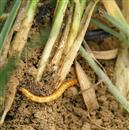 How do you control click beetles in mint? What harm do click beetles cause? We also invite knowledgeable readers to share their input.
Click beetles are commonly known as "jie jie chong" or "wireworms" and are the larvae of click beetles. Common species of click beetles include the striped click beetle, the slender click beetle, the brown-striped click beetle, and the broad-backed click beetle. Zhongdiwang has compiled information on the harm caused by click beetles and their control methods, listed in detail below for readers' reference.
Harm caused by click beetles:
Generally, adult click beetles cause very little harm to crops, but the click beetle larvae cause great harm to crops and are a major soil pest. Because the bore holes of click beetles are very small, they can bore deep into crops to cause damage. In addition to damaging underground tuberous roots and tubers, click beetles can also damage the roots and stems of host plants.
Click beetles damage the root system of crops, thereby reducing absorption function and causing reduced yields. When click beetle damage is severe, it not only lowers crop quality but also affects the edible value of the crop's fruit, and causes missing plants and broken rows in crops, leading to substantial yield reduction or even total crop failure. Click beetles occur more severely in field crops, dry land, and virgin wasteland in spring and autumn.
Control methods for click beetles:
Method one: Deep plowing in autumn or spring can turn some adults or larvae up to the soil surface, exposing them to freezing, drying out, or being preyed upon by natural enemies, parasitized, or mechanically killed, thereby increasing the pest mortality rate. Generally, this can reduce pest numbers by 15%-30%.
Method two: Applying more decomposed organic fertilizer can improve soil structure, improve aeration and permeability, provide good conditions for microbial activity, and promote healthy development of vegetable root systems, thereby enhancing crop resistance to pests. This is because among chemical fertilizers, ammonia-containing fertilizers such as ammonium bicarbonate, ammonium humate, and ammonia water can release irritating ammonia gas after application, which has a certain repellent effect on pests.
Method three: During the peak emergence period of adults, spray with 90% trichlorfon at 800-1000 times dilution, or use 90% trichlorfon at 100-150 grams per mu (666.7 sq m), add a small amount of water, mix with 15-20 kg of fine soil to make toxic soil, spread it on the ground, then harrow the ground to mix the toxic soil with the soil. This kills the adults.
Method four: Seed treatment with 50% phoxim emulsifiable concentrate can eliminate larvae. The ratio of pesticide, water, and seeds is 1:50:600. First dilute the pesticide with water, then spray the liquid onto the seeds and stir evenly, then wrap well with plastic film and let the seeds sit for 3-4 hours. Turn them 1-2 times during this period. Once the seeds have absorbed the liquid, they can be sown.
Method five: If click beetles have already caused damage and the pest numbers are relatively high, root drenching with a pesticide solution can be used. Generally, use 90% trichlorfon at 500 times dilution, or 50% phoxim emulsifiable concentrate at 800 times dilution, or 25% carbaryl wettable powder at 800 times dilution. Apply 150-250 grams per plant to kill larvae in the root zone.
Method six: During the peak emergence period of adults, for every 30000 sq m of vegetable field, use one 40-watt black light lamp, positioned 30 cm above the ground, with a basin placed under the light containing water and a small amount of kerosene. Turn on the light at night to attract adults into the water where they drown.
What harm do root-knot nematodes cause?
What is a cutworm?