-

Cotton Cultivation Techniques: Why Do Cotton Plants Need Flower and Boll Fertilizer?
Why do cotton plants need flower and boll fertilizer? Please explain the reasons. After cotton plants begin to flower, it is both a period of rapid growth of vegetative organs such as stems, branches and leaves, and a critical period when large numbers of flowers open and bolls form to produce yield. During this period, cotton plants accumulate the most dry matter, their demand for nutrients increases greatly, and large amounts of nutrients in the leaves...
-
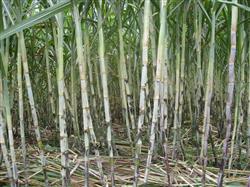
Sugarcane Cultivation Techniques: How to Manage Sugarcane Well During the Jointing Stage?
How to manage sugarcane well during the jointing stage? Please provide guidance on management methods. The jointing stage of sugarcane is the critical period for forming sugarcane yield. After sugarcane enters the elongation stage, its root system is well developed, and its ability to absorb water and nutrients is greatly enhanced. Its demand for light, temperature, water, and nutrients reaches a peak. At this time, fertilization, hilling, pest and disease control, etc...
-
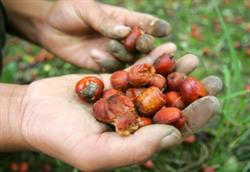
Key Management Techniques for Jujube Trees During the Fruit Enlargement Stage
How should jujube trees be managed during the fruit enlargement stage? Please provide an introduction to the management methods. After jujube fruits enter the enlargement stage, the heavy nutrient growth and reproductive growth consume a large amount of nutrients stored in the tree, and it is also the critical period when the roots rapidly absorb nutrients just as the girdling wound has healed. Therefore, the jujube trees become weaker, suffer from nutrient deficiency, and have a reduced ability to resist adverse external factors...
-
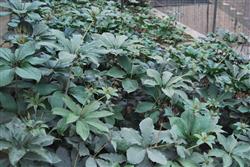
Paris polyphylla cultivation techniques shared, with practical methods explained in detail
Paris polyphylla is a perennial herbaceous plant with a long growth cycle; it takes 8 to 10 years from sowing to harvest. It is one of the main ingredients of state-protected traditional Chinese medicines such as "Yunnan Baiyao" and "Gongxuening". In recent years, with continuously increasing demand, the harvesting rate has far exceeded the rate of natural growth, causing Paris polyphylla resources to become sc...
-
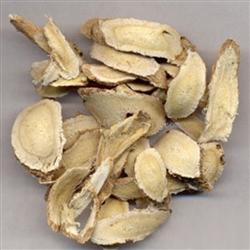
How to grow the medicinal herb Scutellaria baicalensis well? Detailed explanation of the key points of Scutellaria baicalensis cultivation techniques
How to grow the medicinal herb Scutellaria baicalensis well? Please give an introduction. Scutellaria baicalensis prefers warmth and tolerates severe cold; its underground part can withstand a low temperature of -30°C. It is drought-tolerant but afraid of waterlogging. When planted in areas with poor drainage or abundant rain, the growing environment is poor, growth is poor, and root rot is easily caused. For the cultivation methods of Scutellaria baicalensis, you can refer to the following techniques: 1. Cultivation methods...
-
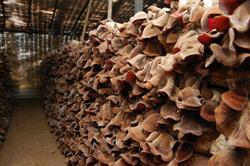
Detailed Explanation of Key Management Techniques for Oversummering Wood Ear Mushroom (Auricularia polytricha)
How to manage oversummering wood ear mushroom (Auricularia polytricha)? Please give an introduction. Oversummering wood ear mushroom (Auricularia polytricha) can be managed by referring to the following methods: 1. Making fungus logs. For soil-covered oversummering cultivation of wood ear mushroom (Auricularia polytricha), the inoculation time for making fungus logs should be postponed by 30-45 days compared with conventional spring cultivation, that is, from late April to early May. At this time, the temperature is 20-30°C, which is just suitable for...
-
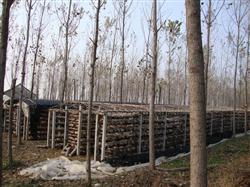
Key Techniques for Summer Cultivation of Black Wood Ear (Auricularia heimuer) in Forest Intercropping
How do you cultivate black wood ear in forest intercropping in summer? Please provide guidance. Under normal conditions, black wood ear grown in forest intercropping should produce 3 flushes. However, at present, after some first-flush wood ears are harvested, the bags become infected with contaminant microorganisms before the second flush even emerges, causing reduced yields or even total crop failure in the second and third flushes, which hurts profits. I. Causes of contaminant microorganism infection during flush transition: (1)...
-
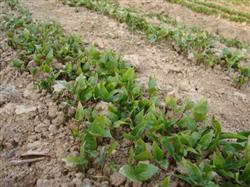
Detailed Explanation of Magnolia grandiflora Propagation Methods and Techniques
How to propagate Magnolia grandiflora? Here is an introduction. Magnolia grandiflora propagation can be done by referring to the following methods: Magnolia grandiflora propagation mainly relies on grafting, using Magnolia liliiflora and Magnolia aromatica as rootstock, performing cleft grafting, side grafting or bud grafting, etc. Cuttings can be taken in early June when the lateral buds on new shoots are plump. Layering is suitable for preserving and developing famous and superior varieties...
-
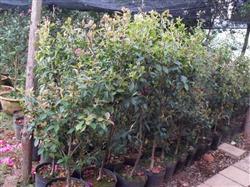
A Detailed Guide to Camellia Propagation Methods and Planting Techniques
How do you propagate and plant camellias? Here is an introduction to the methods. Camellia propagation and planting can be done by referring to the following methods: Propagation techniques 1. Cuttings. In the rainy season from May to June, select a young mother plant, cut a one-year-old softwood shoot about 10cm long from the tip, remove the lower leaves, trim flat below the node with a blade, and keep at the tip...
-
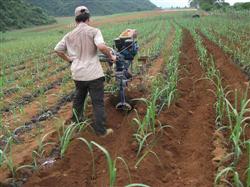
Why does sugarcane need hilling? A detailed explanation of planting techniques
Why does sugarcane need hilling? What are the benefits of hilling sugarcane? How do you hill sugarcane? Let us introduce each one by one. Zhongdiwang has compiled the benefits and methods of hilling sugarcane, listed below for netizens to refer to. Hilling sugarcane because the sugarcane stem borer (stalk borer), besides harming sugarcane seedlings and causing deadheart seedlings, also...
条件筛选