Detailed Explanation of Key Points for High-Yield Cultivation Techniques of Honeysuckle
How to cultivate honeysuckle (Lonicera japonica Thunb.) for high yield? Methods wanted. Honeysuckle (Lonicera japonica Thunb.), also known as silver flower, double flower, second flower, Japanese honeysuckle, Su flower, etc., is the flower bud of plants in the genus Lonicera of the family Caprifoliaceae. It is a commonly used Chinese medicinal material with the functions of clearing heat and detoxifying, dispersing wind and reducing swelling. In recent years, in addition to medicinal use, it is also used to produce toothpaste, beverages...
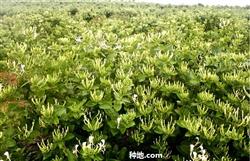
How to cultivate honeysuckle (Lonicera japonica Thunb.) for high yield? Methods wanted
Honeysuckle (Lonicera japorica Thunb.), also known as silver flower, double flower, second flower, Japanese honeysuckle, Su flower, etc., is the flower bud of plants in the genus Lonicera of the family Caprifoliaceae. It is a commonly used Chinese medicinal material with the functions of clearing heat and detoxifying, dispersing wind and reducing swelling. In recent years, in addition to medicinal use, it is also an important raw material for producing toothpaste, beverages, and cosmetics. Its high-quality products are in short supply for export. The cultivation experience is now introduced as follows:
1 Distribution and Habits
Honeysuckle is mainly produced in Shandong, Henan and other provinces, and is now cultivated throughout the country. Among them, the "Southern Honeysuckle" produced in Henan is of good quality, and the "Eastern Honeysuckle" produced in Shandong is famous nationwide for its large quantity.
Honeysuckle is a light-loving crop. It prefers a warm and humid climate and has strong adaptability. It can tolerate cold, drought, and waterlogging. It has low requirements for soil and can be cultivated in mountainous areas, hills, and plains across the north and south of the country, but loose, fertile, well-drained sandy loam soil is best.
2 Cultivation Techniques
2.1 Propagation methods include cutting, seed, root division, and layering propagation. Cutting is further divided into direct cutting and cutting seedling raising. Because direct cutting occupies a large area and has a low survival rate, it is not conducive to seedling-stage management; seed propagation is labor-intensive and slow to produce seedlings; root division and layering are not conducive to large-scale propagation and are time-consuming and labor-intensive. The above methods are not commonly used. At present, cutting seedling propagation is mainly used.
Site selection and land preparation: Select sandy loam soil that is loose, fertile, and well-drained, and a place with convenient irrigation and a water source as the seedling-raising site. Deeply plow more than 30 cm, level and harrow finely, apply sufficient base fertilizer, and make high beds 1.3 m wide for cutting seedling raising. For the cultivation land, scattered plots such as barren slopes, field edges, ditch sides, and areas in front of and behind houses can be used. Deeply plow, apply sufficient base fertilizer, and make high beds or high ridges for planting.
Selection and treatment of cuttings: Select robust, plump branches 1-2 years old, cut them into cuttings about 30 cm long, retaining about 3 nodes. Remove the lower leaves and keep 2-4 leaves on the upper part. Cut the lower end into a smooth slanted surface, tie into small bundles, quickly dip the lower slanted surface in a 500 mg/kg indolebutyric acid aqueous solution for 5-10 seconds, let them dry slightly, and then proceed with cutting immediately.
Cutting seedling raising: In early spring, on the prepared cutting bed, draw lines at a row spacing of 15-20 cm, use a small wooden stick to make guide holes on the bed surface every 3-5 cm, then insert the cuttings 1/2-2/3 into the holes, press firmly and tightly, water immediately, and build a plastic film arched shed to preserve heat and moisture. After about half a month, they can take root and sprout new shoots. At this time, the arched shed can be removed for seedling-stage management.
For spring cutting seedling raising, the seedlings can be released from the nursery and planted in the same winter or the following spring.
Transplanting is carried out before sprouting in early spring or during the dormant period in autumn and winter. On the prepared planting land, dig holes at a row spacing of 130 cm and a plant spacing of 100 cm, with a width and depth of 30-40 cm each. Mix sufficient base fertilizer evenly with the subsoil and apply it into the holes. Plant 1 strong seedling per hole, fill with fine soil, press firmly, tread firm, and water thoroughly to settle the roots.
2.2 Field Management
Weeding and fertilizing: After transplanting and survival, fertilize 3-4 times each year in combination with intertillage and weeding. During intertillage and weeding, note that the area around the plant rhizosphere should be shallow, while farther away it can be slightly deeper, to avoid damaging the roots and promote root growth. Fertilization in spring and summer should mainly use decomposed human and livestock manure water or ammonium sulfate, urea, etc., applied in shallow furrows; in winter, decomposed barnyard manure or compost, ammonium sulfate, superphosphate, and other mixed fertilizers should be applied in combination with earthing up around the rhizosphere.
Shaping and pruning: After transplanting and survival, through shaping and pruning, train the creeping vine into an upright small single-plant shrub, increase branching, expand the crown, make the branches open and evenly distributed, improve ventilation and light penetration, increase the flower-picking area and the number of harvests, and greatly increase yield. Specific shaping and pruning methods: within 1-2 years after planting, the main task is to cultivate an upright, thick main trunk. When the main trunk height is 40-50 cm, cut off the top tip to promote lateral buds to sprout into branches. After sprouting in the second spring, select and retain 4-5 thick branches on the upper part of the main trunk as main branches, arranged in two layers. In winter, among the first-level branches growing from the main branches, retain 5-6 pairs of buds and cut off the upper part. Later, among the second-level branches growing from the first-level branches, retain 6-7 pairs of buds and cut off the upper part. Among the flowering branches growing from the second-level branches, if there are hook-shaped tender tips, remove them promptly. Among the second-level branches or on the original old flowering branches, short shoots with dense nodes and fine leaves are all flowering branches and should be retained. Thereafter, prune once each summer after flower picking, and each pruning should be accompanied by one topdressing. Winter pruning should also be done once each year, from after Frost's Descent to before the ground freezes. Winter pruning mainly removes dead old branches, diseased and pest-damaged branches, thin and weak branches, crossing branches, etc., so that nutrients are concentrated on producing new branches and forming flower buds.
3 Harvesting and Processing
3.1 Harvesting: Honeysuckle blooms over a relatively concentrated period, about 15 days. Timely picking is the key to increasing yield and quality. The harvesting period must be before the flower buds open, when the flower buds turn from green to white, the upper part swells, and the lower part is still green (or when the flower buds have completely turned white), and harvesting should be done before 9 a.m. Harvesting at this time, first, does not damage immature flower buds, and second, the flower buds are of the best quality and the yield is high.
3.2 Processing: After harvesting, processing should be timely to prevent pile fermentation. Processing methods include air drying or oven drying. Note that the temperature during oven drying should not be too high. First control it at about 30°C for 2 hours, then raise the temperature to 40-50°C and maintain it for several hours. When the honeysuckle is nearly dry, raise the room temperature to about 60°C so that the flowers dry thoroughly quickly. This drying method gives better quality and higher yield than air drying.
Click to get more honeysuckle planting techniques
Click to get more medicinal herb planting techniques