-
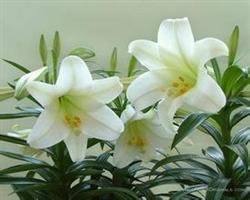
Cut Lily Disease Prevention and Control Methods and Key Technical Points
I. Lily blight 1. Symptoms: Stems, leaves, flowers and scales can all be affected, mainly the tender leaves of the flowers. When leaves are affected, small water-soaked spots appear, which gradually expand and turn grayish-green. When the stem is affected, the water-soaked discolored area spreads upward and downward and rots, further developing into bending and drooping of the stem. In severe cases, the flowers...
-
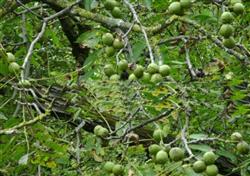
Pecan Pest and Disease Control Methods and Key Technical Points
How do you control pests and diseases in pecans? Please provide guidance. The methods for controlling pecan pests and diseases can refer to the following: Pecan seedlings have many pests and diseases. Common pests include aphids, scarab beetle larvae, and cutworm larvae, while the main disease is root rot. In controlling pests and diseases, grasp the principle of "prevention is more important than cure, with prevention as the priority"...
-
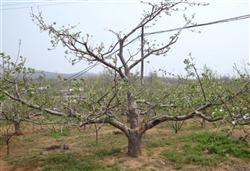
How to winter prune Red Fuji apple trees? Detailed technical points
How to winter prune Red Fuji apple trees? Please guide: when winter pruning Red Fuji apple trees, note the following: 1. After pruning, the tree height should be less than the row spacing; a light-transmitting band of 1.0-1.3 m must be maintained between rows; large branches between trees must not cross each other; framework branches at all levels should be staggered. A leaf canopy spacing of 30-50 cm must be maintained between main branches at each tier to enhance light exposure...
-
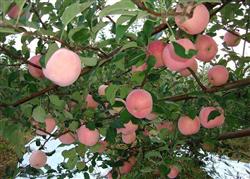
Key Technical Points for Fertilizer and Water Management in Red Fuji Apple Orchards
How should fertilizer and water be managed for Red Fuji apples? Please advise. For Red Fuji orchards, basal fertilizer is generally best applied in late September, mainly using farmyard manure. For young orchards with a yield below 2000 kg per mu, apply 2-3 kg of fertilizer per kg of fruit; for high-yielding orchards with a yield of 2000-3000 kg per mu, apply 1 kg of fertilizer per kg of fruit; for high-yielding orchards above 3000 kg per mu...
-
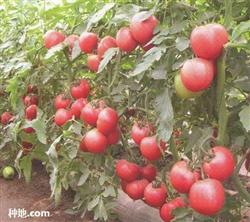
Open-field Tomato Cultivation Methods and Key Technical Points
How to grow tomatoes in the open field? Here are two reference methods for guiding open-field tomato cultivation: 1. Production site environment: choose a loam plot with high and dry terrain, convenient irrigation and drainage, a relatively low groundwater table, and deep, loose soil, and it should comply with GB/T 18407.1-2001 "Safety and Quality of Agricultural Products - Environmental Requirements for Pollution-free Vegetable Production Sites"...
-
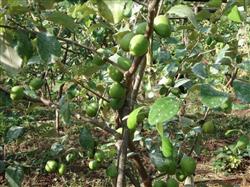
How to Grow Green Jujube? Detailed Explanation of Cultivation Methods and Technical Key Points
How to grow green jujube? Please provide guidance. For growing green jujube, you can refer to the following information: I. Growth and development characteristics of green jujube trees. Green jujube shows a habit of continuous growth throughout the year. As long as the temperature is suitable, the terminal bud grows forward and lateral branches sprout accordingly. Every 3 nodes the branch produces a rib-like alternate branch, and on the branch...
-
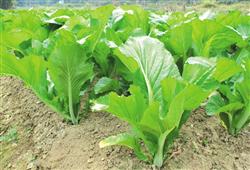
Large mustard greens winter planting methods and key technical points
How to plant large mustard greens in winter? Please give an introduction. Large mustard greens, also known as wrapped-heart mustard greens and fleshy mustard greens, belong to the cruciferous family and are a long-day crop. They prefer cool and moist climate conditions, but are not tolerant of frost. Their flesh is thick and tender, fresh and sweet, and they can be stir-fried with meat. They are especially suitable for processing, such as pickling into sour mustard greens, and the product has a...
-
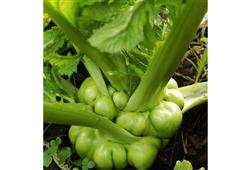
How to Grow Stem Mustard? Detailed Explanation of Planting Methods and Key Technical Points
How to Grow Stem Mustard? Please Introduce the Planting and Management Methods. Stem mustard, also known as caitou, caitou, baobaocai, yangjiaocai, lingjiaocai, etc., is a variety of the Brassica genus in the Brassicaceae family, grown for its swollen stem, which can be boiled, pickled, served cold, stir-fried, or salted. Among them, the variety with protrusions on the swollen stem is suitable for processing, and the processed product is called zhacai (pickled mustard tuber)....
-
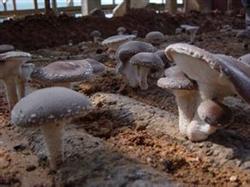
Detailed Explanation of Key Technical Points for Summer Management of Shiitake Mushrooms
1. Box specifications: Rectangular boxes or baskets measuring 50 x 35 x 10 cm, made by nailing wooden boards together or weaving with bamboo strips, locust twigs, or mountain vines, with nail heads or binding ends facing outward, and plastic film lining the inside. 2. Substrate preparation: Mix 88% hardwood sawdust (or cottonseed hulls or straw), 8% wheat bran or rice bran, 2% cornmeal, 1% sugar, 1% gypsum powder...
-
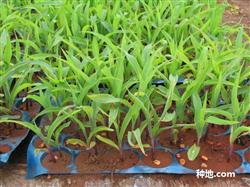
Detailed Explanation of Sweet Corn Seedling Raising Methods and Technical Points
How to raise sweet corn seedlings? Please introduce. Shrunken, unfilled sweet corn seeds are small, shriveled, and plump; the nutrients stored inside the seed for use during the seedling stage are few, making germination and emergence more difficult than ordinary corn seeds. If seed treatment is not carried out, it often manifests during the seed germination stage and the 1-3 leaf stage growth period as a low emergence rate...
条件筛选