Open-field Tomato Cultivation Methods and Key Technical Points
How to grow tomatoes in the open field? Here are two reference methods for guiding open-field tomato cultivation: 1. Production site environment: choose a loam plot with high and dry terrain, convenient irrigation and drainage, a relatively low groundwater table, and deep, loose soil, and it should comply with GB/T 18407.1-2001 "Safety and Quality of Agricultural Products - Environmental Requirements for Pollution-free Vegetable Production Sites"...
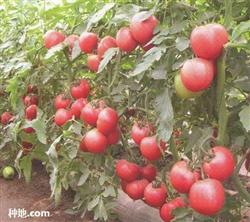
How to grow tomatoes in the open field? Please introduce guidance
The following methods can be referenced for open-field tomato cultivation:
1. Production site environment
Choose a loam plot with high and dry terrain, convenient irrigation and drainage, a relatively low groundwater table, and deep, loose soil, and it should comply with GB/T 18407.1-2001 "Safety and Quality of Agricultural Products - Environmental Requirements for Pollution-free Vegetable Production Sites".
2. Seed: seed quality should comply with DB 3703/003-2002 "Guidelines for the Use of Inputs in Pollution-free Vegetable Production". Choose varieties that are disease-resistant, high-quality, high-yielding, good in marketability, tolerant of storage and transport, and suitable for market demand. Refuse to use genetically modified tomato varieties.
2.1 Seed treatment
2.1.1 Hot water soaking: put the seeds into hot water at 55°C, stir until it cools to 30°C, then soak for 3-4 hours. Mainly controls leaf mold, canker, early blight, and late blight.
2.1.2 Trisodium phosphate soaking: first soak the seeds in clean water for 3-4 hours, then soak in a 10% trisodium phosphate solution for 20 minutes, remove and wash clean. Mainly controls viral diseases.
2.1.3 Dry heat treatment: place dry seeds in a constant-temperature chamber at 80°C for 48 hours, which can effectively control viral diseases.
2.2 Seed soaking and germination
After soaking, place the seeds under conditions of 25-28°C to germinate. Once 60-70% of the seeds have sprouted, they can be sown.
3. Raising strong seedlings free of pests and diseases
3.1 Preparation before sowing
3.1.1 Use seedling-raising facilities such as greenhouses, plastic tunnels, and cold frames. To effectively control pests and diseases, seedling raising should be equipped with insect-proof and shade facilities.
3.1.2 Prepare nutrient soil: use 1/3 fully decomposed barnyard manure and 2/3 pathogen-free mature soil, break it up finely and sieve it; for each m3 of nutrient soil, add 1 kg of superphosphate, 5 kg of plant ash, or 2 kg of nitrogen, phosphorus, and potassium compound fertilizer.
3.1.3 Seedbed disinfection: either of the following two methods may be used: first, for each m2 of sowing bed, use 30-50 ml of formalin, add 3 L of water, spray the bed soil, cover with plastic film for 3 days, then remove the film and sow after the odor has dissipated; second, mix 80 g of 50% carbendazim into each m3 of nutrient soil.
3.2 Sowing and seedling raising
3.2.1 Sowing period: the suitable sowing period is from early February to late April. Seedlings can be raised and then transplanted, or direct sowing can be used.
3.2.2 Sowing rate: according to seed size and planting density, for each 667 m2 of cultivation area, the seed rate for raising seedlings and transplanting is 20-30 g, and the seed rate for direct sowing is about 100 g.
3.2.3 Sowing method: sow when more than 70% of the germinated seeds have broken through the seed coat. Before sowing, water the seedbed thoroughly so that the bed soil is moist to a depth of 10 cm. After the water infiltrates, spread a thin layer of nutrient soil, level the bed surface, then sow evenly. After sowing, cover with 0.8-1.0 cm of nutrient soil. For each 667 m2 of seedbed, then mix 8 g of 50% carbendazim wettable powder or 7 g of 50% seed-dressing dual powder with fine soil and spread it evenly and thinly over the bed surface to control damping-off. Actively promote sowing and seedling raising methods such as nutrient pots, seedling trays, and paper bags.
3.3 Seedling stage management
3.3.1 Management before emergence: provide shade during hot daytime weather, and the bed temperature should not exceed 30°C. Cover with film during rainy days to prevent rain. Do not let nighttime temperatures get too high during seedling raising. After sowing and before emergence, the seedbed soil should remain moist and must not dry out. The bed surface can be covered with straw mats to preserve moisture.
3.3.2 Pricking out: prick out when there are 2-3 true leaves. Transplant the seedlings into a pricking-out bed prepared in advance with nutrient soil, with a row spacing of 12-13 cm and a plant spacing of 12-13 cm; they can also be transplanted into nutrient pots 10-12 cm in diameter.
3.3.3 Management after pricking out: during the recovery period after pricking out, provide appropriate shade at noon, with a daytime bed temperature of 25-30°C and nighttime 18-20°C; after recovery, about 25°C during the day and 15-18°C at night. A few days before transplanting, appropriately lower the bed temperature to harden the seedlings.
3.3.4 Disease prevention at the seedling stage: promptly remove diseased, pest-infested, and weak seedlings found during the seedling stage. During the seedling stage, spray fungicides twice (200-250 times Bordeaux mixture is a suitable protective fungicide, i.e., 1:200-250) to prevent diseases.
3.3.5 Standards for strong seedlings: 4 leaves and 1 heart, plant height about 15 cm, stem diameter about 0.4 cm.
4 Transplanting
4.1 Preparation before transplanting: land preparation and fertilization: fertilization should mainly use organic fertilizer, with nitrogen, phosphorus, potassium, and micronutrient fertilizers applied in combination. During land preparation, apply 5-7 m3 of decomposed high-quality organic fertilizer, 50-60 kg of nitrogen, phosphorus, and potassium compound fertilizer, and 100 kg of superphosphate per 667 m2. After fertilization, carry out deep plowing and level the land.
4.2 Transplanting
4.2.1 Transplanting time: generally from early May to late June.
4.2.2 Transplanting method: if nutrient pots are used, plant them together into the soil; if nutrient pots are not used, water thoroughly once 4-5 hours before transplanting, carry more soil, and reduce root damage. At transplanting, use north-south oriented beds. The transplanting density varies depending on variety characteristics, pruning method, climate and soil conditions, and cultivation purpose, etc., generally 2500-3300 plants per 667 m2.
5 Field management
5.1 Irrigation and drainage: in the early growth stage, water demand is relatively low, but by the peak fruiting period, which is exactly the high-temperature summer season, evaporation is high and water demand is greater. Irrigation is often carried out once every 3-5 days, with timed and quantitative irrigation, combined with fertilization (manure). When using furrow irrigation, the water surface should not be higher than the bed surface. For over-summer tomatoes in high mountains, fertilization should be combined with rainfall.
5.2 Topdressing: the fertilizers applied should comply with DB 3703/003-2002 "Guidelines for the Use of Inputs in Pollution-free Vegetable Production". In addition to base fertilizer, sufficient topdressing is required. Within one week after transplanting, apply a "seedling-promoting" fertilizer once to promote vegetative growth at the seedling stage; after the first truss begins to swell, apply the second topdressing; when the first truss is about to mature and the second truss is quite large, stems and leaves are growing again and require a lot of nutrients, so apply quick-acting fertilizer for the third time; when the first to second trusses are harvested and the third to fourth trusses are growing rapidly, apply the fourth and fifth fertilizers again. Topdressing, like base fertilizer, should not be biased toward nitrogen fertilizer alone but should be combined with phosphorus and potassium fertilizers. When using human excrement and urine as topdressing, apply it thinly at the early stage and more concentrated later. At the first and second topdressing, it is advisable to add 10-15 kg of superphosphate per 667 m2. If pale yellow leaf color is found in the early growth stage, apply ammonium sulfate once, 15-20 kg per 667 m2, with very good results.
5.3 Cultivation, weeding, and ground covering: cultivation is often carried out in combination with weeding and hilling. Generally, the first cultivation is carried out after transplanting and recovery, and the second about one month after transplanting. This second cultivation is combined with hilling, loosening the soil in the furrows and hilling it onto the bed surface and around the plants to raise the bed surface. After that, since the plants are already tall, cultivation and hilling are no longer carried out. Using plastic film ground cover can promote root and stem-leaf growth, advance flowering and fruiting, and increase yield.
5.4 Plant adjustment: there are mainly the following two pruning methods: (1) Single-stem system - this method keeps only the main stem and removes all side branches. (2) Double-stem system - in addition to the main stem, keep one side branch growing from the leaf axil directly below the first inflorescence, and remove all other side branches. Pruning and bud removal should not be done too early or too late, because the growth of each part of the plant has mutual effects. The growth of leaf axils can stimulate root growth. Removing axillary buds too early will affect root growth and cause incomplete development of the vascular system within the root mass. Therefore, remove side buds when they grow to 4.7 cm, and do so at noon on sunny days to facilitate wound healing. In addition, in tomato plant adjustment, work such as flower removal, leaf removal, and pinching should also be combined.
5.5 Flower and fruit drop and their control: the main causes of flower drop are unsuitable external environmental conditions that affect poor development of floral organs, slow elongation of pollen tubes, and formation of the abscission layer of the pedicel caused by lack of water and malnutrition. If flower drop is caused by insufficient nutrients and water, too weak sunlight, or excessive rain, it should be solved through cultivation techniques. If flower drop is caused by excessively low or high temperature, growth regulators can be used, 2,4-D 10-20 ppm, PCPA 25-50 ppm.
5.6 Fruit preservation and fruit thinning
5.6.1 Fruit preservation: in seasons unsuitable for tomato fruit set, use plant growth regulators such as 4-CPA and Tomatotone to treat flower clusters.
5.6.2 Fruit thinning: except for cherry tomatoes, fruit should be appropriately thinned to ensure product quality. For large-fruited varieties, retain 3-4 fruits per truss; for medium-fruited varieties, retain 4-6 fruits per truss.
5.7 Harvesting
Tools used for harvesting should be kept clean, hygienic, and free of contamination. Harvest promptly in batches to reduce the plant's burden, ensure the quality of marketable fruit, and promote later fruit enlargement.
6 Pest and disease control
6.1 Control principles
In accordance with the plant protection policy of "prevention first, integrated control", adhere to the harmless control principle of "giving priority to agricultural control, physical control, and biological control, with chemical control as a supplement".
6.2 Agricultural control
Create suitable conditions, improve plant resistance, and reduce the occurrence of pests and diseases. Promptly remove diseased leaves and fruits, pull out diseased plants, take them out of the field, and bury them deeply or destroy them.
6.3 Physical control: use yellow boards to trap aphids and whiteflies. The method is to hang yellow sticky insect boards or yellow board strips in the greenhouse, coated with a layer of machine oil, 30-40 pieces per 667 m2.
6.4 Biological control
6.4.1 Natural enemies: actively protect and utilize natural enemies to control pests and diseases.
6.4.2 Biological agents: use viruses, nematodes, etc. to control pests, as well as botanical pesticides such as veratrine and matrine, and biological-source pesticides such as agricultural streptomycin, abamectin, ningnanmycin, and agricultural antibiotic 120 to control pests and diseases.
6.5 Control of major pests and diseases
The pesticides applied should comply with DB 3703/003-2002 "Guidelines for the Use of Inputs in Pollution-free Vegetable Production".
6.5.1 Damping-off and Rhizoctonia rot: in addition to spreading medicated soil on the seedbed, control can also be carried out with agents such as oxadixyl + mancozeb and propamocarb. The occurrence of diseases can also be reduced by controlling the "low temperature and high humidity" and "high temperature and high humidity" environments of the seedbed.
6.5.2 Gray mold: give priority to using smoke agents and diethofencarb dust, and control can also be carried out with agents such as procymidone, vinclozolin, and wuyiencin.
6.5.3 Early blight: give priority to using chlorothalonil dust and chlorothalonil smoke agents, and control can also be carried out with agents such as mancozeb, kasugamycin + copper hydroxide, and metalaxyl-mancozeb.
6.5.4 Late blight: give priority to using chlorothalonil dust and chlorothalonil smoke agents, and control can also be carried out with agents such as phosethyl-Al-mancozeb, oxadixyl + mancozeb, and propamocarb.
6.5.5 Leaf mold: give priority to using kasugamycin + copper hydroxide powder, and control can also be carried out with agents such as wuyiencin and Bordeaux mixture.
6.5.6 Canker: control with agents such as copper hydroxide, Bordeaux mixture, and agricultural streptomycin.
6.5.7 Viral diseases: control with agents such as 83 resistance inducer, virus A, and zhibingling.
6.5.8 Aphids and whiteflies: control with agents such as deltamethrin, imidacloprid, bifenthrin, and veratrine.
6.5.9 Leafminers: control with agents such as abamectin, Zhongbao No. 4 emulsifiable concentrate, and chlorpyrifos.
7 Storage
Temporary storage should be placed under cool, ventilated, clean, and hygienic conditions, protecting from sunlight, rain, freezing damage, and contamination by toxic substances. In particular, prevent damage such as compression.
Click to get more tomato cultivation techniques
Click to get more vegetable cultivation techniques