How to Grow Stem Mustard? Detailed Explanation of Planting Methods and Key Technical Points
How to Grow Stem Mustard? Please Introduce the Planting and Management Methods. Stem mustard, also known as caitou, caitou, baobaocai, yangjiaocai, lingjiaocai, etc., is a variety of the Brassica genus in the Brassicaceae family, grown for its swollen stem, which can be boiled, pickled, served cold, stir-fried, or salted. Among them, the variety with protrusions on the swollen stem is suitable for processing, and the processed product is called zhacai (pickled mustard tuber)....
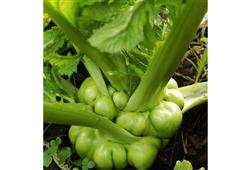
How to Grow Stem Mustard? Please Introduce the Planting and Management Methods
Stem mustard, also known as caitou, caitou, baobaocai, yangjiaocai, lingjiaocai, etc., is a variety of the Brassica genus in the Brassicaceae family, grown for its swollen stem, which can be boiled, pickled, served cold, stir-fried, or salted. Among them, the variety with protrusions on the swollen stem is suitable for processing, and the processed product is called zhacai (pickled mustard tuber). In our city, farmer Jiao Xin from Shizhuang Village has successfully grown it for 6 years using a winter-warm greenhouse, which not only meets consumer demand but also achieves good returns.
I. Selecting Good Varieties
Choose varieties with wide adaptability, strong stress resistance, low bolting tendency, vigorous growth, strong cold tolerance, good quality and fresh fragrance, and high yield potential, such as Teda Ercai, Jingxuan Zhacai, Egong Baocai, Zaoyuan No. 12, Zaoyuan No. 13, etc.
II. Land Preparation and Base Fertilizer Application
Choose soil with deep, loose, and fertile layers. Apply 5000-6000 kg of high-quality decomposed barnyard manure per mu, mixed with 50 kg of superphosphate. After the previous crop is harvested, plow deeply and harrow finely, level the land and make beds 1.2 m wide.
III. Raising Strong Seedlings
For greenhouse stem mustard, autumn seedling raising followed by early spring harvest is mostly practiced in the Huang-Huai River basin. The sowing date should not be too early. Although early sowing can extend the growth period, it is prone to virus infection and premature bolting; late sowing is less susceptible to viruses and bolting, but the growth period is short, affecting yield. Sowing in August to early September is suitable. Evenly broadcast the seeds on the seedbed, cover with fine soil 1.5-2 cm after sowing, then cover with 25-mesh insect-proof net to prevent aphids and other disease vectors. Use 0.4-0.5 kg of seed per mu. Seedbed to field ratio = 1:10-15. Thin seedlings once at 2 true leaves, and thin again at 3-4 true leaves, removing inferior, weak, and diseased seedlings, maintaining a row and plant spacing of 6 cm. Water appropriately during the seedling stage to keep the seedlings growing vigorously.
IV. Transplanting
When the seedlings have 5-6 true leaves and the seedling age is 30-35 days, transplanting is more suitable. If the seedling age is too young, it is not conducive to improving land utilization; if transplanting is too late, the seedlings become crowded and tend to grow leggy. Plant 4000-5000 plants per mu, with a row spacing of 40 cm and a plant spacing of 33-40 cm. To improve the processing quality of zhacai, the density can be appropriately increased. When transplanting, follow the sequence of digging holes according to row and plant spacing, watering, placing seedlings, and covering with soil. Large and small seedlings should be planted separately to facilitate balanced growth.
V. Fertilizer and Water Management
In terms of water management, the soil should always be kept moist. On the premise of applying sufficient base fertilizer, generally topdress 3 times. The first time is after the seedlings recover from transplanting until before the first leaf whorl forms, apply 15-20 kg of ternary compound fertilizer (N, P, K content each 15%) per mu in holes. The second time is after the first leaf whorl forms, when the stem begins to swell and gradually forms the second and third leaf whorls; at this time the stem grows relatively fast, so apply 40-50 kg of ternary compound fertilizer per mu. The third time is during the peak stem growth period, apply 20-25 kg of urea per mu with irrigation water. In the middle and late stages after the plants close the rows, field activities should be minimized to avoid damaging the leaves.
VI. Temperature Regulation
The optimum temperature for leaf growth of stem mustard is about 15°C, and the optimum ten-day average temperature for stem swelling is 8-13.6°C. Within this range, the higher the temperature, the faster the growth. Therefore, according to the plant growth status and changes in outside temperature, cover the greenhouse at the appropriate time (mid to late October), and reasonably uncover and cover the straw mats. Especially on cold overcast days, more attention should be paid to uncovering the mats to increase light, creating a suitable environment for stem and leaf growth, so as to improve quality and increase yield.
Click to get more mustard growing techniques
Click to get more vegetable growing techniques