How to Grow Green Jujube? Detailed Explanation of Cultivation Methods and Technical Key Points
How to grow green jujube? Please provide guidance. For growing green jujube, you can refer to the following information: I. Growth and development characteristics of green jujube trees. Green jujube shows a habit of continuous growth throughout the year. As long as the temperature is suitable, the terminal bud grows forward and lateral branches sprout accordingly. Every 3 nodes the branch produces a rib-like alternate branch, and on the branch...
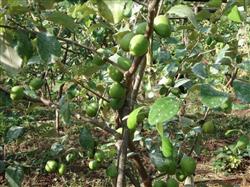
How to grow green jujube? Please provide guidance.
For growing green jujube, you can refer to the following information:
I. Growth and Development Characteristics of Green Jujube Trees
Green jujube shows a habit of continuous growth throughout the year. As long as the temperature is suitable, the terminal bud grows forward and lateral branches sprout accordingly. Every 3 nodes the branch produces a rib-like alternate branch; on the branch, a lower-level branch also alternates every 3 nodes, ultimately forming on the trunk hierarchy the main trunk, first-level branches (main branches), second-level branches, and third- and fourth-level branches (the main fruiting branches). First-level branches can grow to 2 m, averaging 16 second-level branches; second-level branches can grow 12 m, averaging 8 third-level branches; third-level branches are 60 cm long and can grow multiple fourth-level branches.
II. Flowering and Fruiting Characteristics of Green Jujube
Green jujube flower buds differentiate in the current season (year), differentiate quickly, have a large flower volume, and flowers and fruits are on the same branch. Flowers open during the day, beginning to open at 6-8 a.m., fully open at 8-11 a.m., and rarely opening after 12 noon. They are insect-pollinated flowers, relying on flies, bees and other insects for pollination. Planted in the first year, they can flower in 70 days and can flower and fruit multiple times a year. From flowering to fruit maturity takes about 120 days. From April to December, as the shoots grow, flowers continue to open, but flowers opening at different times have different fruit-setting ability. Flowers opening from April to June basically only flower without setting fruit; flowers opening in July-August have a low fruit-setting rate, and a small amount of fruit matures in November-December; flowers opening in September-October have a high fruit-setting rate, and fruit matures in large quantities in January-February. From the perspective of a single tree, the main fruit-bearing branches are third-level branches, accounting for 90% of the total fruit; second-level branches account for 9.5%, and first-level branches (main branches) account for only 0.5%.
III. Requirements of Green Jujube for Environmental Conditions
Soil: Jujube trees are not strict about soil, but slightly alkaline (pH 7.5) to acidic soil (pH above 6.0) is more suitable. Sandy loam is required, with deep soil and convenient drainage and irrigation. Temperature: Green jujube is a sun-loving plant and needs sufficient sunlight. The planting area requires an annual average temperature above 18°C (Yuanjiang 23.8°C), and the extreme minimum temperature should not be lower than 0°C. During the fruit expansion period, a large temperature difference between day and night helps sugar accumulation. Suitable planting altitude is below 1200 m.
Water: Green jujube has a well-developed root system and strong drought resistance. It can grow normally in areas with annual rainfall of 500 mm (Yuanjiang 780 mm) and relative humidity greater than 50%. During the flowering period, jujube trees require relatively high humidity; a relative humidity of 85% is favorable for pollination and fertilization. The fruit maturity period requires little rain and mostly sunny weather, otherwise it easily causes a large amount of flower drop and fruit rot.
IV. Planting
(1) Digging pits, applying fertilizer, and backfilling soil:
The tree pit is required to be 1 m long and 1 m wide, and 0.5 m deep; dig one pit every 4-6 × 5-7 m, plant one tree per pit, and plant 16-33 trees per mu. After the pit is dug, apply 30-40 kg of decomposed farmyard manure and 0.5-1 kg of calcium magnesium phosphate or calcium magnesium phosphate fertilizer per pit. Fertilizer should be applied in 2-3 layers, backfilling one layer of soil for each layer of fertilizer. When returning soil, put the subsoil first and then the topsoil; all the soil dug out above must be returned to the pit; pile it into a mound 20 cm high and 1 m in diameter.
(2) Selection and arrangement of varieties
Excellent varieties must be selected for planting. An excellent variety has 4 conditions:
1. Large fruit, fine and crisp flesh, high sweetness, no astringency, and should be slightly sour;
2. Thin peel, smooth and bright, yellow-green, good taste, and no peel residue after eating;
3. Small seed and thick flesh, high soluble solids;
4. Strong resistance, especially resistance to pests and diseases.
For example, Gaolang No. 1 has the above four conditions.
Green jujube is a cross-pollinated plant and must be configured with pollinating varieties. Any two varieties can serve as pollinating varieties for each other, generally at 6-8:1.
(3) Planting period
Except in winter, planting can be done in spring, summer and autumn. Spring is March-May, summer is June-July, and autumn is September-October. In Yuanjiang, planting in March-April is more suitable, and a good harvest can be obtained in the same year.
(4) Planting operation
1. Planting bagged seedlings and bare-root seedlings with soil: Put the seedling into the planting hole, gently cut off the packaging bag with a sharp knife, and try not to loosen the soil ball around the roots. Then hold the seedling with one hand so that the root collar is basically level with the surface of the tree plate, and with the other hand use fine soil from the outer upper side toward the root part and compact it in layers.
2. Planting bare-root seedlings: Dig a small planting hole according to the length of the main and lateral roots, let the main root and lateral roots spread naturally in layers. First fill and fix the main root with broken soil, then press and bury the lateral roots one by one in layers, and finally fill the gaps formed by the main root and lateral roots with fine soil, so that the fine soil fully contacts the root system.
When compacting in layers, compact gradually from the outside toward the trunk. It is most taboo to compact right beside the main root at the beginning, or to tread too firmly with the foot, causing poor aeration around the roots. When filling soil up to the root collar, water thoroughly to settle the roots, then fill broken soil to 2-3 cm above the root collar. Build the tree plate into a dish shape about 1 m in diameter, then cover the tree plate with dry (rice) straw to retain moisture, lower temperature, prevent surface soil hardening, and suppress weed growth.
Note: Before or after planting, cut the seedling back at a height of 30-40 cm as the main trunk. Bagged seedlings generally need 2/3 of the leaves removed; for bare-root seedlings, cut off all leaves and keep only the petioles. A layer of plastic film can also be wrapped around the stem to reduce water evaporation.
(5) Management from planting to seedling survival
After planting, if there is no rain, water once every 2-3 days until new leaves sprout and turn green. From planting until the first new shoots emerge, do not rush to fertilize, especially do not apply high-concentration chemical fertilizer or manure water. Wait until the first new shoots turn green and mature and begin to produce the second new shoots, then apply 0.5% compound fertilizer water 3-5 L more than 20 cm away from the trunk. Or after rain, apply 20-30 g of compound fertilizer 20-30 cm away from the trunk, once every 10 days, for a total of 2-3 applications.
V. Main Cultivation and Management Techniques
(1) Fertilization techniques
1. Fertilization for newly planted trees: Because newly planted green jujube trees have underdeveloped root systems, they both need fertilizer supply and are easily damaged at the roots. Therefore, fertilization should adhere to the principle of light fertilizer and frequent application, that is, small meals more often. Generally, apply fertilizer 1-2 times per shoot emergence. Decomposed manure water or chemical fertilizer can be poured on, or chemical fertilizer can be applied dry after rain, alternating farmyard manure and chemical fertilizer. ① Base fertilizer: after the pit is dug, apply 30-40 kg of decomposed farmyard manure and 1-0.5 kg of phosphate fertilizer. ② Topdressing: topdressing farmyard manure is usually 15%-20% clear urine water (about 25 kg per bucket of water plus 2-3 ladles of human and livestock urine, 3.5-5 kg); or 7-13% decomposed human and livestock manure water.
Either of the above two should be applied at 3.5-5 kg per plant each time, applied more than 20 cm away from the trunk, and gradually moved outward as the crown expands.
For chemical fertilizer topdressing, apply 25-50 g of urea or compound fertilizer per plant each time; it can be dissolved in water and poured (concentration 0.4-0.5%), or evenly broadcast in a line ditch within the drip line of the tree plate (if after rain, no ditch is needed).
2. Fertilization for perennial trees
① Base fertilizer: after retractive pruning in February-March, dig a ring ditch at the drip line of the crown for each plant and deeply apply 20-30 kg of poultry and livestock manure and 0.5 kg of phosphate fertilizer. Fertilization at this time cuts roots, which helps regulate the balance of root-to-crown ratio and promotes shoot growth.
② Shoot-strengthening fertilizer: mainly nitrogen fertilizer, N:P:K = 2:1:1. One month after retraction, new shoots begin to sprout, and new shoots continue to emerge from April to August. Therefore, from April to June, apply 1.5 kg of 15% compound fertilizer plus 0.5 kg of 46% urea per tree as shoot-strengthening fertilizer, preferably in three applications.
③ Flower-promoting fertilizer: flowering and fruiting occur in September-October, so flower-promoting fertilizer is required in July-August, mainly quick-acting fertilizer, with suitable combination of nitrogen, phosphorus and potassium (2:1:2). Apply 0.5 kg of compound fertilizer, 0.2 kg of urea, 0.2 kg of potassium chloride (or potassium sulfate), 0.1 kg of magnesium sulfate, and 50 g of borax per tree, in two applications.
④ Fruit-strengthening fertilizer: apply in January-December, N:P:K = 2:1:4. Apply 1 kg of compound fertilizer, 0.25 kg of urea, 0.3 kg of potassium fertilizer, 0.1 kg of magnesium sulfate, and 50 g of zinc sulfate per 5 trees, in 3 applications.
During this period, 0.2% borax plus 0.2% potassium dihydrogen phosphate can also be sprayed on the leaves as extra-root topdressing.
(2) Water management
1. Shoot growth period (April-July): cultivate the crown. In drought, irrigate in time, otherwise tree vigor will be weak.
2. Flowering and fruit-setting period (September-October): irrigation should be suspended to promote the plant's transition from vegetative growth to reproductive growth.
3. Fruit development period (November-December): the plant again needs a large amount of water. In this period, sudden dryness and sudden wetness easily lead to serious fruit drop.
4. Harvest period (December): avoid large amounts of irrigation, otherwise quality declines.
(3) Crown management
1. Training and pruning. Jujube trees have a large growth volume, and branches are mainly lateral outward-growing. The shoots are soft, slender and fragile, susceptible to wind damage, and the branches and trunk break easily.
① Pruning of newly planted trees: after planting, cut back at a height of 30-40 cm to establish the trunk, and support with bamboo sticks to keep the seedling upright. After sprouting, select and keep 3-4 strong lateral branches in good growth positions on the trunk as main branches (first-level branches), and guide them in four directions with bamboo poles (strings) so that they are evenly distributed to form an open-center tree shape. Subsequently, rib-like lateral branches (second-level branches) form alternately on the main branches; the new shoots produced by the lateral branches are the fruiting branches of the year (third- and fourth-level branches). Pruning generally begins in June and ends after all fruits have set in November. Cut off 7 types of branches, namely crossing branches, excessively dense branches, water sprouts, upright branches, slender branches, diseased and insect-damaged branches, and branches trailing on the ground. By November, if there are already quite a lot of fruits, the young fruits or flower clusters at the tips of the shoots can be cut off.
② Pruning of trees over 2 years old: after fruit harvest (February-March), the main branches need retractive renewal. There are three methods.
First, the main-branch short-cut renewal method: saw off the main branch 20-30 cm above the original graft union, and after new shoots grow, keep 3-4 appropriately positioned and robust shoots to cultivate as main branches.
Second, the reserved-support renewal method: cut the main branch back to 1.5 m, cut off all lateral branches on the main branch, then girdle about 30 cm from the base of the main branch (remove a ring 5-10 cm wide; if too narrow, it heals easily). Select and keep a strong bud near the trunk, and tie the new shoot it produces to the original main branch to cultivate it into the new main branch of the year.
Third, the grafting and variety-change renewal method: green jujube is prone to bud mutation and natural hybridization, and new varieties emerge endlessly. After harvest, saw off the main branch 30-60 cm above the ground, and use the cleft grafting method or cut grafting method to graft excellent variety scions onto each growing branch.
2. Trellis
① According to the tree shape, it can be built into a triangle or quadrilateral.
② Cement post trellis.
3. Fruit thinning
Green jujube has a large number of flowers and fruits. Each inflorescence bears 8-30 small flowers and generally can set 4-5 fruits. Even after natural fruit drop, it is still excessive, so artificial thinning is needed to avoid wasting nutrients. Fruit thinning is carried out around the time the fruit is the size of a peanut. First, combine with pruning to cut off slender branches, water sprouts and excessively dense branches that have already set fruit, then thin out excessively dense fruit, small fruit, yellow diseased fruit and deformed fruit. Generally, 1-2 inflorescences retaining one fruit (that is, "1 fruit per node" or "1 fruit per 2 nodes") is best.
(4) Pest and disease control techniques
Insect pests: mainly scarab beetles, red spider mites, yellow slugs, fruit borers, etc.
① Scarab beetles: damage leaves. Can be controlled with 40% trichlorfon at 1:1000, but manual capture is best.
② Red spider mites: damage leaves (undersides), causing leaf drop; damage fruit, causing rough brown scars on the fruit surface and affecting appearance and internal quality. Can be controlled with 20% dicofol EC at 800-1000 times or 73% propargite EC at 2000-3000 times.
③ Yellow slugs: can be controlled with trichlorfon 1:1000, or fipronil 1:1000, or decis (or kung fu) 1:2000.
④ Fruit borers: fruit borers bore into the fruit and feed on the flesh. Insect feces accumulate inside the fruit, and the fruit becomes rotten, smelly, and loses edible value. Control should grasp two periods. First, before adult emergence from the soil, carry out ground sealing. Use 50% phoxim at 300 times or 40% trichlorfon at 1000 times to seal the soil under the crown to poison and kill adults emerging from the soil. After spraying phoxim, shallowly turn the soil layer to avoid photodegradation of the pesticide. Second, during the adult occurrence period or the peak hatching period, spray the crown with 25% fenpropathrin at 2000-3000 times or 2.5% lambda-cyhalothrin at 2000-3000 times.
2. Diseases: mainly powdery mildew, which damages young leaves and young fruit. After the fruit is damaged, the peel becomes pitted, shrunken, lusterless and suberized. Can be controlled with 50% sulfur colloidal suspension at 200-400 times, 15% triadimefon 1:800-1000, 40% Shenxing EC 1:5000-8000, and 62.25% Xiansheng wettable powder 1:600.
Click to get more jujube cultivation techniques
Click to get more fruit cultivation techniques